When Bass Anglers Use Finesse To Avoid Stress
The following appears in the February issue of California Sportsman:
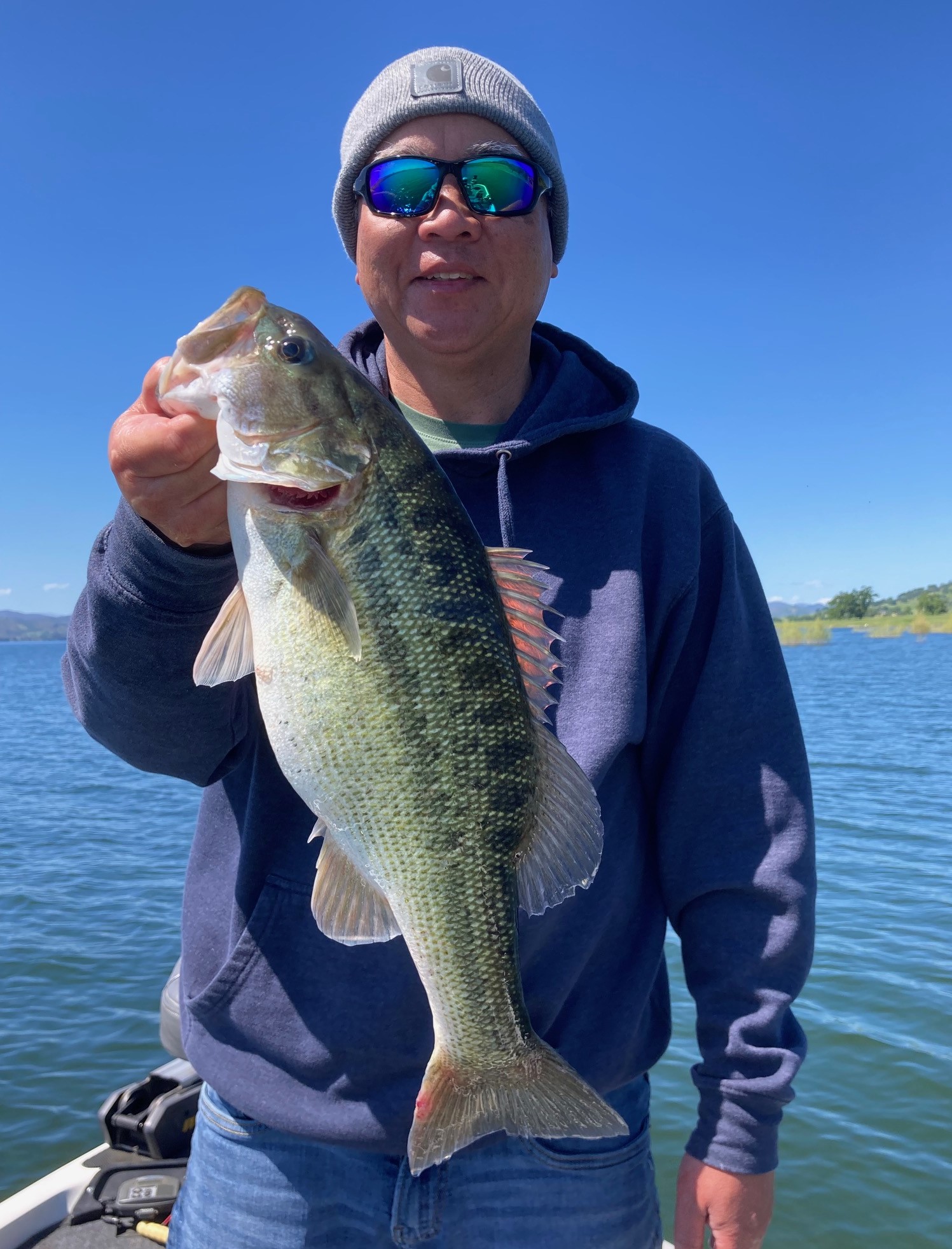
By Mark Fong
Big fish eat little fish, and there are very few baits that imitate a shad or minnow as effectively as a finesse swimbait.
I have said it before many times: In my opinion, there are few things in fishing more fun than a good swimbait bite. Small swimbaits just plain get bit, they are year-round fish catchers and can be extremely versatile. When rigged on a traditional jighead, they can be fished throughout the water column. Thankfully for me, there are many lakes and reservoirs around Northern California loaded with bass that will readily eat a finesse swimmer.
THE DETAILS
Finesse swimbaiting is an easy technique to fish, but it does come with a learning curve. It is effective for both bank and boat anglers alike. High-percentage areas to target include points, flats, rocky areas and dropoffs. But a word of advice: Don’t overlook less attractive locations either. Finesse swimbaits have the uncanny ability to generate bites from water that is often bypassed and therefore underfished.
Start by making a long cast and letting the bait sink to the desired depth before starting your retrieve. Begin with a slow, steady retrieve, as this will allow the bait to track in the zone for the longest part of the cast. Fan-casting a prospective area will give you maximum coverage when searching for fish.
DEPTH PERCEPTION
If you are using forward-facing sonar on your boat, this technology makes it easy to pinpoint the bass and to adjust your bait’s depth accordingly.
If you don’t have access to this technology or are fishing from the bank, don’t worry; you can search for fish by counting down your bait as it sinks before starting your retrieve. Experiment with different counts until you find the depth where the fish are holding. If a slow, steady retrieve is not productive, don’t be afraid to adjust your cadence until the fish reveal their preference.
Don’t forget to cover the area near the bottom. This can be done in one of two different ways. First and foremost, you can keep the bait swimming just above the bottom, or you can slowly drag the bait while maintaining contact with the bottom. And sometimes just dead-sticking the bait on the bottom is what is required to get the fish to bite.
THE STRIKE ZONE
A swimbait bite often feels like pressure akin to the tension created by pulling a rubber band. Don’t set the hook immediately; instead, continue reeling until the rod begins to load, then sweep the rod firmly to drive the hook point home.

NITTY GRITTY SWIMBAIT CHOICES
Some anglers like to use a specialized swimbait head, but I like to keep things simple and prefer a simple ball-head-style jighead. By adjusting the weight of the jighead, you can fish anywhere in the water column, from just under the surface all the way to the bottom.
I have caught swimbait fish in as little as 1 foot of water all the way down to 80-plus feet. In skinny water I will go as light as 1/16 ounce, while I’ll go all the way up to 1/2 ounce in deeper water.
There are so many great finesse swimbaits on the market today, and rest assured, every swimbait angler has their favorite. I really like the Yamamoto Shad Shape Swimmer. It swims with a nice kicking action and has a good baitfish shape. It comes in three sizes – 3.2 inches, 3.7 inches and 4.2 inches – making it easy to match the size of the forage that the fish are feeding on.
Because this is a clear-water presentation, color is an important piece of the equation. I like to keep it simple by sticking primarily to shad imitators such as natural shad, electric shad or sexy shad.

LONGER ROD, BETTER CONTROL
I can’t emphasize enough the importance of using a longer rod when fishing finesse swimbaits. In my opinion, the extra length provides many advantages that improve efficiency, such as allowing for longer casts and moving more line on the hookset. My preference is a 7-foot, 6-inch medium-light-action spinning rod with a light tip.
I’ll pair the rod with a 2500-series spinning reel spooled with a 10-pound braid mainline connected to a top-shot leader of 8-pound fluorocarbon line. Over the past year I’ve made the switch to the next generation of sinking braided line. I am impressed by the way it minimizes the amount of bow in the line, as opposed to traditional braided lines.
The next time you head to the lake, be sure to bring along some small swimmers; you may just be surprised with what kind of action you get on the end of your line. CS