UC Santa Cruz On Preserving California’s Chinook Salmon
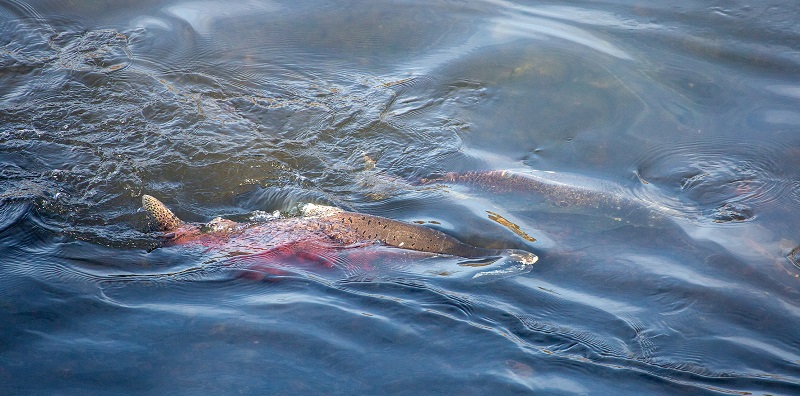
UC Santa Cruz released a report on the plight of California’s once thriving and now struggling king salmon. Here’s more from UCSC:
Imagine a world where just six out of every 100 newborns make it to their teenage years, the rest unable to survive post-apocalyptic environmental conditions that have become too strange and dangerous for human life. That’s the plight of California’s once-thriving Chinook salmon, a population that now sees 94% of its juveniles die within the few weeks they spend trying to reach the sea from the freshwater sources where they first hatched.
This tragic reality is almost entirely due to how their native waterways in the state’s Central Valley have been turned into a system of levees, channels, and large high-head dams that are tightly managed almost exclusively for human needs. In terms of how water is allocated, wildlife is essentially an afterthought.
But the Central Valley Salmon Ecology Group, a team of researchers that bridge academia and resource management facilitated by the Fisheries Collaborative Program (FCP) at the University of California, Santa Cruz, has come up with a playbook for how water managers can tweak the timing, temperature and volume of releases to dramatically increase the odds of juvenile salmon surviving the perilous journey to the open ocean.
The approach, called “facilitated migration,” is detailed in a paper published on July 3 by the Ecological Society of America’s journal Ecological Applications.
“We’re already playing God with these ecosystems,” said the paper’s lead author, Benjamin Burford, an assistant project scientist at the Institute of Marine Sciences (IMS) at the University of California, Santa Cruz. “Can we play God a little bit better for a couple weeks out of the year to help more fish survive the migration? Yes, we absolutely can.”