Smaller Is Better: Tempting Winter Bass With Micro Jigs
The following appears in the January issue of California Sportsman:

By Mark Fong
If f you are a bass fisherman, you know that winter brings frigid temperatures, stormy weather, blue bird days and cold water. These conditions are not exactly optimal for catching fish. However, despite becoming less active, bass still need to eat, and one of the most effective ways to catch them is with a slow-moving, bottom-bouncing offering like a jig, which effectively imitates so many different aquatic creatures that bass like to feed on, especially crawfish.
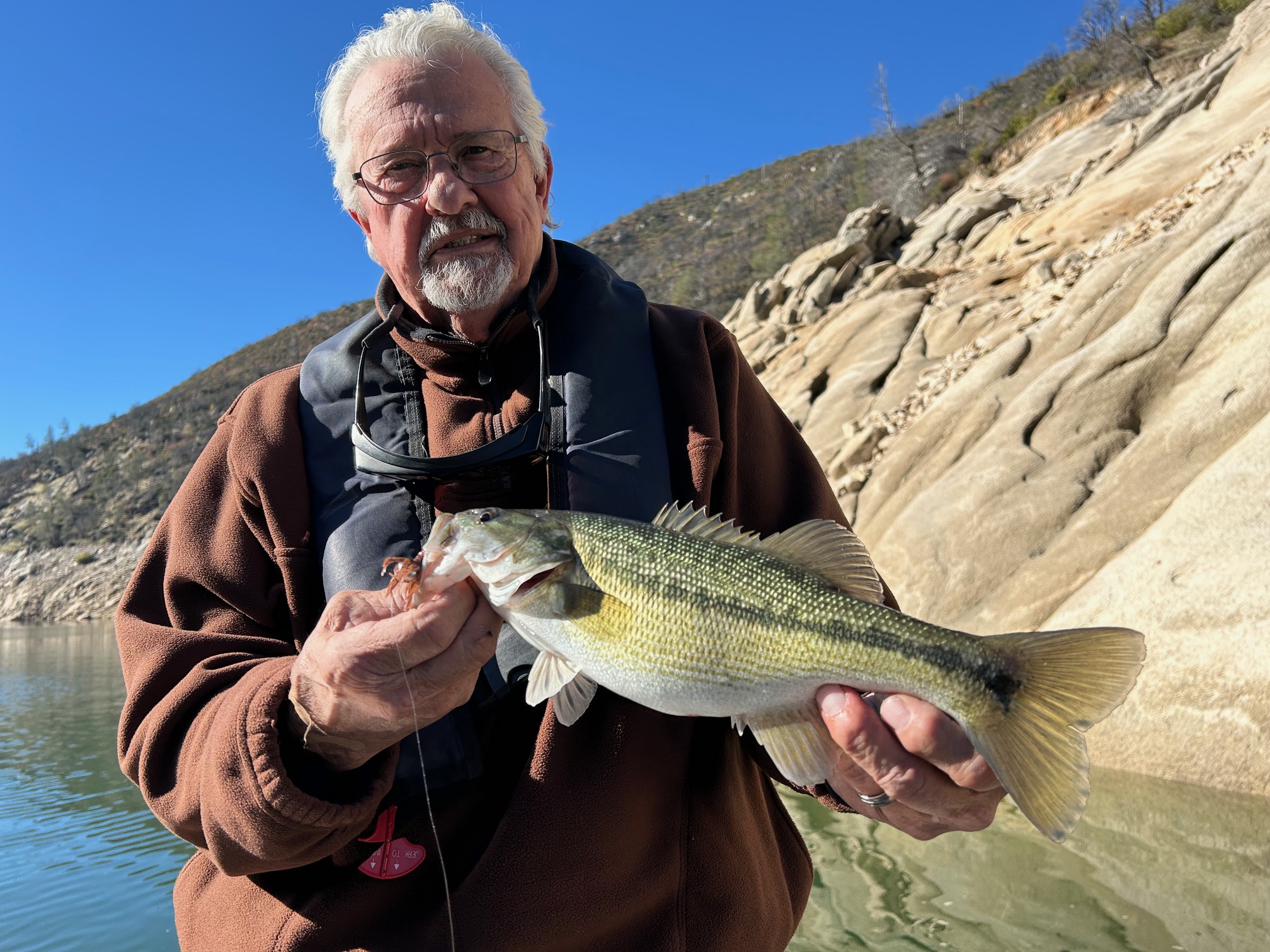
Lately, I have been catching a lot of fish on micro jigs. They’re like a standard jig, just smaller – more finessey and lots of fun. Micro jigs have become a mainstay in my arsenal, especially on the deep, clear-water impoundments across Northern and Central California.
Thankfully, many of these bodies of water have great populations of spotted bass. Spotties, unlike largemouth bass, are more active in cold water, making them easier to target and to catch.

FACTORS TO CONSIDER
Water temperatures and clarity are important considerations. During the winter, water temps can vary from the upper 40s to the low 50s. A lot also depends on air temperature as well as the type of storms feeding the area. Northern storms bring cold rain and runoff, while storms fed by warm atmospheric rivers can produce huge amounts of warmer precipitation. While bass can still be caught in warmer, off-colored water, there is nothing worse than cold, muddy water to put the fish off the bite. As a result, finding water with good clarity is important. The clearest water can often be found in the lower sections of a reservoir near the dam, as the upper reaches can be dirty from incoming runoff.
Bite windows play an important role in success this time of year. In my experience, spotted bass will bite first thing in the morning during low- light conditions. If you don’t feel like getting on the water first thing in the morning, don’t despair, as the bite tends to pick up again later in the day once the sunlight warms the water in the afternoon.
When the water is cold, the first place I like to look for fish is on vertical structure. Bluff walls and step points that have deep water nearby are key locations. These types of areas are feeding stations for bass, as they are not required to travel long distances and expend a lot of energy to move up to eat. And once they are done feeding they can simply slide back into the deeper water to rest and feel secure.
With their metabolism at the lowest levels of the year, bass typically won’t chase a fast-moving bait. A micro jig is very lifelike and can be fished at a pace to match the activity level of the bass. Indeed, slow draggin’ and dead stickin’ is what gets bit this time of year.

WHY DETAILS MATTER
Over the years I have relied on 4- and 5-inch Yamamoto Hula Grubs or a standard-sized living rubber-skirted football head jig matched with a Yamamoto Double Tail Grub trailer. Recently, I have been fishing a new, smaller 2.5-inch Hula Grub. This downsized version has all the same fish-catching attributes of its bigger brothers – just in a smaller, more finesse-style package that truly excels in cold water. Besides being shorter in overall length, it has a much more compact profile. The 2.5-inch Double Tail Hula Grub is a true bite getter. I’ll pair it with a 1?4-ounce football head with a size 1 hook. As for color selection, I prefer to stick to what’s tried and true. You can’t go wrong with either green pumpkin or cinnamon purple.
Having the right gear is another key to success. I prefer a 7-foot, 6-inch medium-light-action spinning rod. The rod has a nice fast sensitive tip and plenty of backbone to generate positive hooksets. The extra length allows me to make longer casts and to control hard-fighting fish. I match the rod with a 2500-series spinning reel filled with 10-pound hi-vis braid mainline finished with an 8-pound fluorocarbon leader.
There is little doubt that jigs put a lot of fish in the boat during the winter. If you are looking to try something a little different, try fishing a micro jig. You’ll find proof that good things do come in small packages. CS