Sierra Fishery Contains A ‘Stampede’ Of Fish
The following appears in the August issue of California Sportsman:

Guiding a feisty Stampede cutt into the net. The species was introduced between the late 1990s and the turn of the 21st century. “While the reservoir isn’t yet a top destination for catching giants, it represents a key piece of the puzzle in the larger Lahontan recovery plan,” author Cal Kellogg writes. (CAL KELLOGG)
By Cal Kellogg
We were looking for more cutthroat trout and we’d been catching them on and off all morning long. Instead, we stumbled onto a handsome, amber-colored smallmouth cruising about 8 feet deep on a submerged rock-strewn flat.
The spawn should have been over long ago – there was no visible bed – yet this fish was reluctant to leave the area. I knew Stampede Reservoir had a smallmouth bass population, but this was the first bass I’d ever seen at the lake despite fishing there dozens of times.
Due to the lake’s high elevation and short feeding season, I always figured the bass would be on the small side, but this fish was anything but small. Indeed, it looked huge, magnified by the crystal-clear water.
My two fishing partners quickly grabbed spinning rods and started rigging up with jigs. I did the same thing, but instead of a jig, I went with a wacky-rigged Senko. Cast, cast and more casts.
The bass rejected the jigs, moved up to my Senko, glared at it from a half-inch away and rejected that too. As my partners cast again, an idea hit me. I ripped off the Senko, grabbed the tub of nightcrawlers from the cooler and pinned a fat worm on my hook.
Seconds later the worm plunked into the water and started to slowly sink. Almost immediately the bass spotted the now wriggling and writhing crawler and moved upward a foot or two. The bass positioned itself under the falling bait like an outfielder waiting for a fly ball.
Slowly, the bass rose as the worm dropped until the worm was an inch or two from its nose. The strike was fast, but without violent motion. The smallmouth simply flared its gills and sucked the 6-inch-plus worm into its mouth.
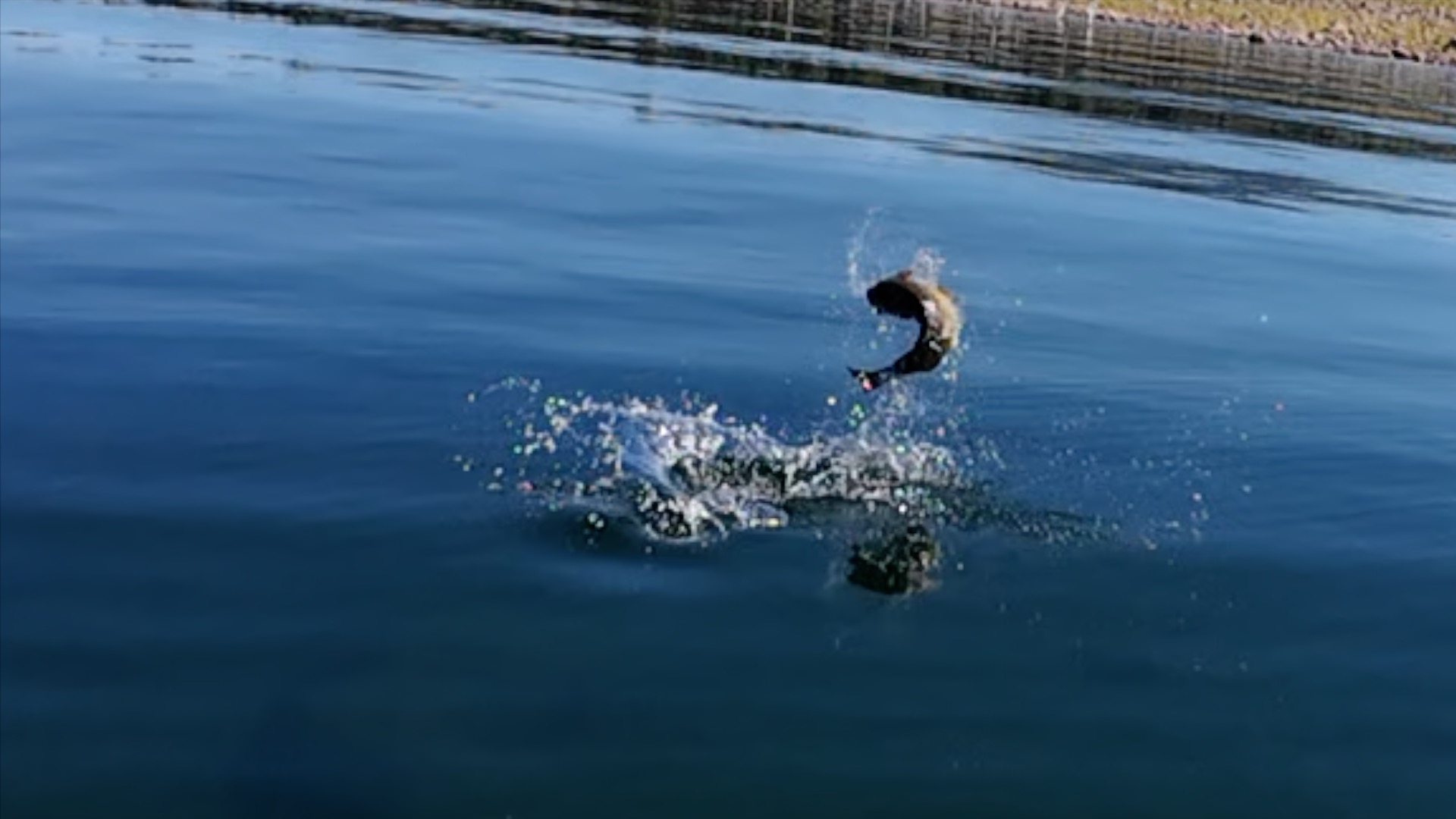
I waited a beat and drilled the hook home, not wanting to hook the bass deeply. At first the bass reacted with only a few half-hearted headshakes, as if it wasn’t sure what was happening. But then it wised up and bolted away from the boat. When that tactic didn’t free the bass of the hook, it exploded to the surface in a wild, gyrating jump. Free from the water, the bass looked smaller, but not by much.
After a half-dozen spirited power dives, I slid the fish into the waiting net and found myself admiring an impressive smallmouth a few ounces under 4 pounds. I was blown away; not only was it one of the best smallmouth I’d caught in a few years, but it was my first high-Sierra smallmouth from a lake I was convinced only held a small population of small bass. I’ve never been so happy about being so wrong!

STAMPEDE BASICS
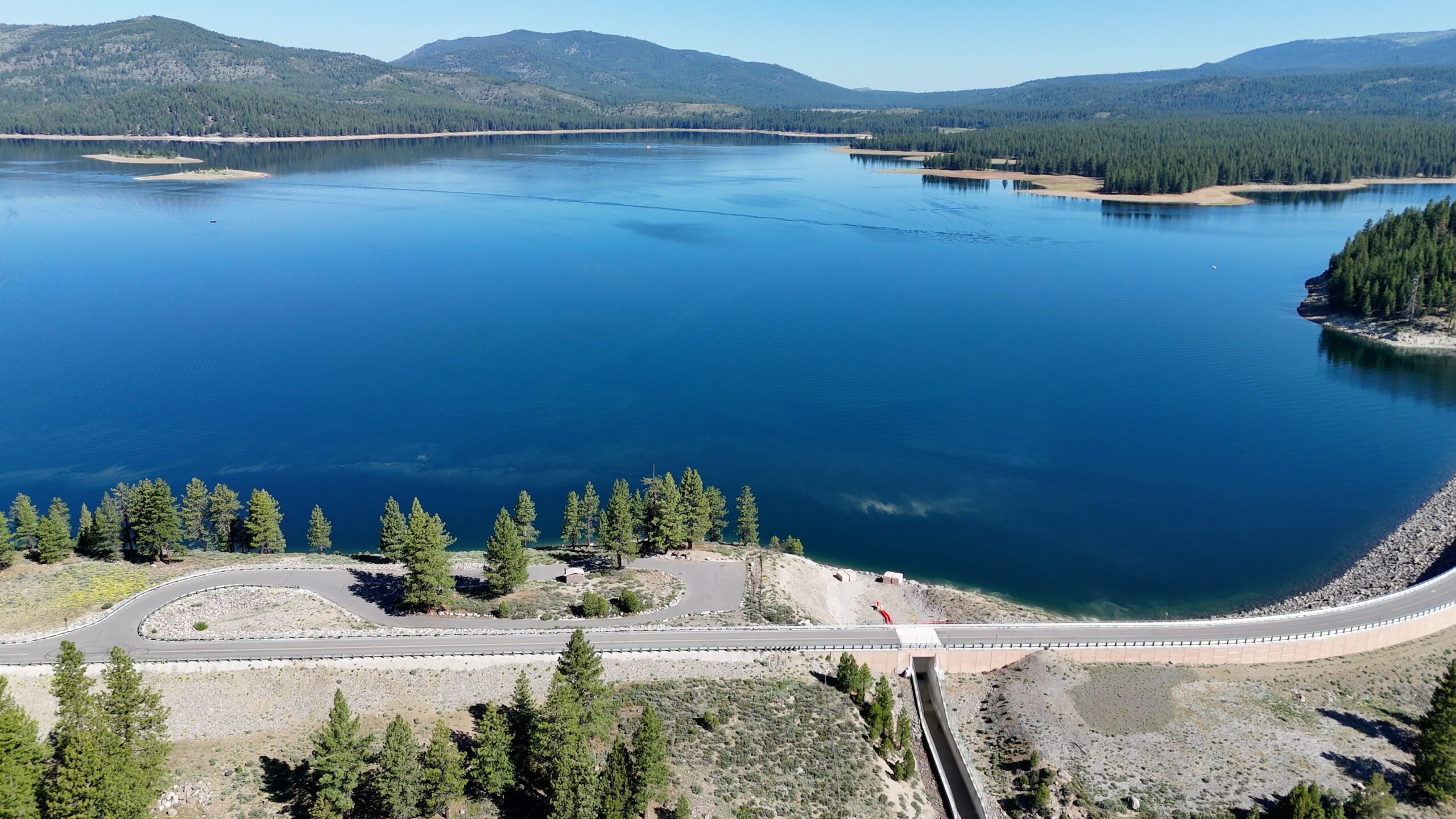
Nestled high in the Sierra Nevada northeast of Truckee, Stampede Reservoir is overlooked by most Golden State anglers, especially those who aren’t interested in the lake’s often tiny kokanee salmon.
Completed in 1970 with the construction of Stampede Dam on the Little Truckee River, the reservoir was designed for water storage, flood control and environmental management as part of the Bureau of Reclamation’s Washoe Project. What was also created, perhaps unintentionally, is a remarkably diverse and productive fishery that goes far beyond kokanee.
At just over 5,900 feet in elevation, Stampede spans roughly 3,500 acres when full. The lake’s clear, cold waters support a robust forage base – primarily chubs, crawdads, plankton and aquatic insects – that fuels a thriving population of gamefish.
Unquestionably, Stampede is best known for its stellar kokanee salmon fishing, and, to a lesser extent, there is a small contingent of anglers who visit the reservoir in the spring and fall looking for trophy brown trout action. But
anglers in the know are beginning to whisper about two other players in the system: Lahontan cutthroat trout and smallmouth.

INTRODUCTION OF LAHONTAN CUTTS
Lahontan cutthroat trout (LCT) were introduced into Stampede Reservoir as part of a broader effort by the U.S. Fish and Wildlife Service to restore this iconic native species to its historical range in the Truckee River Basin. Historically, LCT, the largest cutthroat subspecies, were native to the Truckee River and its tributaries, including the area now occupied by Stampede Reservoir. However, due to dam construction, overfishing, water diversion and the introduction of non-native species, LCT populations were gone from much of their native habitat by the mid-20th century.
The reintroduction efforts at Stampede began in earnest in the 1990s and early 2000s, with the focus on the Pilot Peak strain of Lahontans. This strain was genetically matched to the original Pyramid Lake population, known for producing fish that grow well into the 20- to 30-pound class under ideal conditions. The goal was to re-establish a naturally reproducing population in the upper Truckee River system and to provide a backup recovery population for conservation purposes.
Stampede Reservoir was chosen because of its relatively cold, clean water, large size and proximity to the Little Truckee River, one of the region’s best remaining trout streams. The hope was that these fish would not only survive but thrive and eventually use the river for spawning.
While initial stocking focused on establishing numbers, more recent efforts have emphasized monitoring growth, survival and potential reproduction. LCT have shown good survival skills in Stampede, and while the reservoir isn’t yet a top destination for catching giants, it represents a key piece of the puzzle in the larger Lahontan recovery plan.
It took a while for cutthroats to begin showing in the catches at Stampede. In the early 2000s a few 12- to 14-inch Lahontans began being reported by kokanee anglers. Over time cutthroats have become a commonly caught species at Stampede, and in recent years big fish in excess of 5 pounds and 24 inches have been reported.
Hooking LCT at Stampede requires a blend of finesse, mobility and an understanding of seasonal patterns. While these fish aren’t always easy to find, they’re aggressive when feeding and will take a variety of presentations when conditions line up.
Timing and location are everything. In spring and fall, when water temperatures are cooler, LCT often move toward the shallows and cruise shorelines, especially near creek inlets, points and rocky flats. This is the best time to target them from the bank, kayak or a boat working the shallows. During summer, they tend to retreat to deeper, cooler water – often suspending off points or holding near drop-offs.
Trolling is one of the most consistent ways to hook cutts at Stampede. Run spoons, Rapalas or small minnow-imitating plugs in silver, gold or perch patterns at 1.5 to 2.0 mph. Long setbacks or leadcore line help cover water and keep your lure in the strike zone. Flashers or small dodgers can be added to draw attention in stained water.
Casting can be effective near creek mouths or in the Little Truckee River inlet area. Try spinners like Panther Martins or Mepps, or small spoons such as Kastmasters. Fly anglers will find success with streamers, Woolly Buggers or leech patterns on intermediate sinking lines.
Live bait is prohibited, but bait anglers can do well with inflated nightcrawlers or PowerBait-style doughs fished off the bottom.
Keep in mind that Stampede’s Lahontans are part of a conservation program. Practice catch and release when possible and handle fish gently.
BIG FUN WITH SMALLIES
Smallmouth bass were introduced to Stampede Reservoir decades ago – likely in the late 1970s or early 1980s – as the result of an illegal plant from an unknown angler. While Stampede was initially managed as a cold-water fishery for trout and kokanee, the reservoir’s rocky structure, clear water and abundance of crawdads created a perfect environment for smallmouth to take hold and quietly flourish.
For many years, smallmouth bass in Stampede remained largely under the radar. Anglers targeting trout or kokanee would occasionally catch one and write it off as a fluke. But over time, observant anglers began to recognize a pattern – not only were smallmouth present, they were growing big and reproducing successfully.
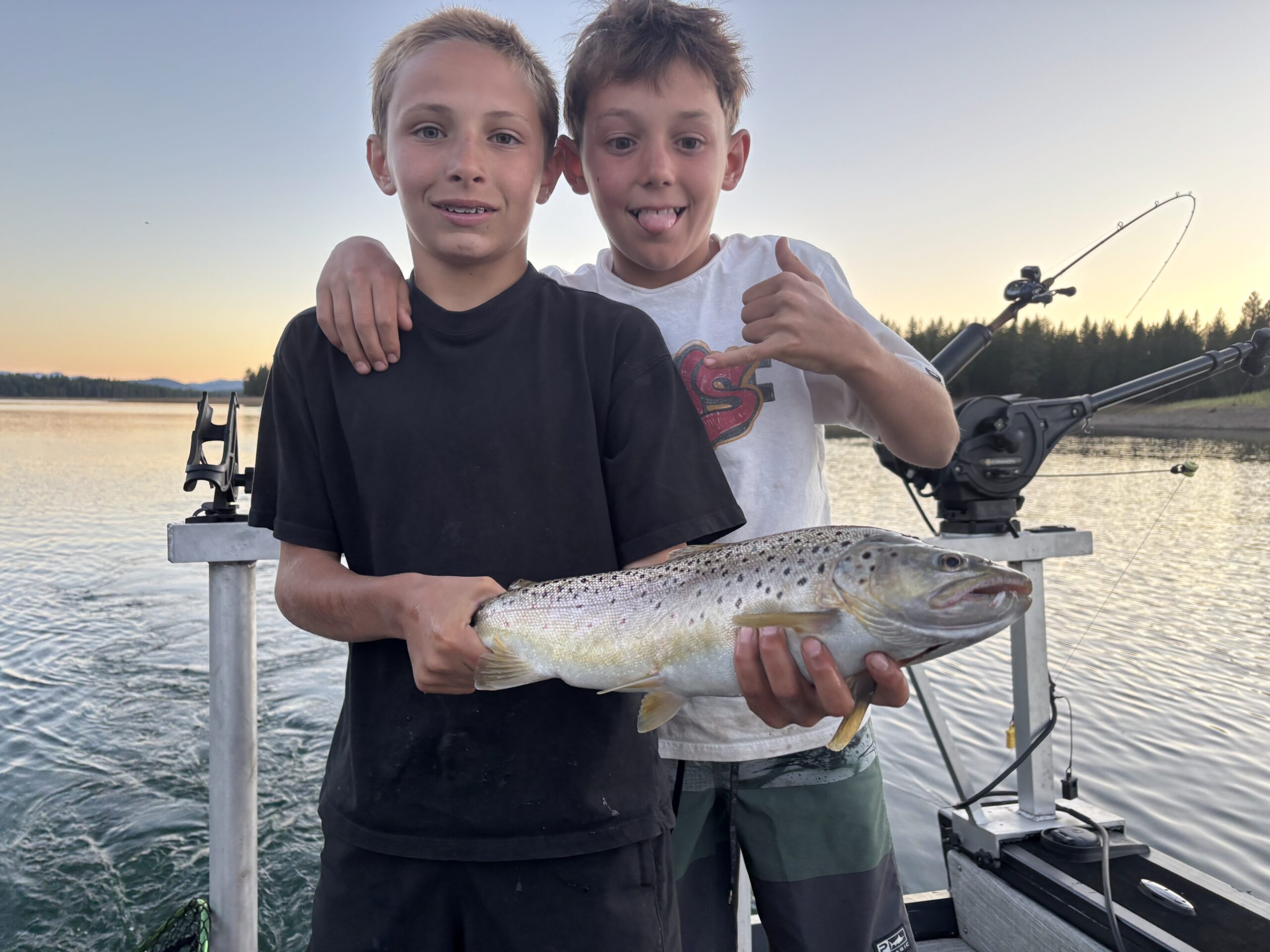
Today, Stampede holds a modest but healthy and self-sustaining population of smallmouth. They aren’t present in huge numbers like in more dedicated bass lakes, but what the fishery lacks in density, it makes up for in quality. Many fish range from 1.5 to 3 pounds, and bass over 4 pounds are caught every season. The low fishing pressure and plentiful forage – including crawdads, juvenile kokanee and pond smelt – allow these fish to reach solid sizes and maintain excellent condition.
As water levels and seasonal conditions vary, so does smallmouth behavior. In high-water years, increased shoreline cover and habitat promote successful spawning and juvenile survival, helping maintain a balanced age structure.
Though still considered a “sleeper” fishery, Stampede’s smallmouth bass have proven themselves to be a worthy target, especially for finesse anglers willing to scale down and work rocky structure methodically. For those in search of high-country bass with size potential and minimal competition, Stampede offers a unique and rewarding opportunity.
Catching Stampede smallies requires a finesse-first approach and a sharp eye for structure. With its clear water, rocky shorelines and deep points, Stampede offers ideal smallmouth habitat, but you’ll need to fish smart and adapt to the season.
In late spring and early summer, smallmouth move into the shallows to spawn. During this period, look for beds along gravel flats, tapered points and inside coves, especially on the lake’s western and northern arms.
Sight fishing is possible on calm days. Cast tube baits, Ned rigs or small jigs in natural colors like green pumpkin, brown or smoke. Soft plastics rigged on light tackle work best. Stampede smallmouth are wary and prefer a subtle presentation.
As summer progresses, the fish move deeper, staging around submerged boulders, drop-offs and ledges in 10 to 30 feet of water. Use your electronics to locate structure and suspended fish. Drop-shot rigs, Carolina rigs and deep-diving crankbaits can be effective when worked slowly along the bottom.

Early morning and evening offer brief topwater windows; try walking baits, poppers or small buzzbaits near rocky points or over deeper water. These short feeding bursts can produce surprisingly aggressive strikes.
In early fall, cooling water temps bring smallmouth back toward mid-depths. Fish become more active and chase baitfish near rocky banks and open-water flats. This is a great time to cover water with jerkbaits, spinnerbaits or swimbaits that mimic pond smelt or juvenile kokanee. Use light fluorocarbon line (6 to 8 pounds) and sensitive rods to detect subtle bites, especially in deeper water. Stampede bass aren’t overly pressured, buttheyarecautiousandrespondbest to naturally finesse tactics.
With a stealthy approach and the right presentations, anglers can enjoy consistent action and occasionally hook into a 4- to 5-pound high-country bruiser at this lake that features more than just kokanee. CS