Returning To The Rivers: Gearing Up For A Full Inland Salmon Season
The following appears in the June issue of California Sportsman:

will be commonplace once again this summer and fall thanks to more traditional
fishing seasons after multiple years of full or partial closures. (CAL KELLOGG)
By Cal Kellogg
For California salmon anglers, this season feels different. For the first time in four years, anglers are looking at a basically full river salmon season, with the excitement surrounding the upcoming opener impossible to ignore.
After years of closures, restrictions and uncertainty, king salmon fishermen throughout the state finally have a real opportunity to get back on the water and pursue Chinook in the rivers that built California’s salmon fishing tradition.
And with that, it changes the entire tone of this season. Instead of talking about what was lost, anglers are once again digging tackle out of storage, checking river flows, tuning plugs and preparing boats for the return of a fishery that has long defined summer and fall fishing throughout Northern California.
Beginning July 16, inland salmon fishing opportunities in one form or another will unfold across the state and, depending on migration timing, river conditions and seasonal regulations, anglers will have opportunities to chase kings all the way into December. That’s a long-awaited return to something resembling normalcy.
Early in the season, much of the attention will center on the Sacramento River system, where fresh salmon push inland from the Delta and stage in classic travel lanes and deep current seams. As summer transitions toward fall, fish spread throughout the river systems and anglers begin intercepting kings further upstream in places like the Feather River.
Because the season stretches across such a broad window, right now is the perfect time for veteran salmon anglers to revisit foundational tactics and newer fishermen to familiarize themselves with the methods that consistently produce California kings year after year.

BACK-BOUNCING PLUGS
One of the most effective and enduring techniques of all is back- bouncing plugs. At first glance, plug fishing for salmon appears fairly straightforward. The boat slips downstream while diving plugs work near the bottom where migrating salmon travel. But in reality, truly effective plug fishing is a highly refined technique built around precise boat control, tuned lures, current awareness and maintaining exact bottom contact. Done correctly, it is one of the deadliest salmon tactics ever developed.
The heart of the method involves presenting an aggressive diving plug directly in the salmon’s travel lane while the boat slips downstream slightly slower than the surrounding current. Salmon naturally migrate close to the bottom, where current is softer and movement requires less energy. By keeping the lure digging and hunting near bottom, anglers place the plug directly in front of traveling fish.
Sometimes plugs can be run in shallower water or slower current. without additional weight, particularly in shallower water or slower current. Many times, however, anglers employ a three-way swivel system that allows with the plug. a sinker to be used in conjunction with the plug. This is the classic California back-bouncing setup. The main line attaches to one eye of the three-way swivel.
A dropper line carrying a sinker is attached to the second eye, while the leader and plug trail from the third eye. This system allows the sinker to maintain bottom contact while the plug works slightly behind and above it in the strike zone.
The term “back-bouncing” comes from the constant lifting and dropping motion anglers use with the sinker. As the boat slowly slides backward, the sinker repeatedly taps bottom while the plug hunts aggressively behind it.
That rhythmic bouncing action is critical. You are not dragging the sinker continuously. You are lifting it, letting it fall, feeling it touch bottom, then repeating the process while slipping through productive water. The sinker becomes both a depth control tool and a way of reading the river bottom.
Experienced salmon anglers develop an almost instinctive feel for this process. They can tell whether the sinker is ticking properly, hanging up excessively or riding too high simply by feel transmitted through the rod.
Maintaining that precise relationship with the bottom is absolutely essential, as river salmon generally travel close to the substrate while migrating upstream. If the plug rides too high, fish may never see it. If it’s too low, anglers spend the day snagged on rocks and debris.
STEERING INTO SALMON
Boat control is equally important. Most anglers use either a kicker motor or electric trolling motor to slow the boat’s downstream drift while following productive current seams, ledges and travel lanes. The goal is maintaining just enough resistance against the current for the plugs to work aggressively without overpowering the presentation. Too much speed kills lure action. Too little movement causes the plugs to rise unnaturally or lose their hunting motion. Good plug fishermen become almost obsessive about this balance because they understand that proper boat speed governs everything else.
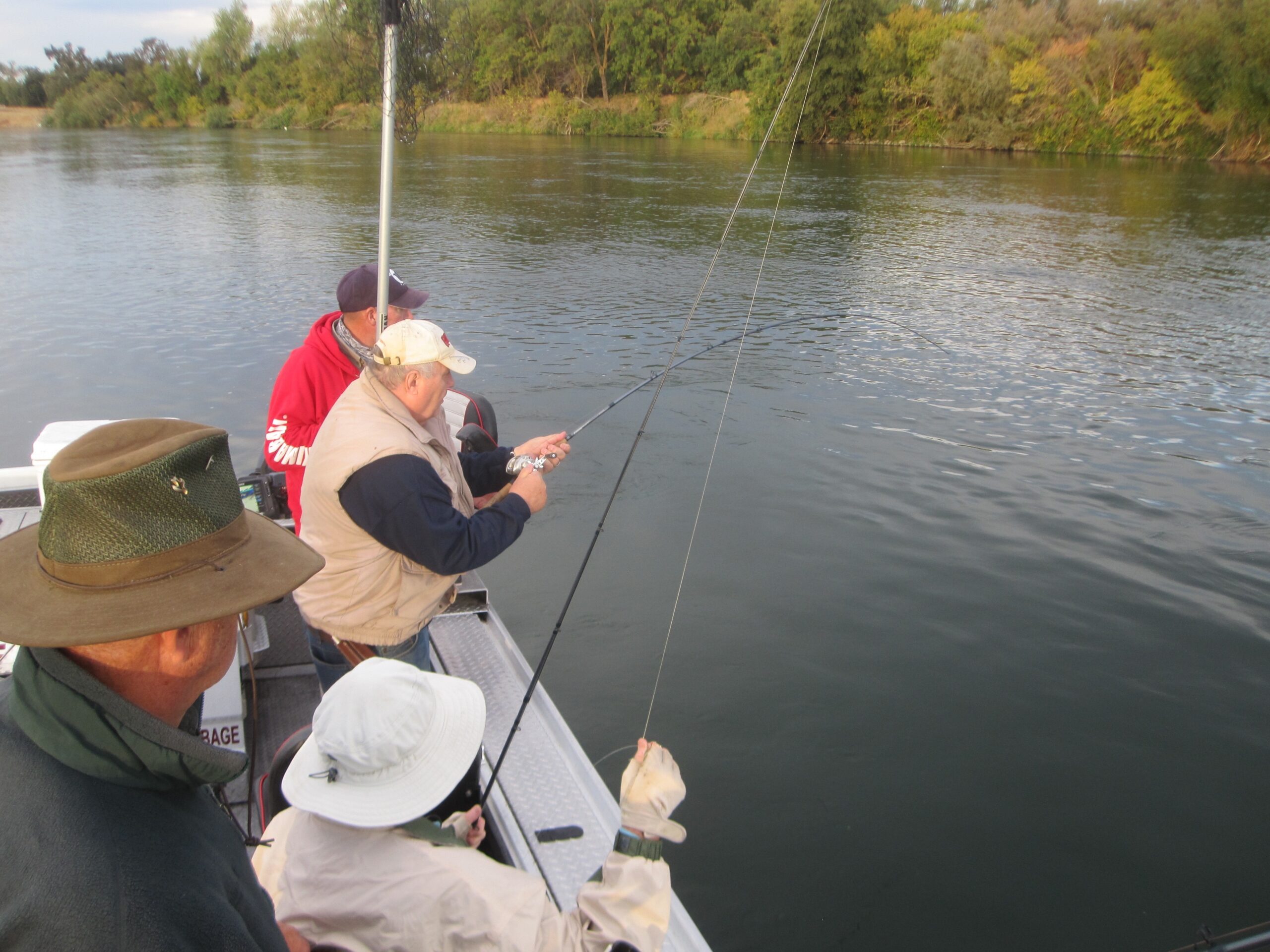
hopes of fighting big kings. (CAL KELLOGG)
BE ‘KWIK’ ABOUT IT
Plug selection matters tremendously as well. Classic salmon offerings like the Kwikfish remain legendary due to their wide-searching wobble and ability to trigger violent reaction strikes from migrating kings. FlatFish- style plugs continue producing salmon, too, particularly when fish want a slower, exaggerated wobble.
By no means are these big salmon lures finesse presentations. They hunt aggressively, push water hard and create heavy vibration signatures salmon can detect from considerable distances away. River kings often strike them out of aggression or territorial instinct rather than pure feeding behavior.
One thing salmon anglers quickly truly ready to fish straight out of the learn, however, is that no plug is package.
SUPER SARDINES
Every serious river salmon plug needs a sardine wrap. This is one of the defining elements of California plug fishing culture – and for good reason. The sardine wrap adds scent, flash and a subtle, wounded baitfish quality that dramatically increases the effectiveness of the lure.
The wrapping process is simple but important. A sardine fillet is trimmed carefully and affixed to the belly of the plug – meat side out – using elastic thread. The wrap must be secured tightly enough to survive trolling current while still remaining streamlined and balanced.
Equally important, the sardine wrap cannot interfere with the action of the bait. That point matters enormously. A poorly wrapped plug loses its hunting action, and its effectiveness drops dramatically. The plug should still wobble aggressively and track properly while carrying the sardine fillet. Properly wrapped, the lure creates a deadly combination of vibration, flash and natural scent that salmon find extremely difficult to ignore.
Experienced salmon anglers often spend a surprising amount of time perfecting sardine wraps, since they know that details matter. Clean wraps fish better, hold longer and maintain proper lure action.

the effectiveness of the lure,” explains author Cal Kellogg. (CAL KELLOGG)
COLORFUL CHOICES
Color selection also plays a major role in the game. Bright colors excel in stained water or low-light conditions, while metallic and baitfish finishes often shine in cleaner flows.
Chartreuse, flame orange, hot pink, and silver and chartreuse combinations remain perennial salmon producers, plus they maintain strong visibility in moving water.
Chrome and blue, black and silver, and metallic baitfish patterns also deserve serious attention, especially during clear-water periods when salmon become more selective.
TUNING IN
Another critically important aspect of plug fishing is tuning. Every plug should run straight with a hard, aggressive hunting wobble. If a lure tracks sideways or rolls excessively, slight adjustments to the eye are necessary until the plug runs correctly. A poorly tuned plug simply won’t consistently produce fish.
Leader setups also tend to be heavier than what trout anglers are accustomed to. Most salmon anglers employ leaders ranging from roughly 20- to 40-pound test, depending on river conditions and fish size. Heavy leaders withstand abrasion from rocks and salmon teeth while also helping stabilize plug action in heavy current.
THINK LIKE THE FISH
Understanding salmon positioning within the river is equally important. Kings rarely distribute randomly. Migrating fish generally follow predictable travel lanes shaped by current speed, depth and structure.
Softer seams adjacent to heavy current become migration highways, while deeper, slower pockets provide resting areas where salmon pause before continuing upstream. This means successful anglers constantly analyze the river itself. You can ask yourself the following questions: Where does the current soften? Where does the river funnel? Where are the deeper slots? Where are fish likely to travel or rest? The answers matter constantly when back-bouncing plugs.
Another thing river newcomers need to understand is that salmon often come in waves. Hours may pass quietly and then suddenly a fresh push of kings enters the system and rods begin burying violently all around the boat. That unpredictability is part of the addiction.
QUITE A RUSH
Few freshwater experiences compare to the moment a heavy Chinook absolutely crushes a back-bounced plug in shallow river currents. The rod buries violently, the reel erupts and chaos instantly fills the boat. Once hooked, river kings become brutally powerful opponents, using the current and their weight and raw strength to full advantage.
At its core, back-bouncing remains one of the finest salmon techniques ever created. It perfectly matches the behavior of migrating Chinook. The system places aggressive vibrating plugs directly into the lanes salmon naturally travel while allowing anglers to systematically dissect productive current seams and holding water.

will open for fishing on July 16. (CAL KELLOGG)
BACK-BOUNCING CURED ROE
While plugs dominate much of the early California river salmon discussion, there are times when nothing outfishes cured roe. Salmon eggs are one of the most natural offerings anglers can present to migrating kings, considering salmon instinctively recognize eggs as food.
Whether feeding opportunistically or reacting aggressively, Chinook will absolutely hammer a properly presented roe cluster under the right conditions. As with plugs, back-bouncing roe revolves around maintaining precise bottom contact while slipping downstream slightly slower than the surrounding current. The setup is fairly straightforward: A three-way swivel is employed with the main line attached to one eye, a dropper line and sinker attached to the second and a roe leader trailing from the third.
As the boat eases backward downstream, the sinker constantly taps and bounces along the bottom while the roe cluster drifts naturally just behind it in the strike zone. The key word here is naturally.
Good roe fishing is all about achieving a believable drift. The sinker should maintain intermittent bait glides freely in the current contact with the bottom while the bait glides freely in the current rather than dragging unnaturally.
This is where experienced salmon anglers separate themselves from beginners. Subtle adjustments in boat speed, sinker weight and line angle dramatically influence how naturally the roe behaves beneath the boat.
Most roe leaders range from roughly 24 to 48 inches, depending on water clarity and current speed. In clear water, I often favor longer leaders because they create a more natural presentation. In dirtier water or heavier current, shorter leaders offer better control and strike detection.
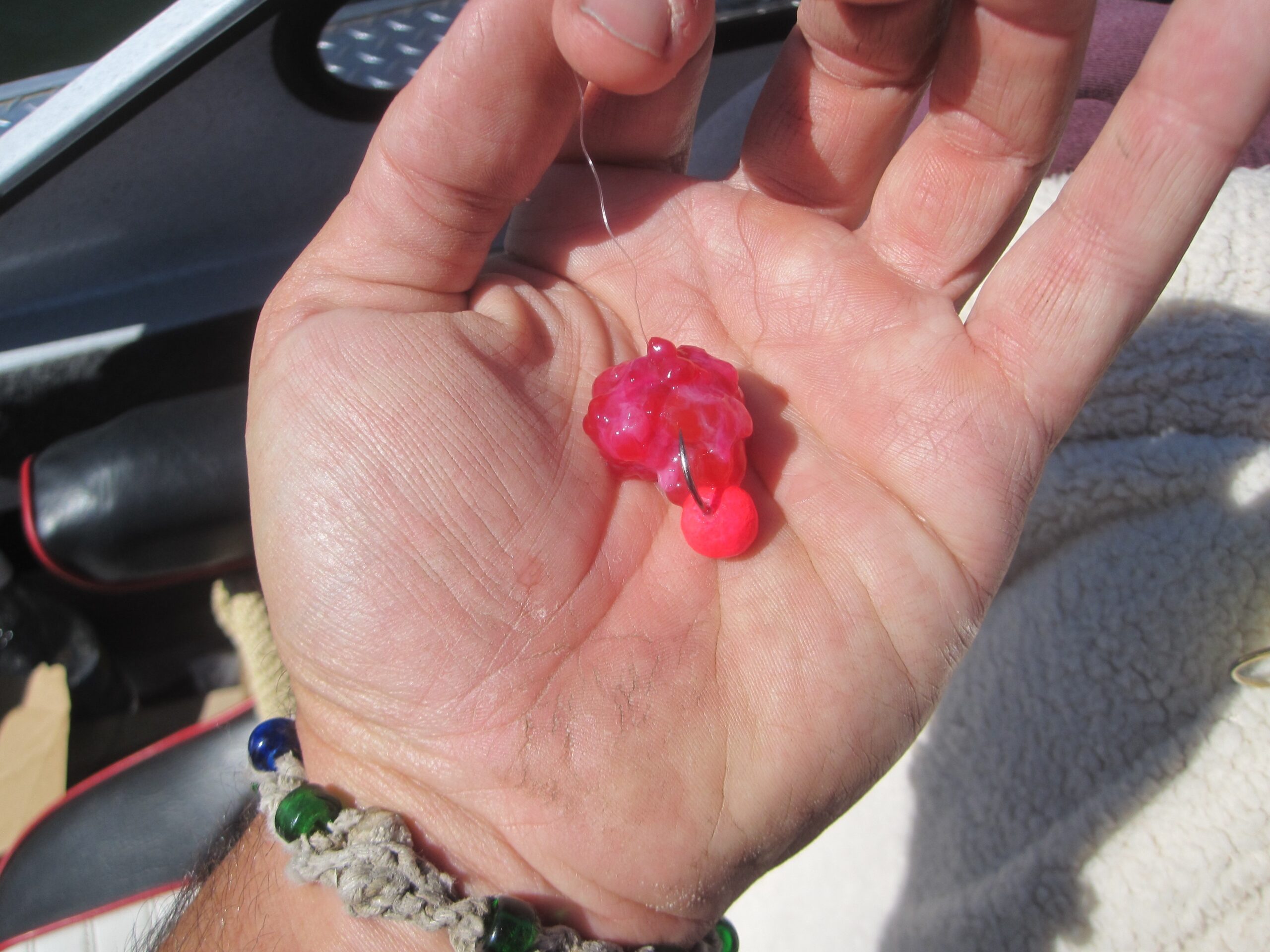
Roe preparation itself is critically important. Fresh uncured eggs catch fish, but properly cured roe is on another level entirely. Good cures toughen the eggs, enhance color, improve scent dispersion and help the bait remain on the hook despite repeated bottom contact and strong current.
Every serious salmon angler eventually develops personal cure preferences involving combinations of salt, sugar, sulfites, dyes and or scent additives. Bright red and orange cures remain standards, with salmon responding strongly to those colors in moving water.
Hooking the roe properly matters too. Most anglers fish roe clusters on bait loops using octopus-style hooks ranging from roughly 2/0 to 5/0 depending on bait size and river conditions. The eggs should appear full and natural without becoming an oversized sloppy mass that spins or drifts unnaturally.
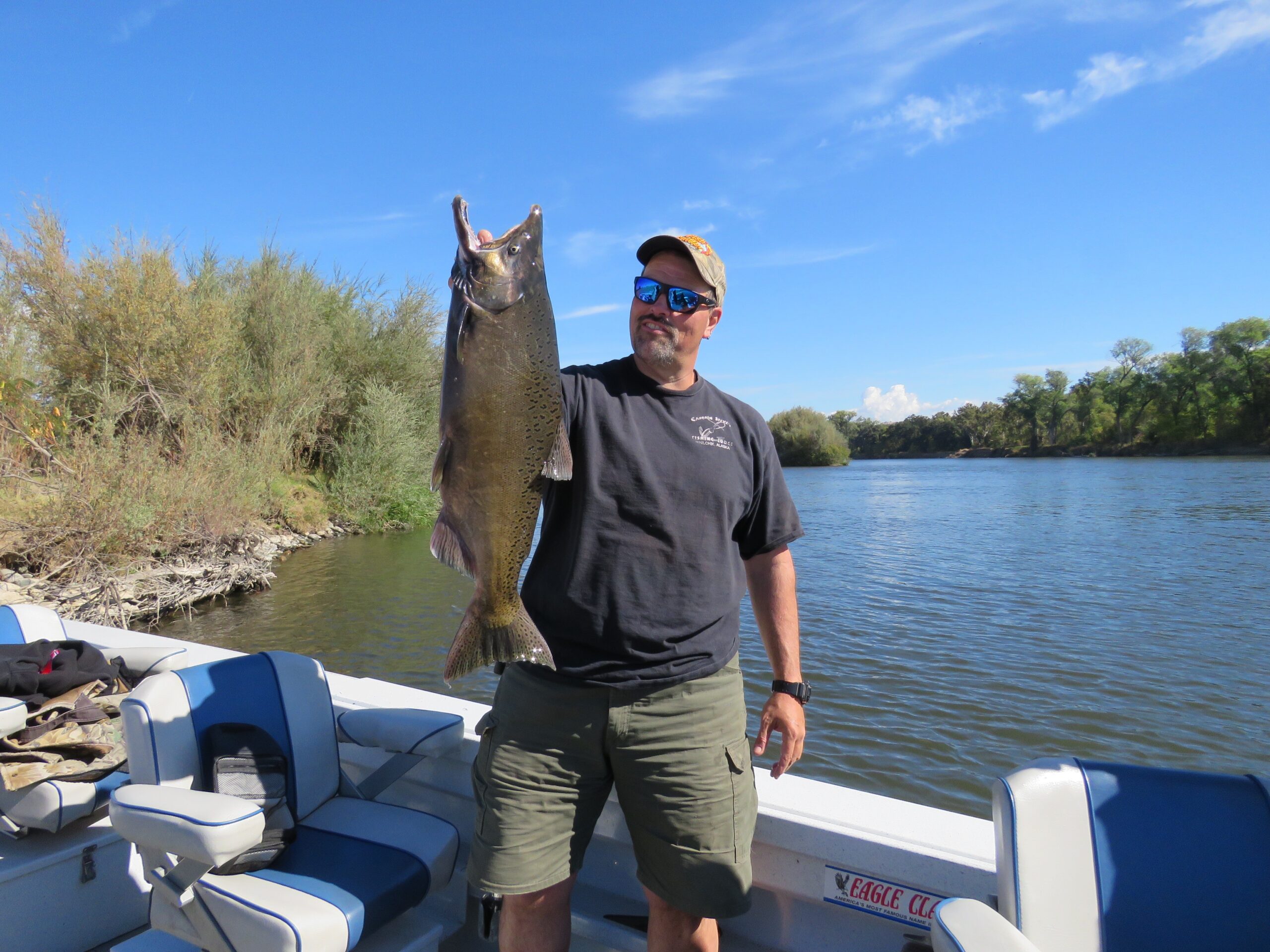
salmon angler Kellogg, who gets essentially
a full season to target kings in Central Valley
rivers. “Veteran anglers will once again sharpen
skills they haven’t fully exercised in years,” he
writes, “while a new generation of fishermen will
finally get the chance to experience the magic of
California king salmon fishing.” (CAL KELLOGG)
A CASE FOR ROE
One major advantage roe holds over plugs is subtlety. While plugs excel at triggering aggressive reaction strikes, roe often shines when salmon become pressured, lethargic or less responsive to loud, vibration-based presentations.
On difficult days, cured roe can dramatically outproduce hardware because it behaves like a genuine natural food source moving naturally with the current.
Again, boat positioning remains enormously important. Successful roe fishermen constantly work productive travel lanes, softer seams adjacent to heavy current, deep troughs and classic salmon-resting water. Migrating kings rarely scatter randomly through a river system. They travel predictable routes, and successful anglers learn to identify and repeatedly work those lanes.
What newcomers will quickly discover about roe fishing is that salmon bites are not always violent. Sometimes kings absolutely hammer the bait, but other times the bite feels surprisingly subtle. A slight hesitation, a soft pull or a heavy sensation where the sinker suddenly feels different may indicate a salmon has inhaled the roe cluster. That’s why concentration matters.
At its core, back-bouncing cured roe remains one of the most refined and productive river salmon techniques ever developed. It combines natural scent, realistic presentation and precise depth control into one deadly system.
When kings become wary of plugs or conditions call for a subtler approach, few methods consistently produce more salmon than properly cured roe cluster drifting naturally through the heart of a migration lane.
FINALLY FISHING AGAIN!
After four years of frustration, closures and uncertainty, California salmon anglers finally have something they’ve been missing for a long time: a real season to look forward to. From the July 16 Central Valley opener through the late fall push of upriver kings, the months ahead promise opportunity, excitement and the return of one of the West Coast’s greatest fishing traditions.
There will be early mornings on the Sacramento, screaming drags in heavy current, chrome kings rolling behind the boat and all the chaos and adrenaline that only river salmon fishing can deliver.
Veteran anglers will once again sharpen skills they haven’t fully exercised in years, while a new generation of fishermen will finally get the chance to experience the magic of California king salmon fishing first-hand. Dust off the plug rods, cure some roe, spool fresh braid and get ready. The kings are coming, and after a long wait California salmon anglers are finally getting their season back. CS
Editor’s note: For more inland salmon fishing season dates and details, check out the California Department of Fish and Wildlife freshwater regulations at wildlife.ca.gov/Fishing/Inland.