Return Of The Ocean Kings: Salmon Trolling Returns To A Normal Saltwater Season In 2026
The following appears in the July issue of California Sportsman:

By Cal Kellogg
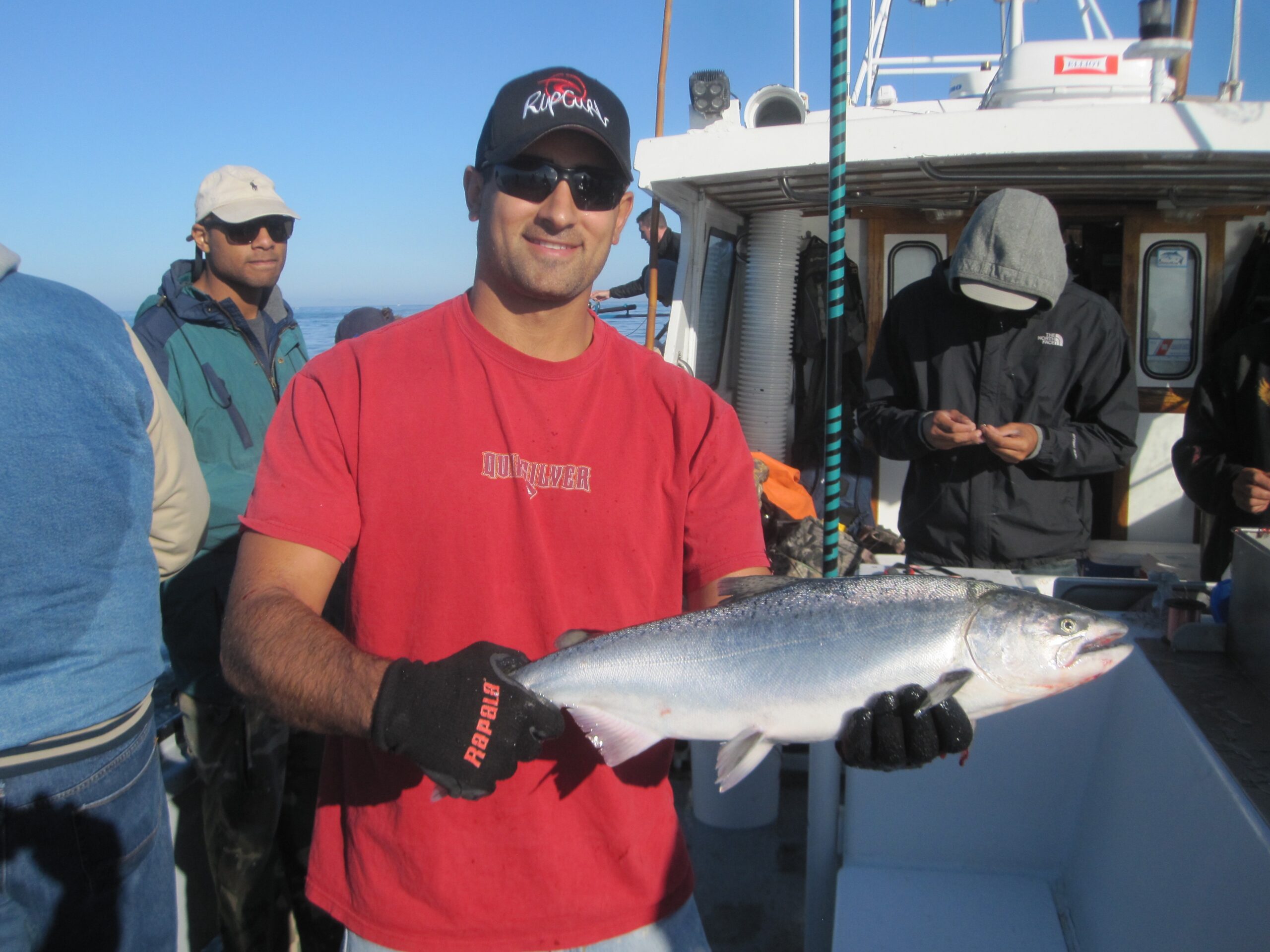
For the first time in several years, California ocean anglers have something they’ve been waiting a long time to hear: Salmon season is back!
Following multiple years of full closures and abbreviated opportunities – like last year – that left charter boats tied to the dock and thousands of anglers wondering when they’d once again hear the scream of a reel as a king salmon peeled line from the spool, Chinook fishing has returned in a meaningful way. Marinas are bustling before daylight, charters are filling quickly, tackle shops are stocking herring and anchovies and salmon fever is once again sweeping the California coast.
Perhaps best of all, anglers finally have something they haven’t enjoyed in years: a real season. Rather than scrambling to squeeze a trip into a handful of open dates, fishermen once again have had the luxury of planning trips around weather, tides and family schedules.
For anyone who’s dreamed of battling a bright Pacific Chinook, there’s never been a better time to climb aboard a charter boat.
RETURN OF THE KINGS
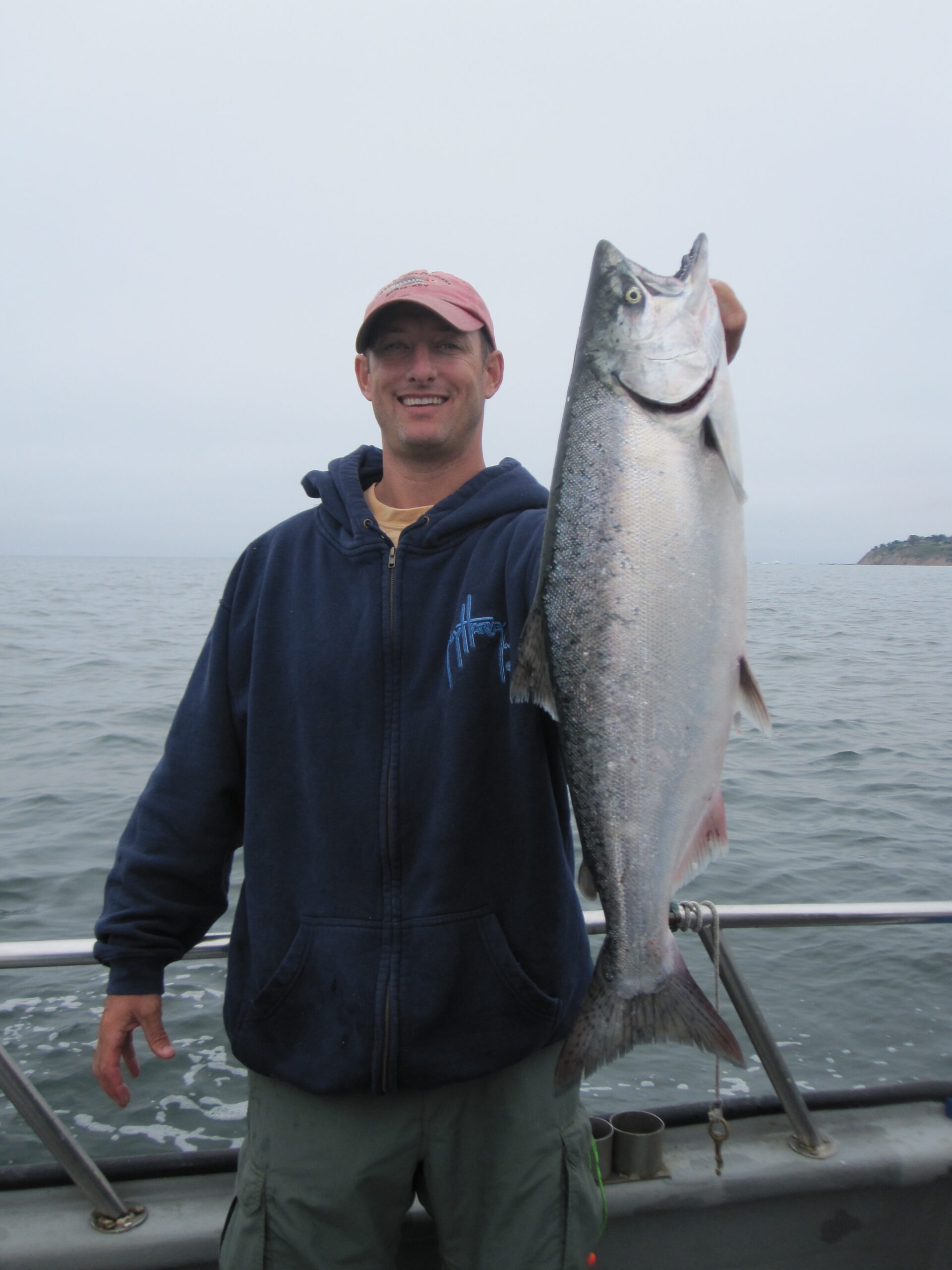
No fish has captured the imagination of California saltwater anglers quite like the Chinook. Powerful, beautiful and among the finest-eating fish that swims, kings have been the undisputed stars of the state’s ocean fishery for generations. And every summer, anglers make the pilgrimage to ports such as Monterey, Santa Cruz, Half Moon Bay, San Francisco and Bodega Bay, hoping to experience one of fishing’s greatest thrills.
While mooching remains an effective technique under the right conditions, trolling continues to account for the overwhelming majority of salmon landed by California’s charter fleet. During the early season, when fish are widely scattered, trolling allows captains to cover water efficiently while searching for schools of feeding kings.
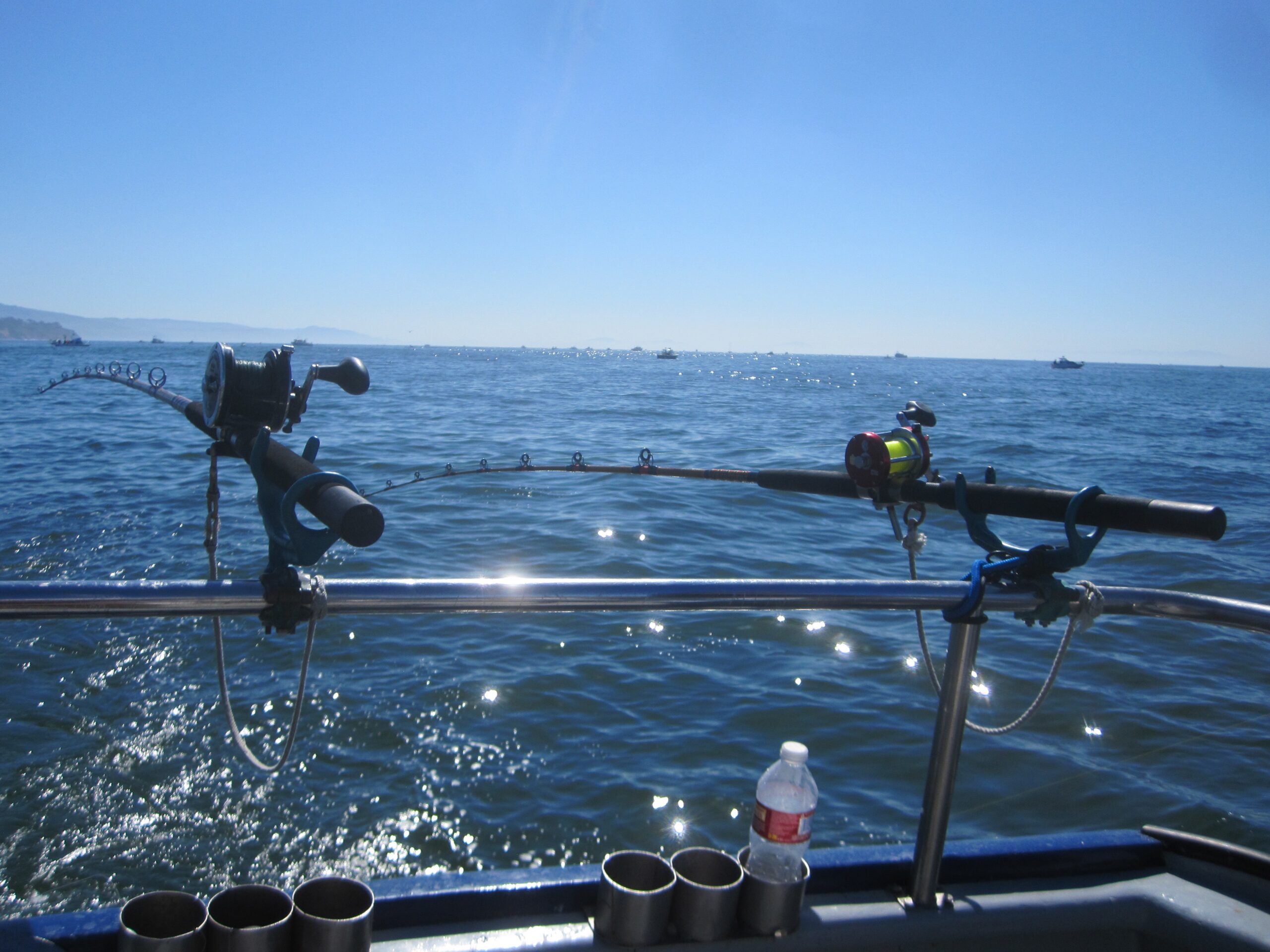
California’s approach to salmon trolling is unlike anything practiced elsewhere on the West Coast. While anglers in the Pacific Northwest rely heavily on downriggers, most California charter boats continue to employ a system that has changed very little over the past 40 years: Heavy round sinkers weighing anywhere from 1 to 4 pounds are attached to the line using spring-loaded sinker releases, often called “dog whistles.”
When a salmon strikes, the release opens and the sinker falls away, allowing the angler to fight the fish without dragging several pounds of lead through the water.
It may look old-fashioned, but generations of successful charter skippers have proven the system’s effectiveness. It is simple, reliable and perfectly suited to fishing a crowded charter boat with 20 or more anglers trolling side by side.
GEAR BASICS
A successful day begins with the proper tackle. Salmon trolling rods represent a study in contrast. They must possess enough backbone to comfortably fish heavy trolling sinkers while remaining limber enough to absorb the blistering runs and violent head shakes of a mature Chinook. Too stiff, and hooks can tear free from the salmon’s soft mouth; too limber, and controlling heavy sinkers becomes difficult.
Modern graphite and composite rods have made selecting tackle easier than ever. Any quality conventional rod measuring between 7 and 8 feet and rated for 15- to 40-pound line will perform well. The rod should be matched with a smooth conventional reel capable of holding at least 200 yards of 25- or 30-pound line. While braid has become increasingly popular in many fisheries, monofilament still enjoys a loyal following among experienced charter anglers, as its built-in stretch cushions sudden surges and helps keep hooks firmly planted during long battles.
At the heart of the California trolling system sits the sinker release. Although several styles are available today, the traditional copper dog whistle remains a favorite among many charter skippers. The release securely holds the heavy trolling
sinker during deployment, yet instantly releases it when a salmon strikes. Once the sinker drops free, the fight becomes dramatically easier for both the angler and the fish.

(CAL KELLOGG)
GOING NATURAL WITH BAIT
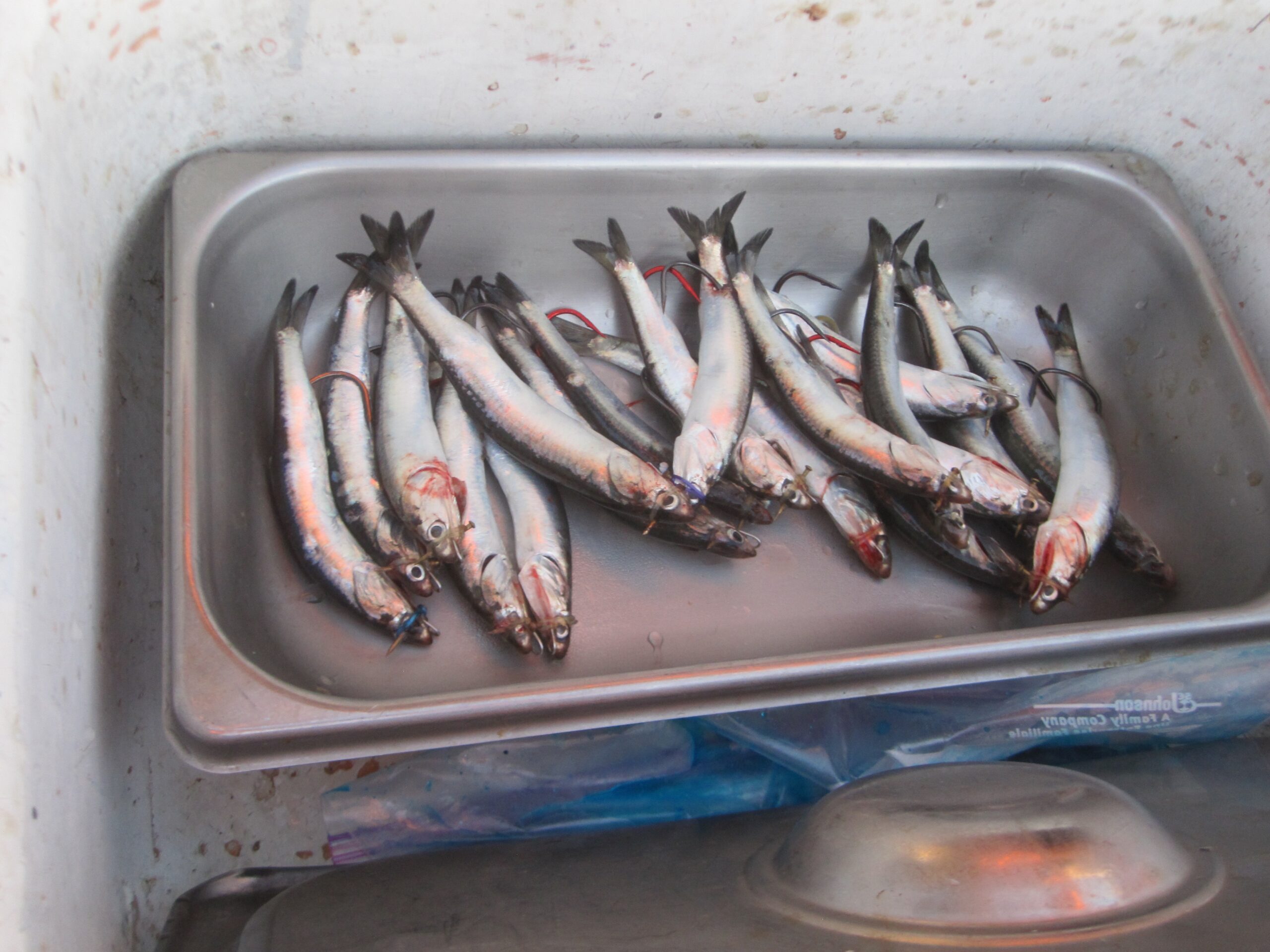
When it comes to terminal tackle, California charter boats remain firmly rooted in tradition. Over the years, a variety of plastic bait heads have appeared on the market with a promise to simplify bait rigging, but step aboard most charter boats and you’ll quickly discover that the overwhelming majority of deckhands continue to rig anchovies and herring using the traditional crowbar method.
Like many aspects of California salmon fishing, it’s a technique passed down from one generation of skippers and deckhands to the next because it consistently produces fish.
The crowbar rig utilizes a long- shanked hook that is carefully inserted through the baitfish after being given a slight bend. That subtle bend causes the anchovy or herring to rotate slowly as it’s trolled through the water. Achieving the perfect roll requires both experience and a practiced hand, and few people become more proficient than charter boat deckhands.
Watching an experienced deckhand prepare a dozen anchovies in just a few minutes is almost an art form. Every bait comes off the rigging table spinning with the same smooth, deliberate roll that has tempted California salmon for decades.

DON’T FORGET THE LURES
Natural bait remains the standard because Chinook spend much of their lives feeding on anchovies, herring, sardines and other baitfish.
When salmon are actively feeding, it’s difficult to improve upon the real thing. Still, experienced skippers know salmon can become surprisingly selective.
On days when natural bait isn’t producing, spoons, Apex lures and hoochies often find their way into the spread. Successful salmon fishermen have always been willing to experiment, and sometimes a simple lure change is all that’s needed to trigger a bite.
GETTING DOWN TO THE FISH
Once the captain announces the target depth, resist the temptation to simply free-spool your rig overboard. Instead, lower the sinker using controlled 1-foot pulls of line. This traditional method keeps anglers fishing at the correct depth while dramatically reducing tangles among the many lines trailing behind the boat. Once the desired depth has been reached, engage the reel’s clicker and place the rod securely in the holder.
Now comes the hardest part of salmon fishing: waiting patiently.
When a salmon strikes, the rod tip buries violently and the reel begins clicking as the line disappears from the spool. The instinctive reaction is to grab the rod immediately, but that’s usually a mistake. Experienced charter anglers allow the fish several seconds to fight against the rod. Those few moments allow the hooks to penetrate securely while also giving the sinker release time to drop the heavy lead away from the line.
Once the sinker has fallen free, remove the rod smoothly from the holder, keep the tip high and simply reel. Resist the urge to pump the rod dramatically, thumb the spool or tighten the drag. Those actions frequently result in lost fish. Instead, maintain steady pressure and listen carefully to the instructions coming from the deckhand. He has likely coached hundreds of anglers through successful salmon battles and knows exactly how to keep a fish buttoned all the way to the landing net.
PICKING THE RIGHT SPOT
One aspect of charter fishing that’s rarely discussed involves where you stand along the rail. Many first-time anglers assume every position offers the same opportunity, but years of observation have convinced me otherwise.
Anglers fishing from the bow often enjoy the first opportunity to intercept approaching salmon before the fish pass beneath the boat. Meanwhile, those working the stern – particularly the rear corners – enjoy the advantage of fishing deeper than everyone else because they don’t have anglers positioned behind them. Those extra few feet can make a surprising difference when salmon are traveling close to the bottom.
Veteran charter anglers understand these subtle advantages, which explains why many arrive at the dock long before boarding begins. While everyone else is searching for coffee and breakfast burritos, the regulars are quietly claiming their favorite positions along the rail.

crew, the silver flash of a king rolling on the surface and the anticipation of
fresh salmon sizzling on the grill later that evening are experiences every angler should enjoy at least once,” the author writes. (CAL KELLOGG)
‘FINELY TUNED OPERATION’
A charter boat is much more than a means of reaching the fishing grounds. It is a finely tuned operation built around teamwork. The captain searches for bait, birds and schools
of salmon while positioning the boat over productive water. Deckhands rig baits, untangle lines, coach anglers and keep the operation running smoothly. Success comes when everyone works together.
After several difficult years, California salmon anglers once again have the opportunity to experience one of the state’s greatest sporting traditions.
There are few sounds in fishing that compare to the sudden eruption of several clickers as multiple salmon charge through the spread.
The excitement that sweeps across the deck, the shouted instructions from the crew, the silver flash of a king rolling on the surface and the anticipation of fresh salmon sizzling on the grill later that evening are experiences every angler should enjoy at least once.
And for the first time in years, those opportunities are back in full swing. The kings have returned, the charter fleet is ready and California anglers once again have every reason to look toward the horizon before dawn with optimism. CS
Editor’s note: California’s ocean salmon seasons will run through August 31 or when the harvest quotas are met.
‘