New GSSA Executive Director On Three H’s That Could Save California Salmon
The following appears in the October issue of California Sportsman:
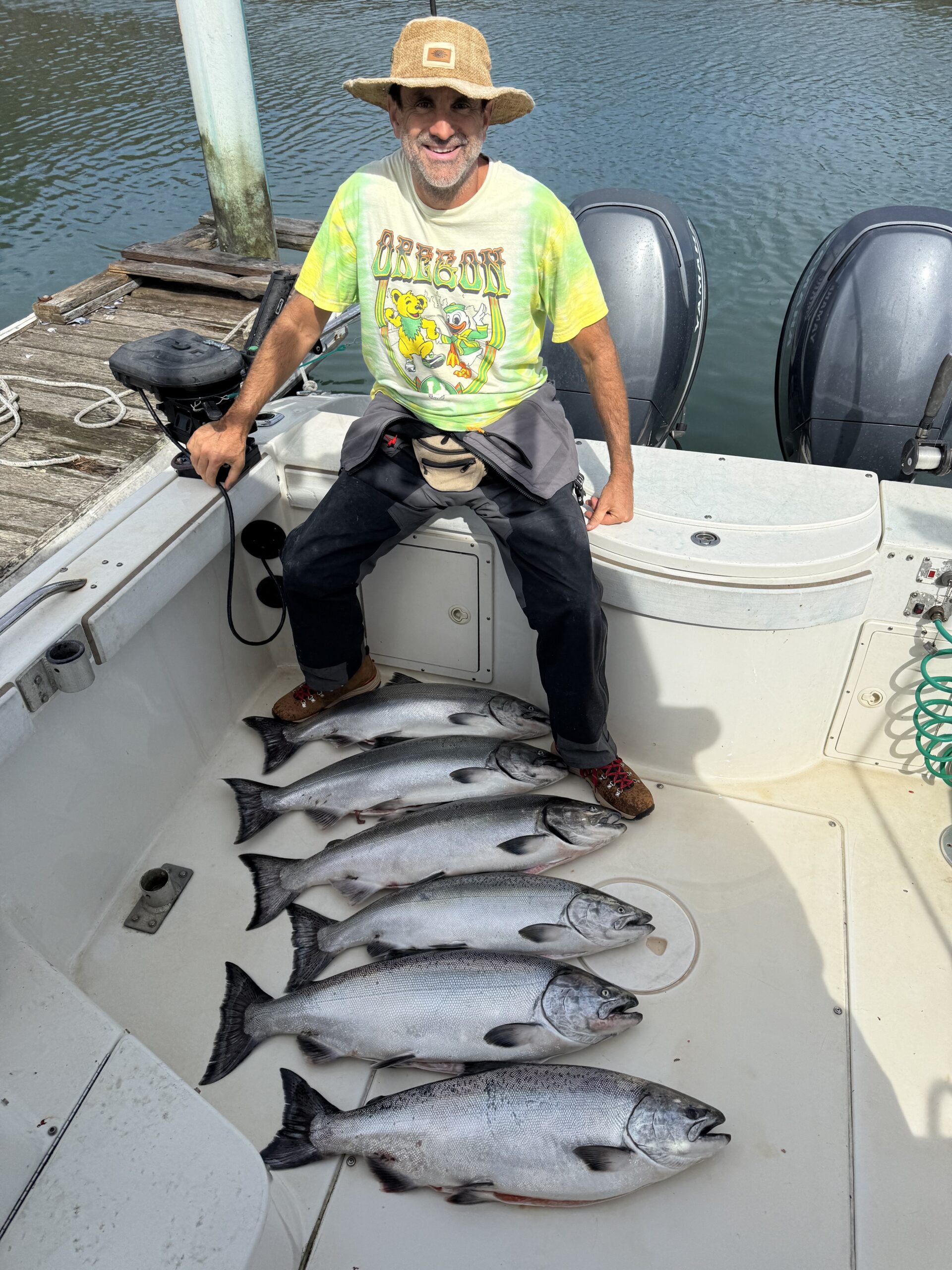
By Chris Cocoles
Who wouldn’t want to appear on and win big on Who Wants To Be A Millionaire? But Michael Frost wants 1 million salmon to swim through San Francisco Bay-Delta Estuary and California’s river systems.
And now, as Frost takes over as the new executive director of the Golden State Salmon Association, he’ll roll up his sleeves and go to work on achieving that milestone. History says it’s a difficult task given the obstacles the fish have and will face going forward.
“If we want to change our minds, we need to be hopeful about something. There has to be some light at the end of the tunnel that we’re working towards,” says Frost, who, in putting salmon into that equation, adds, “The light at the end of the tunnel is the sacredness of the water cycle on this living, breathing planet. Six million salmon swam through this estuary annually a few hundred years ago. We have the ability to improve this region’s water cycle and let nature take its course. The life force of the salmon is so strong that these runs will come roaring back with slightly improved hydrology (volume, timing and temperature of the freshwater flows to the Pacific).”
Frost has been a longtime board member at the conservation and environmental advocacy organization Restore the Delta, so he’s taken center stage in the fight to protect native fish species, not to mention the water war tug of war that has defined California in the 21st century.
“Michael understands both what California salmon mean to people and what it will take to bring these fish back. He brings a combination of leadership experience, business knowledge and a lifelong connection to fishing that will benefit salmon in California,” John McManus, one of Frost’s predecessors as GSSA’s former executive directors and now its senior policy director, said in a press release. “We’re excited to have him leading the organization into its next chapter.”
In a lengthy conversation, Frost talked about myriad issues, including his own backstory of growing up in Redding as an eager angler with his dad, pursuing conservation and environmental causes as he was building a successful career of his own in sales, and his vision for keeping up a longstanding struggle to prevent the extinction of salmon, “a keystone species that is critical for life in this region. If the salmon die, we die.”
“OCEAN PLANET”
Frost was born in 1975, and like many of us from that era, he consumed fiction that depicted a dystopian environment in “the future.” From The Jetsons to The Terminator to Star Wars, we were sold a world without trees, fish and wildlife, but we had video calls, flying cars and lived in sealed plastic spaceships. Food came in a box and everything was post-apocalyptic.
“I never accepted this dystopia that was constantly sold to us in the 20th century,” he says. “We create our own future.
Humanity can live within the rhythms of nature, honor biodiversity and harvest fish. Again, it’s OK to kill and eat fish! Supporting the water cycle, keystone species, microorganisms, insects, etc., will lead us to 1 million (or more) salmon swimming through the (San Francisco) Bay every year.”
“Are we facing climate change? Yes; it is obvious to anybody tracking the weather and the fact that albacore are being caught in Alaska. We know how to mitigate this trend. We know how to improve hydrology for fish. We have agency over our lives and this world. Humanity does not exist separately and distinctly from the environment. We are the environment.”
And Frost, particularly in his new post with GSSA, is charged with the task of increasing salmon runs in a rapidly warming world. “It’s an ocean planet. The entire watershed and Bay-Delta Estuary are all part of the same system. The best news I have for you is that these natural systems are incredibly strong and resilient; we need to give them a little bit more water, a few more wetlands/ floodplains, and room to ebb and flow and breathe,” Frost says.
“It’s the water cycle, or the biotic pump, that keeps us alive. The clouds form over the ocean. Prevailing winds blow this airborne moisture inland and drop the precipitation on the mountains in the form of snow. The mountains send water and sediment/minerals back to the ocean while the marine world renews the cycle by delivering high-nitrogen fertilizer to the mountains and valleys in the form of salmon.”
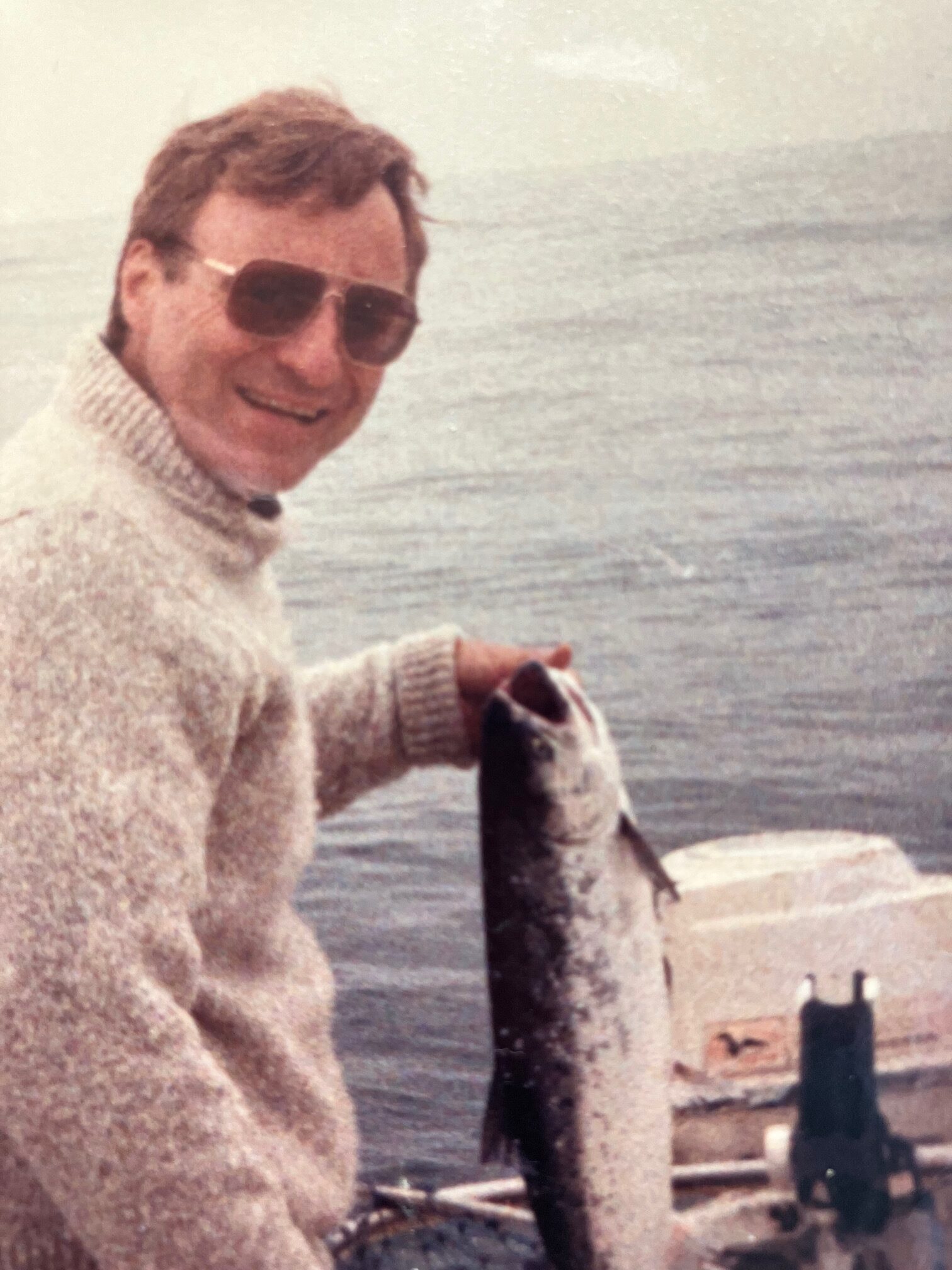
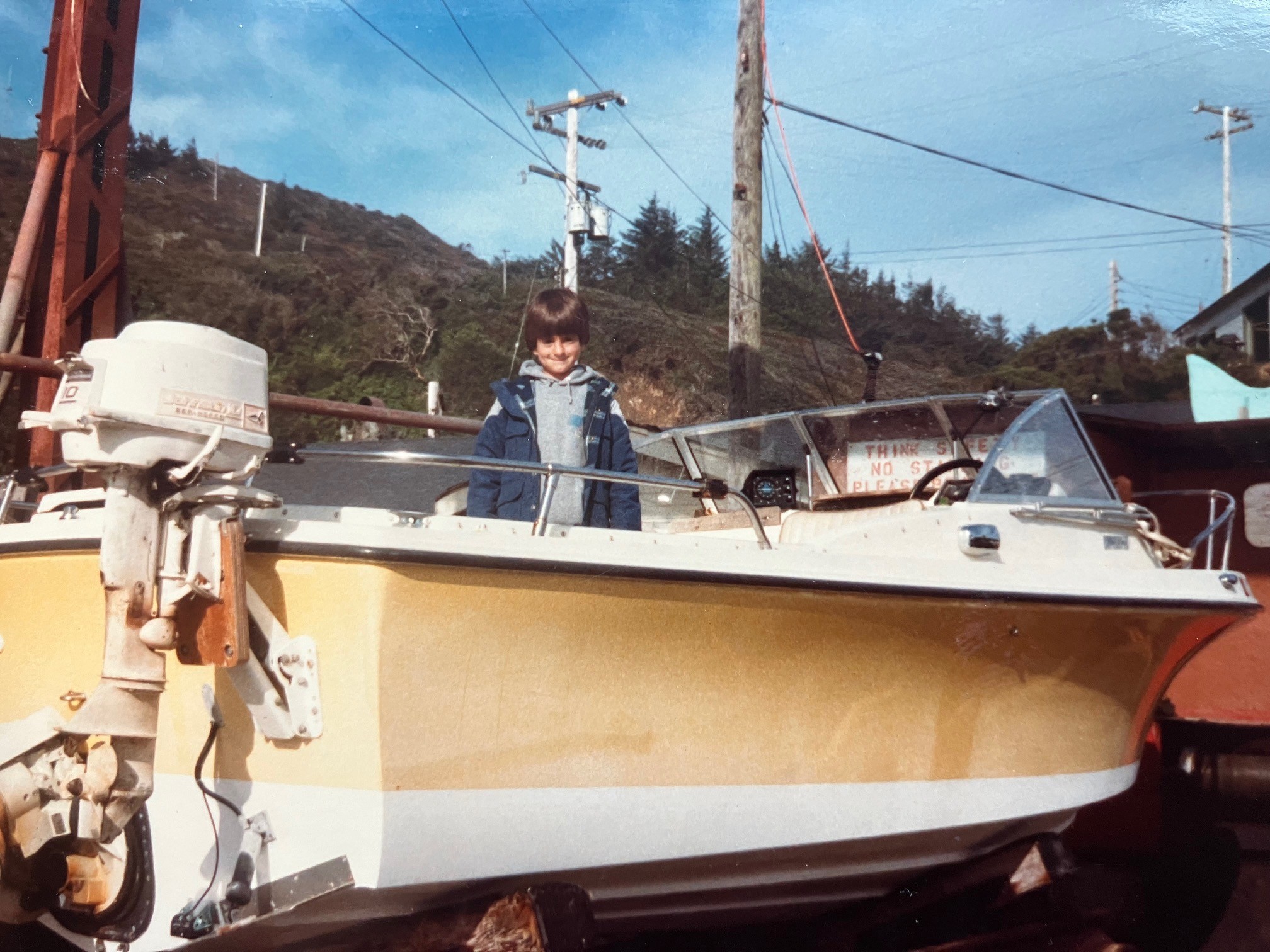
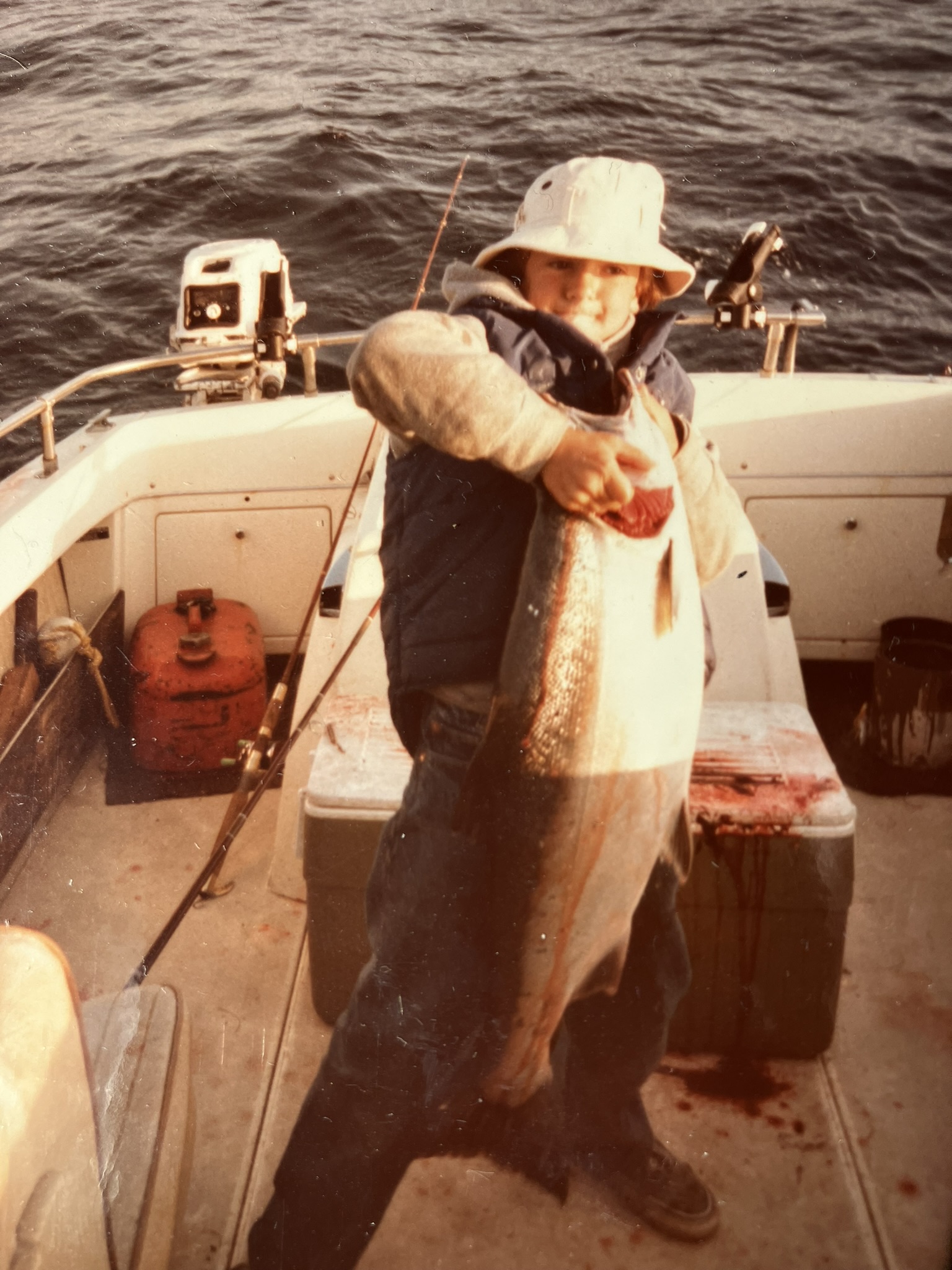
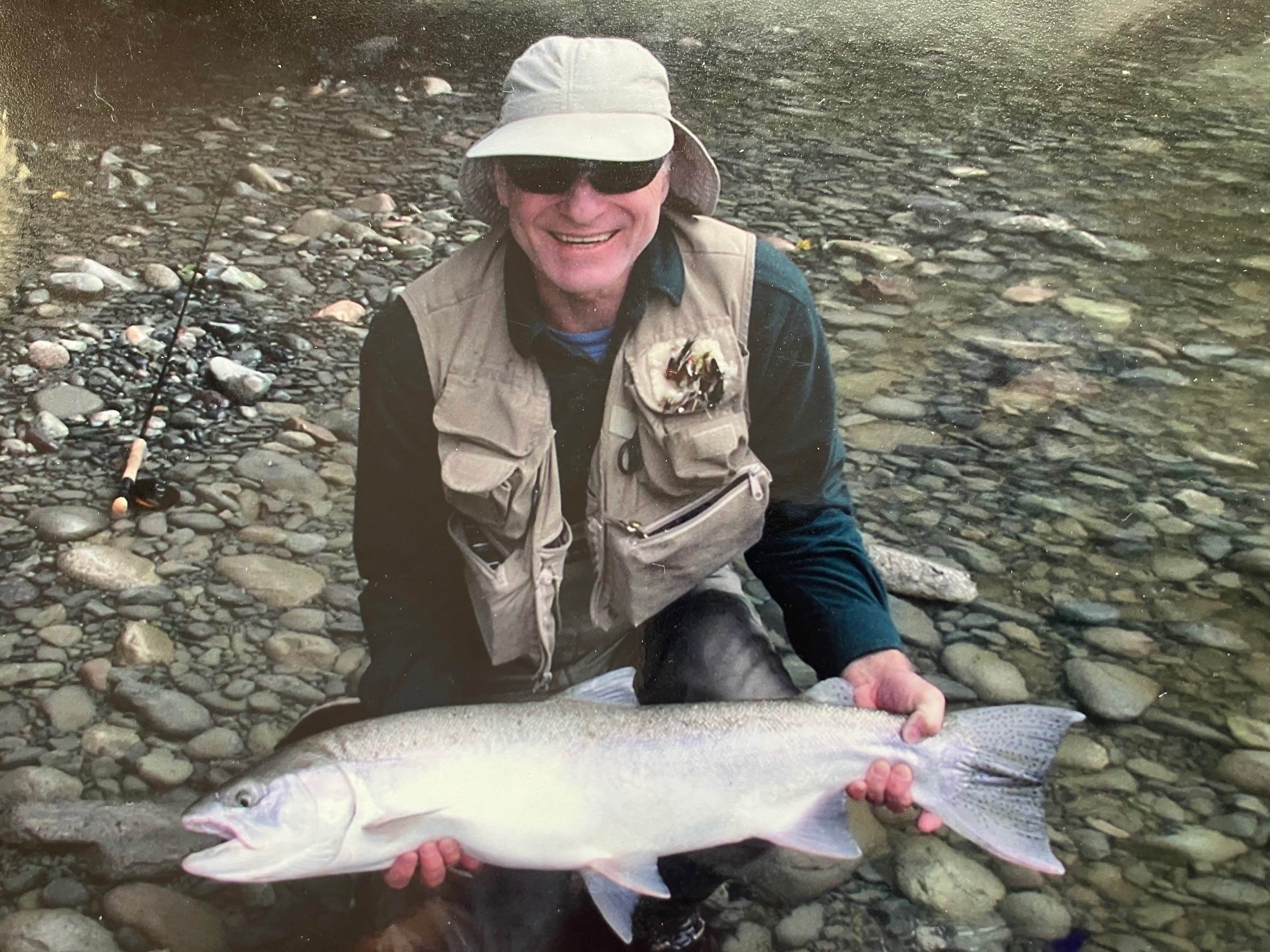
salmon fishing boat when runs crashed in the early 1990s. But both father and son have preached and worked in the conservation arena over the years,
something that Michael takes a lot of pride in as his career has evolved working with Restore the Delta and now GSSA. (MICHAEL FROST)
FISHING FASCINATION
Growing up in Redding, a Northern California bastion for outdoor adventure and where hunters and anglers thrive, Michael Frost learned how to appreciate the natural world from his father, Dan.
The Frosts fished for anything that swims, from fly fishing for trout to bass, bluegill and catfish. But it was their summers in Humboldt County targeting Chinook and coho salmon in the ocean that became a life-altering passion.
The salmon fishing was a thrill for young Michael whether it was quick limits or long days. By the early 1990s, Chinook and coho numbers crashed in Humboldt County and seasons were cancelled, similar to the Bay Area in the 2020s.
“My salmon fishing experience was the most intense between the ages of 5 and 16. I was born in 1975, so from 1980 to 1991, we caught a bunch of fish in the beginning and in the middle, but at the end it went bad really fast,” he says, learning a painful lesson about how even something that seemed so indestructible has a limit.
“Nobody really wants to accept limits. We’d like for there to be unlimited amounts of everything in perpetuity,” Frost adds. “So that motivated me significantly to lookback in time for what it was like before, what it’s like now and what it will be going forward.”
One of the key moments of Michael Frost’s childhood was when his dad recognized the struggles salmon stocks were having in the 1990s and decided to sell the family’s boat. Fortunately, the fishing trips remained, and to this day father and son still get out together to wet a line, including far- flung getaways to destinations like Belize, Mexico and the Australian territory of Christmas Island.
“In 1992 he said, ‘Mike, it doesn’t make sense for us to have the boat anymore. I’m heartbroken about it.’ I wasn’t necessarily bummed that he sold the boat,” Michael Frost says. “I was bummed that the resource was gone. What that meant was much greater than me. I was benefiting from that abundance and biodiversity, and when those fish disappeared, that struck a chord within my soul.”
Dan Frost also found himself contributing to the cause of conservation, having worked with the Planning and Conservation League, Sacramento River Preservation Trust and the Shasta Land Trust. That his son has followed in those footsteps might not have been preordained, but it didn’t hurt that it was part of the Frost family’s DNA.
“He didn’t get too spiritual with it, but he just emphasized the value, awe and the wonder of it all,” Frost says of the importance of salmon. “This was here before us and we’re so lucky to participate in this cycle and to eat these fish and protect them. He spelled it out through his actions. We have agency. Our actions matter.”
ALWAYS LOOKING AHEAD
Frost lives for the rush he feels when preparing for a fishing trip.
“Two things that have always lit me up in every possible way are the preparation and getting up early in the morning,” he says. “What does the wind look like? What time is the sun coming up? What are the seasonal patterns I need to be aware of? Is there any rain? Is it high pressure or low pressure? What are all those things?” he asks. “If I’m fishing on Saturday, then Wednesday, Thursday and Friday I’m paying attention to what’s going on. Not only do I potentially get to catch fish, but I have an infinite amount of variables. Where do I go? Ocean, Delta or river? Wind? Swell? Do I hike and wade or float the river? Do I go deep or go shallow? There’s a million things. It is the most primal human activity … having control over what I’m doing, harvesting food and seeing wildlife … because all the animals need to come down to the river to get a drink of water.”

DOING GOOD THINGS IN THE DELTA
Frost’s time with Restore the Delta dates back to 2009, and in the press release announcing his hiring, Golden State Salmon Association said of Frost, “His conservation work has focused not only on protecting the Delta and its fisheries, but also on demonstrating the economic value of healthy rivers, fisheries and natural resources to all Californians.”
And one of the defining issues facing Michael Frost is the controversial Delta Tunnel project. The water diversion project, which has been supported vigorously by California Governor and likely 2028 presidential contender Gavin Newsom, is thought to have potentially devastating effects on already struggling numbers of salmon, endangered Delta smelt and other anadromous fish.
“The Delta Tunnel makes no sense. The monetary costs, environmental costs and opportunity costs are too high. Every step we take toward the Delta Tunnel is a step in the wrong direction,” he says.
“So we need to place value on hydrology and make sure the right amount of water, at the right temperature, is flowing to the ocean at the right time. The Bay-Delta watershed hydrology evolved over thousands of years. Mimicking natural flows maintains water quality … drinking water, ground water and irrigation water. Whatever benefits native fish will benefit the climate, weather patterns and the stability of everything. Ideas like Delta Tunnel and Sites Reservoir are too disruptive and will exacerbate climate change and droughts. Utility bills and taxes would increase with these unnecessary, decades-long infrastructure projects,” Frost concludes.
“The assumptions that underwrote these ideas in the 19th and 20th enturies don’t add up in 2026 and beyond. These are future stranded assets and make no sense for people or the environment. The idea of a reliable water supply is incredibly attractive, but it is disingenuous. California water supply is year to year. We must prepare for a drought and flood annually. While accepting this reality is emotionally unsatisfying, there’s no escape. Everybody must adapt to dry years; not just fish and fishermen. When the state is selling the dream of a ‘reliable’ water supply, they’re really asking you to buy the nightmare of bad underwriting, higher taxes, higher utility bills, and decades of construction cost/timing overruns.”
And it’s also fights like the Delta Tunnel that have made Restore the Delta and his new GSSA position such an integral part about who Frost is.
“We’ve had numerous wins and many battles. The federal government has been both ally and foe (at different times), and the state government has been pushing the Delta Tunnel forever. “Well over $1 billion has been spent planning a project that doesn’t pencil,” he says of his time at Restore the Delta.
“What Restore the Delta has proven is that the Delta Tunnel and Sites Reservoir are bad investments. Regional self-sufficiency is the low-cost leader. The California Water Renaissance Plan (cawaterrenaissance.org) shifts California away from expensive, unreliable water imports towards local, sustainable solutions that deliver water at a price that we can afford.”
GETTING TO THE DAM POINTS
When it comes to the Golden State’s surplus of dams, Frost says many of them are way past their prime.
“It’s not a secret that a large percentage of the existing dams are past their useful life and don’t benefit people,” he says. “They’re actually massive liabilities – from seismic risk to being silted in. Many dams are not generating electricity or holding water. These were never permanent structures. They’re either rebuilt or decommissioned over time.”
And with four dams near the California and Oregon border now having been removed from the Klamath River, benefiting salmon and steelhead by opening up much more former spawning and rearing habitat, Frost will be watching the long-term impact from those structures coming down.
To the north on Washington’s Olympic Peninsula, a similar project that tore down two dams on the Elwha River has proven to be a boon for salmon on a now free-flowing waterway. Another dam dilemma closer to home, the proposed removal of the Eel River’s Potter Valley Project structure, could also prove to be a fruitful exercise.
“They’re great case studies,” Frost says about what’s happened on the Elwha and what could be in store on the Klamath. “More dams won’t give us more water. We can divert water from rivers the right way. California doesn’t need so many dams to pull water out of rivers. We can do it simply and easily, and no one’s going to go thirsty. We can’t get too possessive or nostalgic over these dams; they were temporary projects to begin with. The temporary nature of these dams becomes very emotional. The true costs are very real.
The Klamath dams didn’t store any water, couldn’t generate electricity and were filled with toxic algae for 20 years before being decommissioned. Sometimes we need to ask, ‘What are we trying to achieve (by keeping these massive liabilities)?’”
MENTORS AND MORE
Three people Frost has and will continue to lean on include two of his predecessors, McManus and Vance Staplin, who he is succeeding as Golden State Salmon Association’s executive director.
“They’re working with me significantly right now. They’re expert fishermen. John’s a great writer, incredibly creative and has a wealth of experience with environmental organizations as well as the media,” Frost says. “Vance is an expert in marketing and meeting with people, networking, and really being tied in with the fishing community – all the guides and everyone else. He’s helped me tremendously.”
Then there is Barbara Barigan- Parilla, Restore the Delta’s executive director, who has worked with Frost since 2009. He says her timing of having “a very strategic sense of what to do and when to do it” has been influential in his own career as a crusader for conservation and environmental matters.
“She has maintained impeccable credibility over the years with hard work and dedication,” he says. “Just ethical and truthful and strategic.
One of her greatest qualities is her commitment to mentoring future generations. She has affected hundreds and shown them the process. She is a great mentor of mine.”
THE THREE H’S FOR PRESERVING SALMON
For Frost, protecting and enhancing California’s salmon can be boiled down to three “H” x-factors: hydrology, habitat and hatcheries.
HYDROLOGY
Of the three, Frost says hydrology is the foundation – water cycles’ ebb and flow. Drought conditions are normal in California and must factor into planning. There is no reason to be surprised by a drought or flood in California. Making fish, fishermen and the businesses that rely on them pay the price for natural, predictable weather patterns is a crime against the environment and humanity, Frost declares.
The salmon fishing closures have been devastating for thousands of fishermen and supporting businesses. The 2026 salmon season has been an extraordinary success and has breathed life into the fishing community.
“It’s year to year. There was a seven-year drought in the 1980s and ’90s when I was growing up. Over the last 2,000 years, there have been multiple droughts over 100 years. A recent four years nearly brought us to our knees. Anything is possible, and we need to prepare for a drought and a flood every year. We need to come to grips with that and just understand that it’s year to year,” Frost says. “And we need to enforce the regulations currently on the books to protect fish and water quality. We need to improve the hydrology as best as we possibly can. Because yes, ideally, we can go salmon fishing every single year.”
HABITAT
GSSA advocates for practical, science-driven restoration projects that rebuild spawning and rearing habitat. Through strong partnerships with agencies, conservation groups and local communities, the organization focuses on restoring side channels, floodplains and river margins.
“We can’t rebuild salmon runs without rebuilding their homes! Restoring these shaded, slow-moving areas provides the perfect place for young salmon to feed, grow and complete their journey to the Pacific,” Frost says.
HATCHERIES
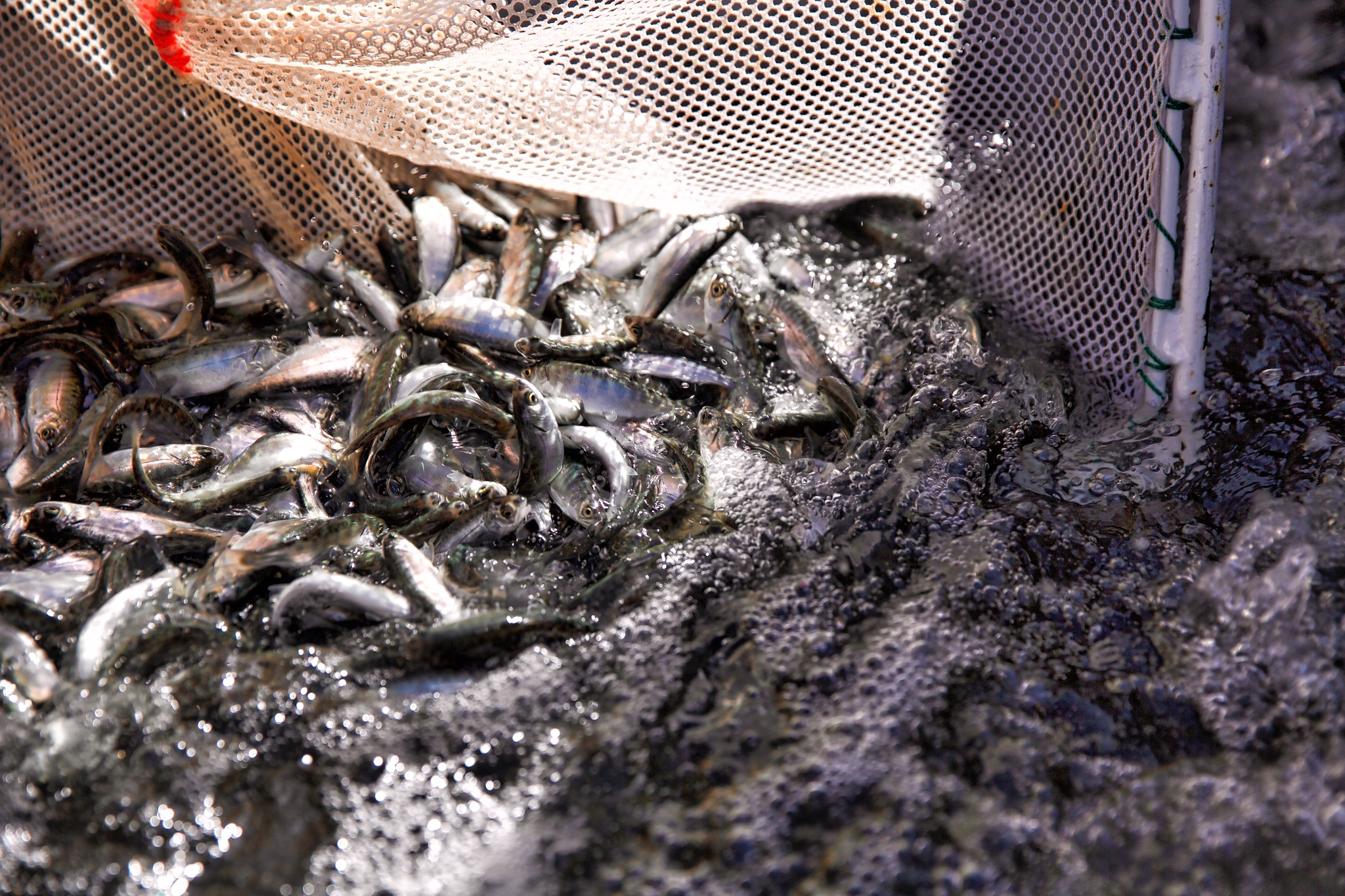
Hatcheries are a necessity in 2026 and beyond to protect salmon runs. Over 75 percent of salmon spawning habitat is blocked by dams. Hatcheries mitigate this reality and are, as Frost emphasizes, “absolutely necessary to protect our fishery.”
“GSSA is committed to supporting hatcheries. We are immensely proud of the work we have done; a few examples include persuading CDFW and USFWS to make smarter releases of smolt further west in the Bay, a Coleman Hatchery pilot program to test fry release via truck, an additional 2 million fry released from Coleman Hatchery with Parent-Based Tagging, and improved infrastructure for trucking fish in dry years,” Frost says. “We will continue to support hatcheries and their important work to keep these fish swimming through the estuary.”
ROAD TO A MILLION FISH
So how does a state that has seen salmon suffer due to drought, combative politics and, at times, poorly managed fisheries and water policies resurrect itself?
It’s one of the challenges Frost will try and tackle as he embarks on this new journey. The gig won’t be an easy one, but it’s a challenge he relishes and was born to solve.
“Improved hydrology, improved enforcement of state and federal regulations protecting endangered salmon are needed for 1 million fish coming through. And we shouldn’t be forced to wait for only high-water years for success. Consistent success is achievable,” he says.
“There used to be 6 million salmon that swam through (San Francisco Bay), so we know that’s possible. Considering the society we’ve laid down over the top of it, I think we need to mitigate those expectations a little bit (for now). But right now our goal is a million fish a year.” CS
Editor’s note: For more on Golden State Salmon Association, check out its website (goldenstatesalmon.org). Follow on X (@goldenstsalmon) and like at facebook.com/goldenstatesalmon.
Sidebar AN ORGANIZATION’S SALMON SAVING LEGACY
New Golden State Salmon Association executive director Michael Frost had this to say when the organization sent out an early September press release to announce his hire.
“The fate of salmon and humanity are intertwined in California. Rebuilding these runs is possible, and I’m looking forward to helping GSSA make it happen.”
And this “coalition that includes commercial and recreational salmon fishermen and women, related businesses, restaurants, a native tribe, environmentalists, elected officials, families, and communities that rely on salmon” could always use some help from those Californians who also want to see salmon runs continue for generations to come.
Membership in GSSA starts at just $35 a year, which “helps protect salmon, support fishing communities and sustain California’s rivers and coastlines.”
Adds Frost, “We do the work that nobody else will do. We don’t take money or support from corporate agri-business or big water interests. We have great contacts and we work together with state and federal government, and we’re a source of information. We do education and outreach with people. And we do the hard work.
“We all have to go out there and make a living, pay the rent and get by in this world. But a couple of bucks – small donations or large donations – to Golden State Salmon Association will go towards protecting biodiversity, which includes salmon, and which includes us at the end of the day. The salmon die; we die.”
To become a Golden State Salmon Association member, go to goldenstatesalmon.org/join. Donate at goldenstatesalmon.salsalabs.org/donation. CC