Folsom: A Lake On The Rise In Sacramento Area
The following appears in the April issue of California Sportsman:

By Cal Kellogg
The first rod loaded just minutes after we settled into our troll off Folsom Point. It wasn’t a violent, drag-screaming takedown, but a steady pull that telegraphed through the rod and into my hands. I eased the rod free, felt the fish surge and grinned. “We’re on,” I said, more to myself than to Jerry Lampkin, who was already glancing back from the helm with that calm guide’s look that says he expected this.
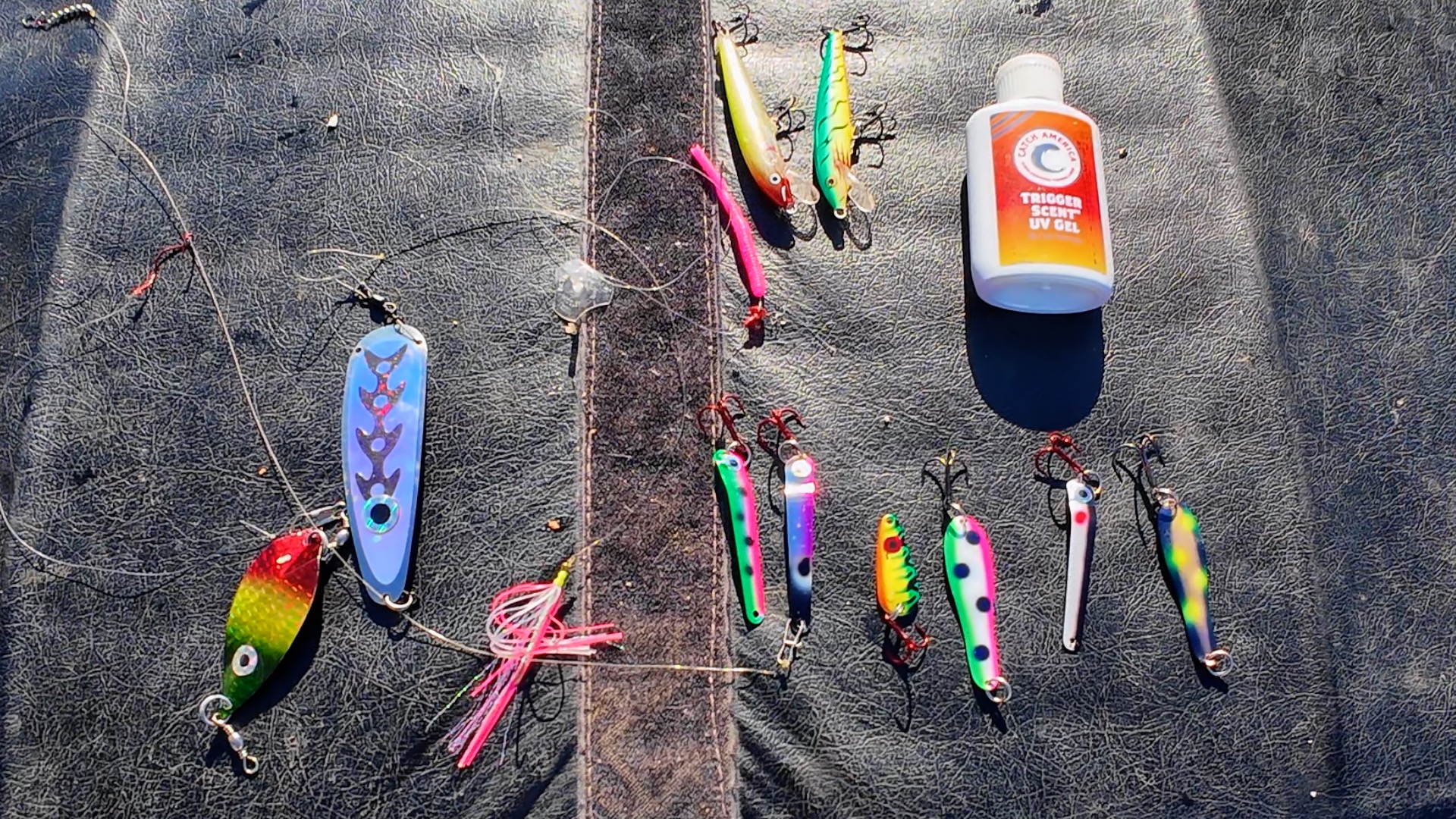
I’d met up with Jerry of TNG Guide Service (tngguideservice .com) and his buddy Steve Burgess of the Rooster Tails Fishing Club (roostertailsfishingclub.org) for a morning run at Folsom Reservoir. We set up in the main body off Folsom Point and began trolling the top 15 feet of the water column. It didn’t take long to realize the lake was ready to cooperate. Rapalas, pink Trout Trix Worms, Trigger Spoon Juniors and full-size Trigger Spoons all took turns getting hammered.
The fish weren’t giants, but they were plentiful and willing. In that first stretch we landed a dozen rainbows to 16 inches, most of them bright planted fish, but mixed in were a few hard-fighting holdovers that had clearly been in the system long enough to toughen up.
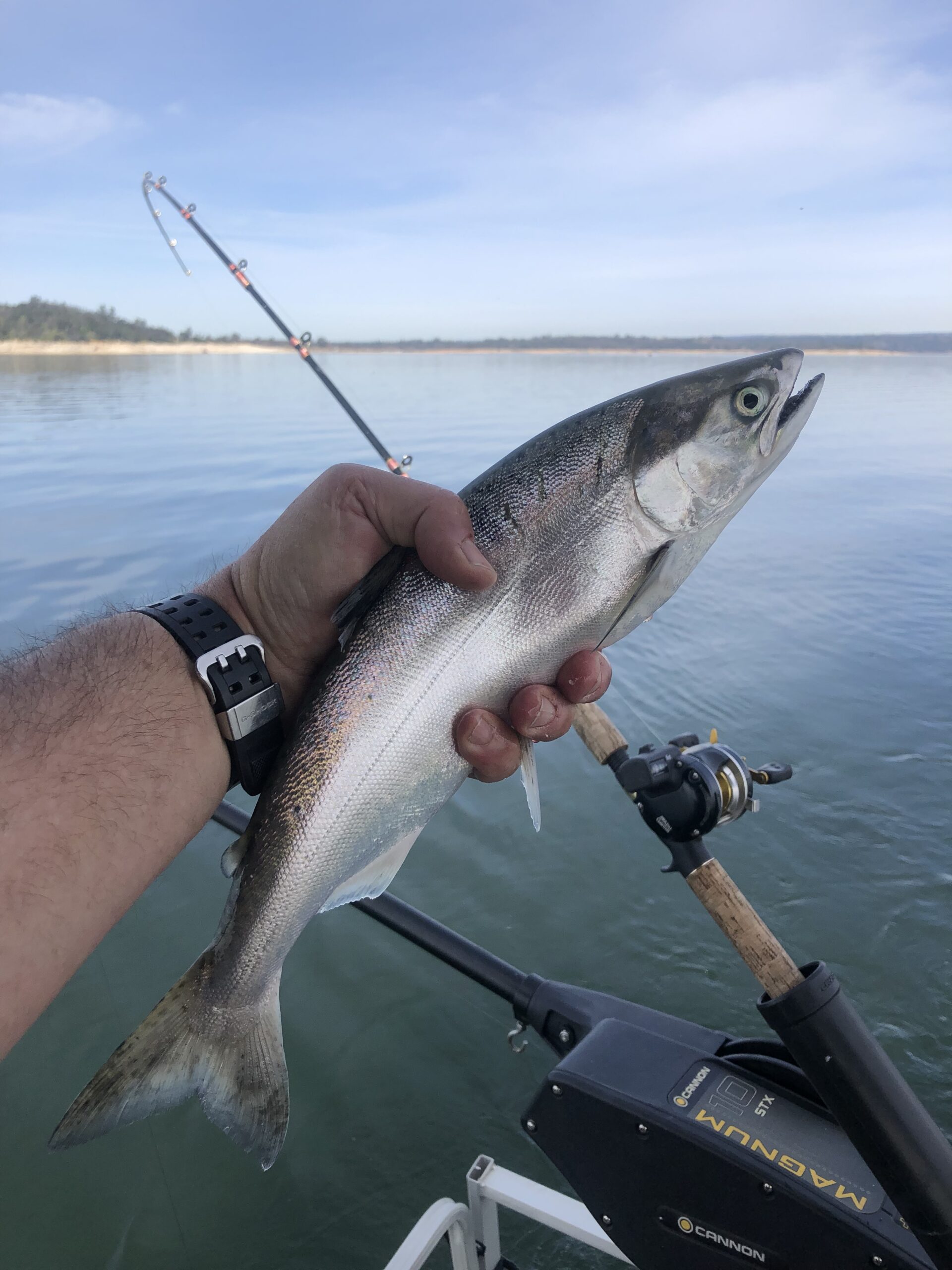
When the bite tapered, Jerry didn’t hesitate. We pulled lines and ran up the North Fork, sliding into position near Anderson Creek. It didn’t take long to confirm the move. Over the next stretch we put another 10 fish in the boat. Most were rainbows that crushed Trigger Spoon Juniors and Popped-Eyed spoons that we ran high in the water column, but two fish stood out. They were 16-inch landlocked kings that nailed trolling flies fished 30 feet deep behind a 6-inch dodger. They weren’t huge, but they were pure muscle and fought like fish with somewhere to go.
That day was more than just a solid trip. It was a confirmation.
Folsom is already fishing well, and if the current trajectory holds, this reservoir is poised to be something special as winter gives way to spring.
WATER LEVEL ON THE UPSWING
The lake is rising, and by the time you read this there’s a very good chance Folsom will be pushing toward full pool. That matters. High water changes everything. It floods fresh shoreline habitat, stimulates forage production and spreads fish out across newly available structure. It also tends to stabilize water temperatures in late winter and early spring, which keeps trout active longer in the shallows and gives salmon more room to roam.
The encouraging part is that the trout fishing is already strong before the reservoir even tops off. When you’re catching a couple dozen rainbows in a short morning session in midwinter conditions, that’s a sign the system is healthy. And as the lake fills and the food chain ramps up, there’s every reason to expect the action to intensify.
Folsom has always been a challenging lake. It’s big, it’s dynamic and it can humble you in a hurry. The water level fluctuates dramatically year to year, and those swings reposition fish constantly. Add in heavy recreational pressure and proximity to Sacramento, and you’ve got a fishery that demands effort. But here’s the payoff: When you dial it in, Folsom gives you big, hard-fighting rainbows and aggressive landlocked kings that punch far above their weight.
KINGS HOLDING COURT
Let’s talk about those kings for a minute. There hasn’t been any recent salmon planting in Folsom, so the fish we encountered have to be the result of natural production. That’s significant. It means the system is supporting successful spawning runs
up the tributaries, the North and South Forks of the American River, and that young salmon are recruiting back into the reservoir, their “ocean,” if you will. The two 16-inch kings we landed are likely just the tip of the iceberg. If this natural production trend continues to strengthen, we could be looking at very good landlocked king seasons to come.
Folsom kings aren’t easy fish, but they’re worth the effort. They roam, they suspend and they feed with authority when you put something in front of them at the right depth. Early in the year, you’ll often find them mixed with rainbows in the top 20 to 40 feet, especially over deeper water in the main body or along channel edges.
As spring progresses, they’ll shift and follow bait, sometimes sliding deeper as surface temperatures climb.
TWO FOR ONE FISHING
The beauty of Folsom is that you can target trout and salmon simultaneously. On our trip, we were running shallow lines for rainbows and a deeper presentation for kings. That layered approach paid off.
Spoons and plugs on high lines in the top 15 feet took the bulk of our rainbows, while the deeper trolling fly behind a 6-inch dodger found the salmon 30 feet down. It’s a reminder that depth control is everything on this lake.
Folsom’s rainbows are a mix of recently planted fish and holdovers that have grown strong feeding on shad and other forage. The planted fish provide steady action and are great for families or anglers looking to put fish in the boat consistently. The holdovers are a different animal. They’re thicker, stronger and much more likely to rip line and test your drag. Those are the fish that keep seasoned anglers coming back.
FISH NEAR THE TOP
As we move toward spring, expect the rainbows to remain accessible in the upper layers of the water column, especially during the late morning and early afternoon when the lake’s foodchainkicksintogear.There’sa persistent myth that the crack-of- dawn bite is always best for the lake’s trout, but that’s not universally true.
On Folsom, I’ve seen countless days where the fishing improves after 10 a.m. As the sun rises, plankton activity increases. Baitfish respond and predators like trout and salmon follow. The hours between 10 a.m. and 3 p.m. often provide some of the most consistent action of the day, particularly in late winter and spring.
VERSATILITY HELPS
Tactically, Folsom rewards versatility. If you’re trolling, start by identifying the depth where fish are holding. In the cooler months, that may be the top 10 to 20 feet. As conditions change, don’t hesitate to probe deeper. Leadcore, snap weights or downriggers can all come into play.
Lures like Trigger Spoon Juniors and Popped-Eyed spoons are excellent search tools because they provide flash and vibration without overpowering the presentation. Rapalas remain staples for covering water and triggering reaction strikes, especially when trout are chasing bait.
Trolling flies shouldn’t be overlooked either, particularly for kings. Run them behind a quality dodger and pay attention to leader length and speed. Sometimes a subtle kick and slower troll is the ticket; other days, speeding up will provoke a more aggressive response.

TAKE SHORE LEAVE
For bank anglers, Folsom offers opportunity but demands mobility. Think points, wind-blown banks and areas where deep water swings close to shore. Early in the year, casting spoons and small plugs can produce rainbows cruising the edges. As the lake fills, newly inundated shoreline can hold fish that are exploring fresh territory. Keep moving until you find active water.
Location-wise, the main body off Folsom Point, the North Fork near Anderson Creek and other tributary arms all deserve attention. Pay attention to current, wind and bait presence. Folsom fish are rarely random. They position according to food and conditions.
A BUSY FISHERY
Of course, being the closest major trout and salmon reservoir to Sacramento comes with both benefits and challenges. The convenience is undeniable. You can leave downtown and be on the water after a short drive.
That accessibility makes Folsom a prime destination for anglers who wantqualitytroutandsalmonfishing without committing to a long haul. It also means pressure. Weekends can be busy, especially during warm weather. If you want the best experience, fish weekdays when possible and start with a clear plan.
Like many California waters, Folsom is now operating under golden mussel prevention protocols. These invasive mussels pose a serious threat to infrastructure and fisheries, and the Bureau of Reclamation has implemented inspection and quarantine requirements for boats launching at the reservoir.
If you’re planning to fish Folsom by boat, check the current regulations before you go. Be prepared for inspections and follow all procedures. It’s an inconvenience, but it’s necessary to protect the lake. Once mussels establish, the damage is long- term and expensive. The restrictions are there to prevent that outcome.

FRUITS OF HARD WORK
Folsom Reservoir has always been a lake that rewards effort. It’s not a small, intimate water where you can see everything at a glance. It’s a sprawling, dynamic fishery that changes with water levels, seasons and forage cycles. But when you dial it in, the payoff is memorable: big, chrome rainbows ripping across open water; young kings hammering a trolling fly and digging for depth; the kind of fish that make you lean into the rod and smile.
Our recent trip with Jerry and Steve was a snapshot of what’s possible: a couple dozen fish, steady action and signs of a healthy, naturally reproducing salmon population. And that was before the lake hit its spring stride. If the water continues to rise and the forage base responds as expected, this could shape up to be one of Folsom’s better seasons in recent memory.
For anglers in Sacramento and the surrounding region, that’s good news. You don’t have to drive hours into the mountains to find quality trout and salmon fishing. It’s sitting right there, on the edge of the state’s capital and waiting for those willing to adapt, experiment and put in the time.

REWARDING THE BOLD
Folsom can be tough. It can be frustrating. But when it lines up, it’s a fishery that delivers. And with the lake level on the rise and the trout and kings already showing up, there’s every reason to believe the best is yet to come this spring. CS