Farewell, 2025: A Look At Our Favorite Stories Of The Year
Happy New Year’s Eve! As we prepare to ring in 2026, how about a last look at the top stories in the magazine in the past year.
JANUARY: A TRUCKEE FISHING ADVENTURE

It was a little too warm to snow and the low overcast was spitting chunky rain. Anglers and gear alike were dripping wet. The ever-present wind made for chilly conditions, but we were dressed for the occasion and reasonably comfortable.
“There’s a pair of trout right there,” master guide Matt Heron said while pointing into the stream’s dark water.
A handful of minutes later, Scott’s indicator jerked down; instinctively, Scott snapped the rod tip upward and the first trout of the day exploded into a frantic series of runs and jumps.
When the trout lost strength, Scott slid it into Matt’s waiting net. The rainbow was beautiful, with a dark green back and an impressive pink-orange stripe running the length of its body. The fish was about 17 inches long, and after holding the rainbow up for a photo, Matt slid it back into the Little Truckee River unharmed.
Over the years I’ve done a good deal of fly fishing in the Truckee region during summer and fall, but this was the first time I’d done so in winter.
In my mind – and I suspect in the minds of many of the trout anglers reading this article – the words “fly fishing,” “winter” and “Truckee” are totally incongruent, as the region is often the coldest spot in California this time of year. But I’m here to tell you that wintertime fly fishing in the Truckee area is absolutely incredible.
I was shooting video of a group of three anglers, Scott, Fabiano and Abdul, during a two-day December fly fishing adventure. The first day we visited the Little Truckee River, and on day two the guys fished the mainstem of the Truckee.
I estimate that over the two days the guys hooked around 60 trout and probably landed 70 to 80 percent of them. Most of the trout were rainbows, but we saw a handful of browns too. Many of the fish were 12 to 16 inches, but several rainbows and one brown broke the 20-inch mark. -Cal Kellogg
FEBRUARY: HOW DEVASTATING SOCAL WILDFIRES AFFECTED AREA FISH
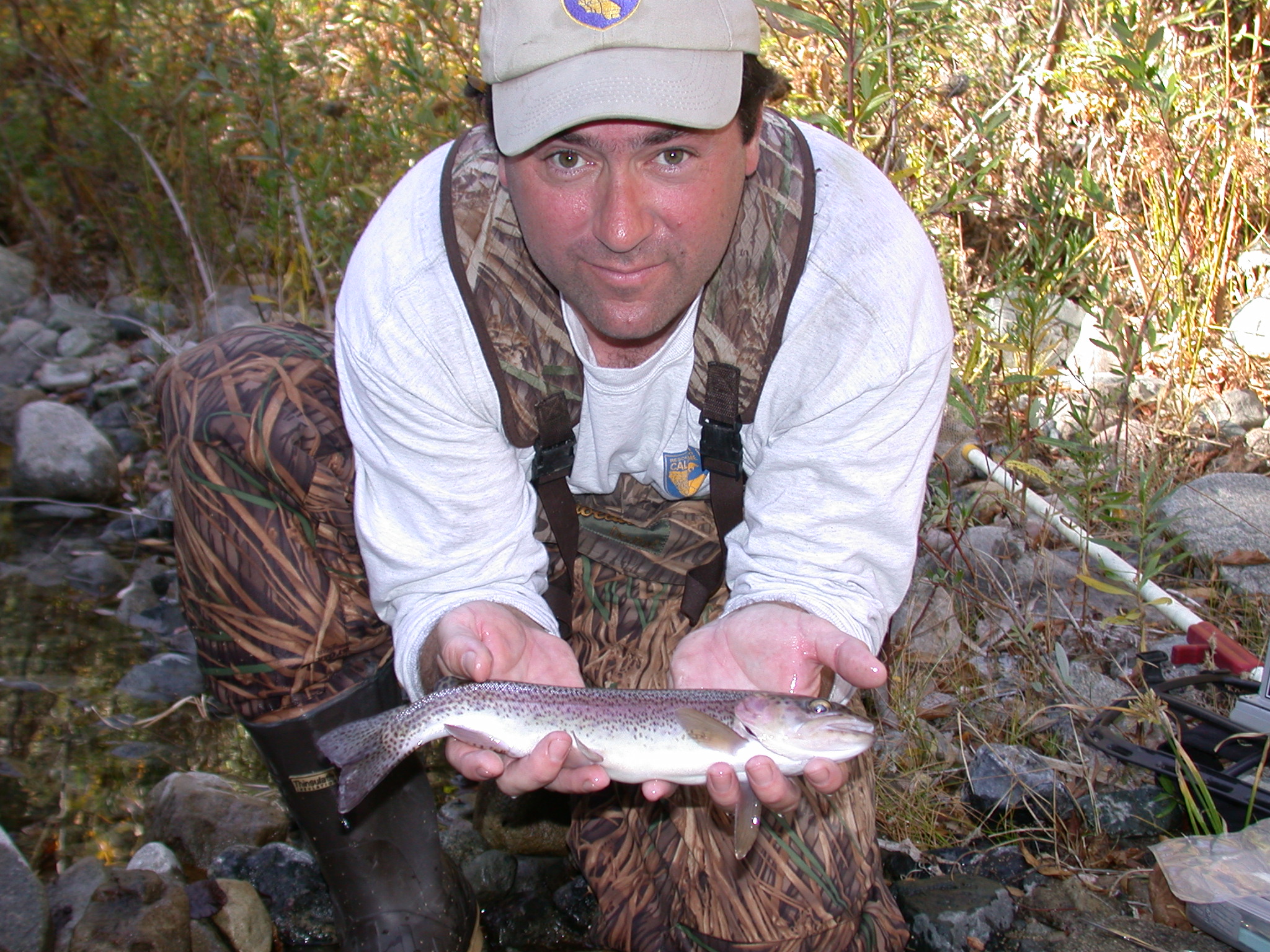
The recent Palisades Fire scorched an area in and around Topanga Creek, a small coastal mountain stream that is home to the only known population of Southern steelhead trout in the Santa Monica Mountains.
Depending on the fire severity upstream of this population, it is likely that heavy debris, ash and mud will be washed into this special section of creek during the next rainfall, killing everything in the water.
Wildfires are not going away in California anytime soon, and conducting reactive fish rescues on sensitive populations may not always be the solution. Moving fish out of their native stream to another after a fire may work in the short term.
However, crucial elements of that species’ survival may be missing in their new home. We are also running out of suitable drainages with perennial water to use as refuge creeks for fish in Southern California.
When fires move through any ecosystem, they are rarely a good thing. They take lives, destroy property and place an unwelcome reset on the natural community. Despite having participated in dozens of fish rescues, I’ve always thought that when man must step in to save any animal, we are only prolonging the inevitable.
It will be months before the true damage of these catastrophic fires is realized. The one thing that all Californians can rely on is that more fires will come and that fire season, a term that is almost specifically associated with California, will always be just around the corner. -Tim E. Hovey
MARCH: BOOK EXCERPT TALKS CENTRAL COAST TURKEY HUNTS
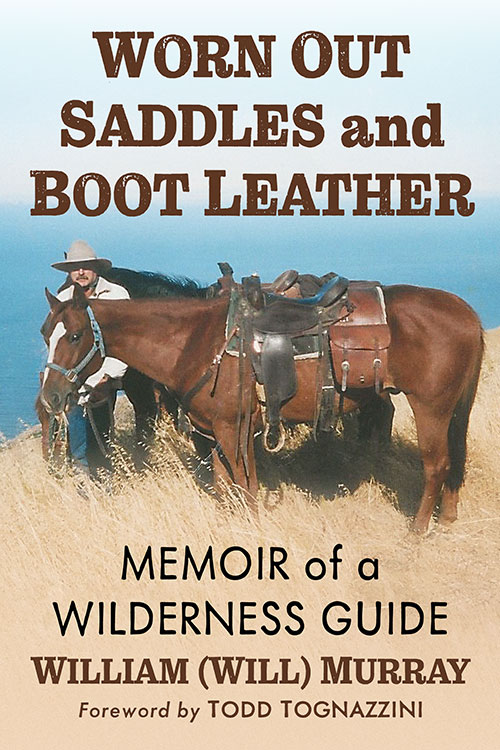
We were well hidden in the grass and the wildflowers were 2 to 3 feet high that year; just beautiful. The gobbler had closed to within about 30 yards and was moving into view when my hunter started poking me in the back. I whispered to him to stay quiet, but he just kept poking me, so I turned my head to see what the problem was. He had that “deer-in-the- headlights” look as he pointed at something on the ground beside me. Thank God for that young man, because there beside me on the ground was a big, unhappy rattlesnake. He was coiled and looking at me like an hors d’oeuvre.
Now, I’ve spent a lot of years in the field, and I knew instantly that if I moved, he was going to bite me. I had absolutely no interest in this! I reacted swiftly, picked up a rock and beat him to death. I then went right back to calling that tom turkey, but he’d seen enough of my dog and pony show and was off and running, moving south along the creek like his tail feathers were on fire. He was gone.
I buried that snake’s head and put nine rattles in my pocket. I wish that I had taken them out of that pocket before my wife found them. She sent me to the barn for this infraction. I spent a lot of time there.
My client just sat there staring at me. I told him that I thought I knew where that turkey was going and if he was up to it, we needed to run to the horses and get downstream ahead of that bird. A note here: Never run up to a horse that you need in a hurry. Just kind of stroll up like you’re not serious. Don’t get them excited until you’re safely in the saddle. -William Will Murray
APRIL: LOS ANGELES KINGS GOALIE TALKS HOCKEY, FISHING


“Growing up, there wasn’t always a clear path to pro hockey or to the NHL, or a successful hockey career, because it’s a small area. Hockey is big there, but comparatively to other markets it’s not a huge hockey place,” Copley says of his Alaska roots.
“I think it was a long journey. In my mind I always thought I first wanted to play junior hockey, so I’d see guys play junior hockey and I thought, ‘I can do that; I can play like that goalie.’ And then when I got to college it was kind of the same thing. For me, it was just kind of incremental. And I really wasn’t thinking about the NHL. Just get to the next level and do what I have to do to get to that next level. Just make the adjustments and believe that I could make the next level and just see the big picture.”
While Alaska was where his hockey career first started developing into an eventual pro career, it was also where Copley spent much of his free time fishing with his stepdad and brothers. It’s simply ingrained in his and other Last Frontier residents’ DNA.
“Everyone in Alaska kind of partakes in things like that, because there’s only so much to do in Alaska, and that’s one of the biggest things you can do,” he tells me. “When you’re up there, even if you really wouldn’t necessarily be a fisherman, if you’re going to live there, somebody will ask you to go fishing, and they’ll say, ‘I’ve got a really good spot.’”
“When I think about fishing right now, when you’re out on the ocean or the river, it’s just so peaceful. Just waking up and fishing. I remember a couple times being out on our kayaks and then heading back to shore,”he adds.“There are some glacial- fed rivers we’ll jump in, and the water’s freezing cold, but it’s so refreshing; the mountains are all around you. It’s quite the place. But that’s what I think about in my Alaska memories.” -Chris Cocoles
JUNE: AN EDITOR’S NEW FISHING ROD
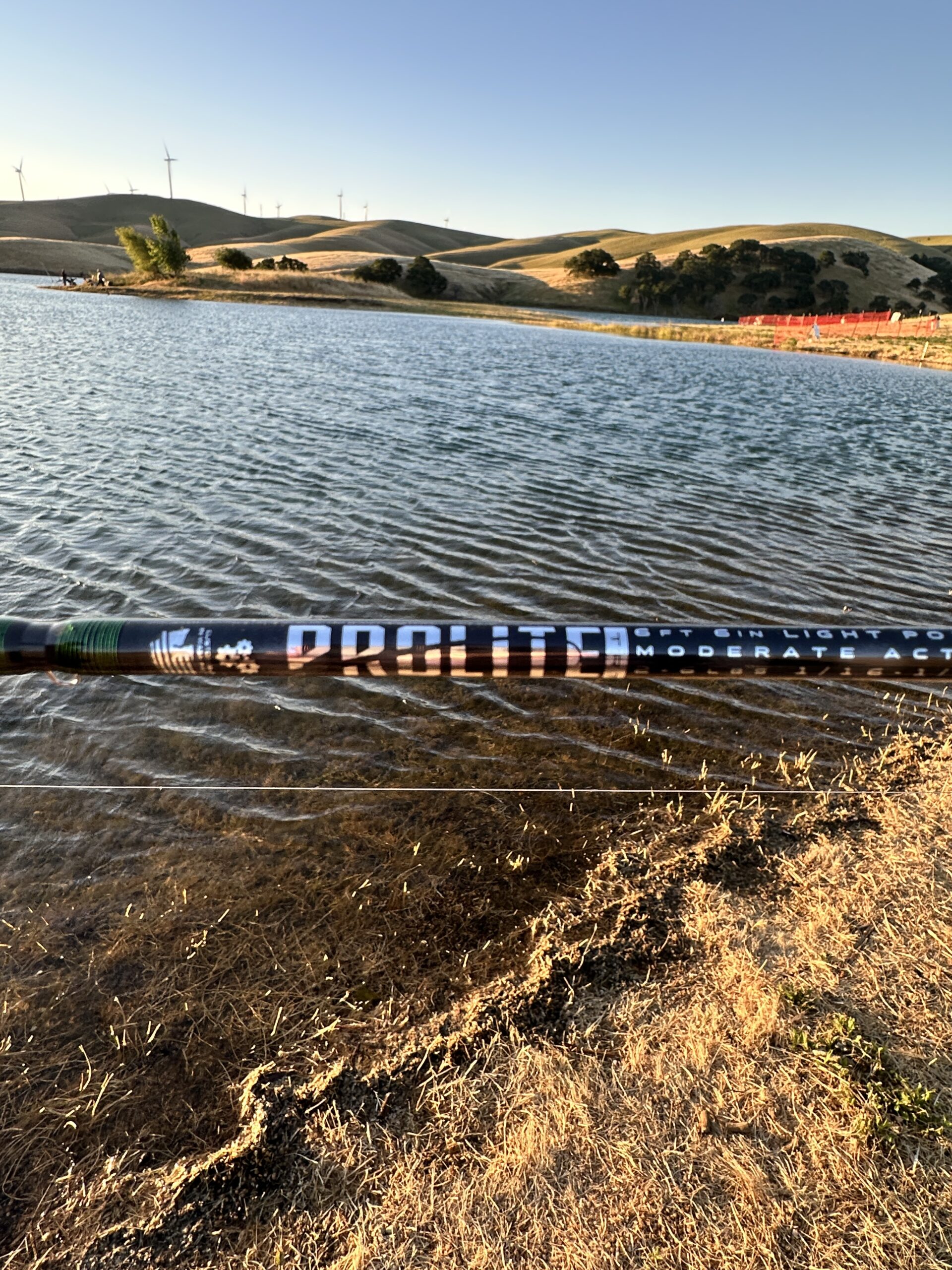
Friend of the magazine Chris Wegeleben, who builds custom rods for his company, Washington State-based Prolite Rod Technology (proliterods.com), was nice enough to create a fishing pole for me. I told Chris my favorite fishing is simply dunking bait
“This rod came from a mix of personal experience and customer feedback. I wanted to build something that could handle the technical demands of the fishery but still feel effortless and fun to fish with,” Wegeleben said. “I always try to blend function with feel – whether that’s sensitivity, balance or action – so it doesn’t just perform well; it connects with the angler.”
I spent some time in May down in the Bay Area visiting family and friends, and on a Friday afternoon I started setting up my new rod in the backyard of my sister Charlene’s house in San Mateo. It was like trying out a new tennis racket back in the day. I’d already admired Chris’s creation when it arrived in the mail, but now I was attaching a reel to it, spooling line through the eyes and getting a feel for it. I attached a sinker and swivel to the line and, being sure not to hit me and my sister’s dogs running around the backyard, got in a few practice casts. I loved how effortless it was to cast!
“The blank is made from a quality graphite that gives it both strength and sensitivity while keeping weight to a minimum,” Wegeleben told me. “On top of that, I pay close attention to the balance of the rod, and the guides are chosen to reduce overall weight and make casting feel smooth and natural.”
I was eager to try it for real. …
Fishing was slow, at least for me and the few guys who set up on a point across the way, and it felt like pressure was surprisingly light that morning. The buzz I heard as anglers came and went confirmed what I was seeing. I kept hoping for some bites, but they never came. Well, except for a young couple fishing about 100 feet away between me and the guys on the point who were also getting skunked. Three times the lucky ones down the bank landed respectable-sized stocked rainbows. I walked down to admire one of their catches and we briefly chatted. They too were soaking PowerBait, so I wondered what I was doing wrong. Maybe that’s just my legacy!
But what I couldn’t complain about was my new Prolite toy to play with. As Wegeleben promised, the rod was light. I’m eager to get back out again and hope my luck changes. But I know Chris sent me one of his great creations. I asked him about channeling his inner artist when building rods for specific purposes.
“Prolite is fun because it brings the artistic side into the performance of the tool. The tool is most important – but it’s gotta look right. Clean and minimalistic is definitely the Prolite way. You’ve got to build with precision because performance matters,” he said. “But at the same time, there’s an artistic side to rod building – choosing the right materials, color combinations, the way a guide wrap flows into the blank finish. It’s the details that make it personal, and I think that’s where craftsmanship becomes art.” -Chris Cocoles
AUGUST: WHEN A HUNTER’S FRUSTRATIONS BOIL OVER!
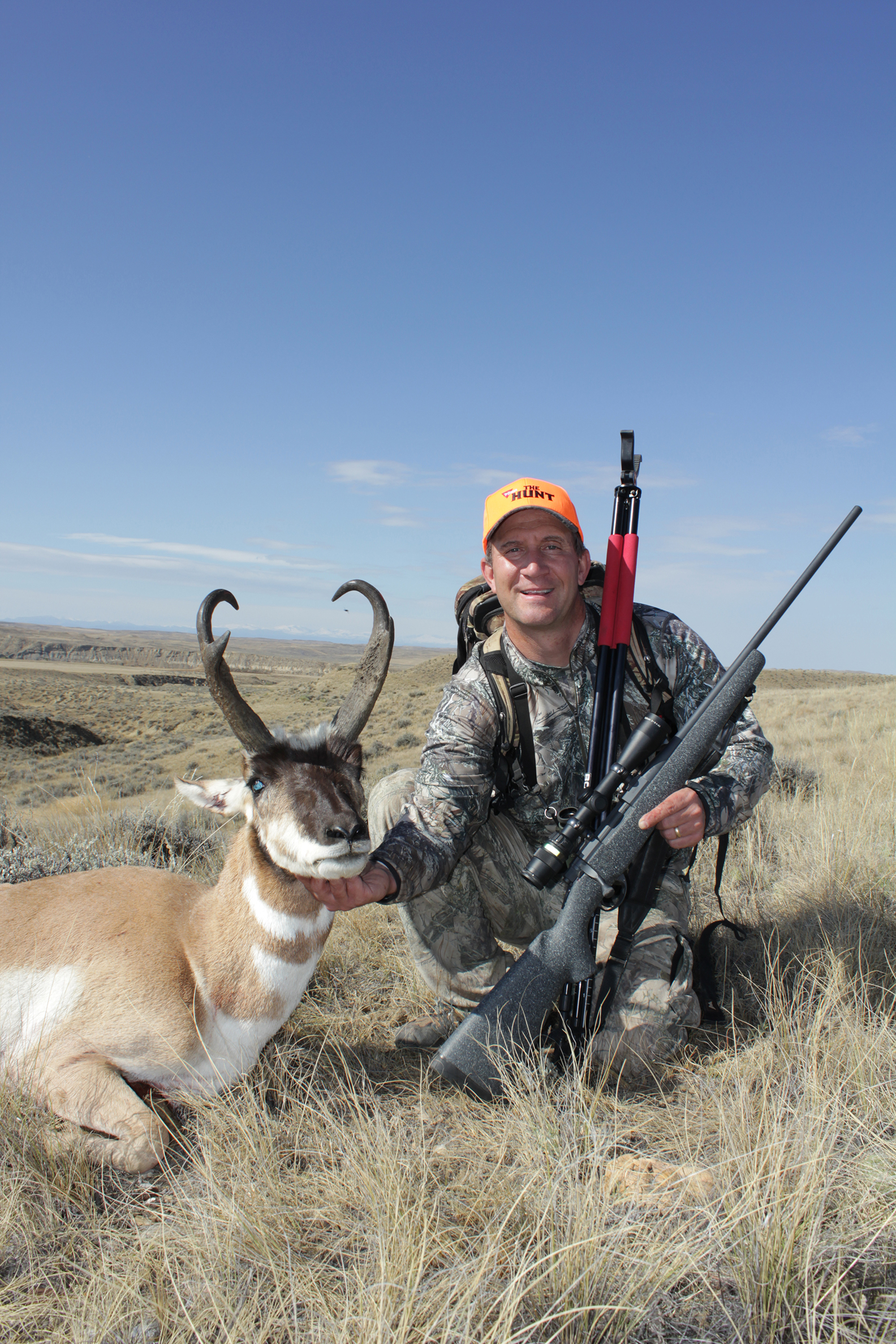
As I stepped onto a gravel road and just had hiked down a sage-covered hill, a man slammed on his brakes. Letting the dust clear, he opened the truck door and hopped out. “I just watched that whole thing, and if you want to press charges on that guy, I’ll be your witness!” he boiled.
I explained I had no intention of shooting the antelope buck in front of me anyway, but that didn’t calm the furious man. “I watched you get into position first thing, then wait as all the goats moved your way,” he continued, breathing harder with each sentence. “I saw that S.O.B. spot the herd from this road, drive his quad up the ridge, hop off and run to get in front of you for a shot. That’s wrong! Just damned wrong! Hunters don’t do that to each other!”
The man was right, but there was nothing illegal; just immoral, something I’ve seen a lot of over the decades. I later caught up with the hunter who cut me off. “Why did you shoot across me like that?” I asked. “I didn’t see you,” he said. That was a lie. I called him out.
“That buck was giant; why didn’t you shoot it?” the embarrassed and defensive man grappled.
“Because it wasn’t big enough,” I said.
“That thing was huge, the biggest antelope I’ve ever seen!” he continued. “It was about 82 inches, I’d say; great cutters, thick bases, but it lost it up top, and I didn’t wait 24 years to draw this tag to shoot something like that on opening morning,” I stated. -Scott Haugen
SEPTEMBER: BASS FISHING ON SMALL GOLDEN PONDS

One of the beautiful things about pond hopping is its simplicity. You don’t need a flashy boat and load of tournament gear to catch fish. All you need are a few rods, a small amount of terminal tackle and a handful of baits.
While there are a variety of lures that will help you catch pond bass, I keep just three types of baits in my arsenal at all times.
By far my favorite way to catch fish in ponds is with a topwater frog. I’ll drag it over matted surface vegetation and fish it around any type of cover. One especially productive method is to work the openings in the grass with a walk-the-dog-style cadence, which allows the frog to shift from side to side while only moving forward slightly.
Froggin’ is not for the faint of heart; strikes on a frog can be jarring. A quick tip: Don’t immediately set the hook on the sight of a blowup; give the fish a moment until you feel pressure, then set the hook hard.
Frog fishing requires stout gear – a 7-foot, heavy or medium-heavy fast-action casting rod with a light tip to properly work the frog. Pairing the rod with a 7:1-ratio casting reel spooled with a 50-pound braided line will get the job done.
Perhaps the most productive pond bait I have fished with is a soft plastic stickbait. It is so versatile, and I like to rig it weightless with a wacky-style hook. This bait will get bites from even the most finicky bass. Anytime the bite is difficult, this is my go-to offering. I like to fish it along weed edges and around cover such as tules or brush.
As it falls in the water column, the stickbait has an enticing shimmying action that triggers bites. Expect to get bit on the drop. The same rod and reel used for froggin’ will work well with a soft plastic stickbait.
Another important lure to have in your tackle box is a shallow-running crankbait. As the water cools and the vegetation dies off, this will create more fishable open water, and this is where a hard bait shines. I like to crank one around the edges of the weedline, any rock that is present and near any structure in open water. -Mark Fong
OCTOBER: NO BOAT? NO PROBLEM FOR TROUT SHORE ANGLERS
Not all of a lake’s shoreline is created equal. Fall trout gravitate to certain features, and knowing where to fish can make the difference between a skunk and a stringer.
Points are prime, especially those that extend into deeper water. Trout cruise along them looking for food. Creek mouths are another hot spot, particularly after an early storm sends fresh, cold water into the lake. Browns and rainbows often stack up at these inflows. Shaded coves with shallow flats are also productive, especially during the low-light hours of dawn and dusk.
Many anglers cast too far. In fall, the majority of feeding fish are within 40 feet of shore. Watch the water; if you see surface dimples, boils or baitfish flickering, chances are the trout are already right in front of you.
Presentation is everything. Once you’ve cast out, place the rod in a holder and leave some slack in the line. Trout are notorious for spitting out baits if they feel resistance. One simple trick is to clip a small bobber to the line between the rod tip and the second guide. With enough slack, the bobber hangs low. When a trout takes the bait, it slowly rises, signaling the perfect moment to set the hook.
Patience is part of the game. Some days the bite is immediate; other days you’ll wait for an hour before a rod doubles over. Stay mobile, try different baits and move along the shoreline until you connect with fish. -Cal Kellogg
NOVEMBER: TURKEY HUNTING WITH KOREAN WAR VET “UNCLE HAROLD”

Harold and I sat along that tree line for over an hour. I set up directly beneath a roosted tom, and 10 minutes before sunrise he loudly exploded from his tree in the exact opposite direction. Two more male birds followed suit but never offered a shot. After that early blunder, not much else was moving.
I walked down to where Uncle Harold was sitting and found him asleep. I gently woke him up and we started hiking back to the vehicles. Halfway back, I noticed movement in a small depression near the end of the tree line. I stopped Harold and looked through my binoculars. All I saw were the tops of over a dozen turkey heads. They were just milling around and occasionally picking at the ground. If we stayed low, we could sneak right up to them.
I grabbed my partner and practically dragged him near the closet mound that made up the depression. Earlier, while I’d sat in the dark, I decided that I really wanted to get Uncle Harold a turkey.
We sat on the ground out of breath. I don’t think Harold even knew why we were moving towards the depression. I looked at him and pointed over the small hill. He carefully peeked over, saw the birds and instantly went into hunter mode. He bent down, shouldered his shotgun and got ready. I looked over at him and held up three fingers. He nodded and on three we stood and fired. The flock instantly dispersed, but once the dust settled, two hen turkeys lay in the dirt. After a quick celebration, we grabbed our birds and took a few photos.
That day was one of my favorite turkey hunts. On the drive home, I got to ride with Harold. I found out that he was a veteran of the Korean War and had served four years in Japan with the U.S. Army. After getting out of the service, he held a long list of jobs over the years. He ran the family grocery store, was a New York Life insurance agent, a taxidermist and, at one time, owned the largest fishing tackle shop in Yuma, Arizona.
When I dropped him off, I shook his hand and told him it had been a pleasure hunting with him. In all honesty, I enjoyed hearing all of Uncle Harold’s stories more than the hunt.
You may not have an Uncle Harold in your bag of fall turkey hunting tricks, but if you spot birds at a distance and can sneak into their route, you just might harvest a holiday dinner like he and I did.
DECEMBER: SEND IN THE MARINES! LAKE BERRYESSA FISHING WITH AN AMERICAN HERO

Our third stop was definitely the charm. I began to graph pods of fish and decided it was worth a try. I dropped the trolling motor and quickly scanned the area using my forward-facing sonar. When I found what I was looking for, I pitched a 2-ounce Blade Runner jigging spoon in the morning dawn color pattern toward the target. With my eyes fixed on my graph, I watched my spoon fall in real time. Before it reached the bottom, a large fish zeroed in on it and engulfed it. I felt a thump and set the hook hard.
It was a good fish, but something wasn’t right. The fish was not behaving like a bass. It began to sulk and
I knew immediately what was going on. When the fish got within range of the surface, my suspicions were confirmed; it was a big channel catfish weighing close to 10 pounds. After releasing the whiskerfish, Mike and I continued to work on the same group of fish. Our next hookup was a nice largemouth, followed by a big spotted bass and then a trout. Some hardcore spoon anglers will only fish a spoon, but I like to mix it up and try to get every bite I can from a group of fish. We alternated between a jigging spoon, a drop-shot worm and a jighead minnow. And so it continued throughout the day: I would locate a group of biting fish, we would catch them for a while and then the fish would turn off. Once this happened it was off to find more active fish.
During lulls in the action, our conversations got really interesting. Perhaps it was because it was Veterans Day, but I found myself wanting to learn more about Mike’s experiences in the armed forces. I discovered that he came from a military family; that he enlisted in the Marine Corps Reserves out of high school; and that he served in the Persian Gulf War as part of the 1st Marine Division in Saudi Arabia.
When he returned stateside, Mike continued to serve in the Marine Corps Reserves for a total of 14 years of service while working full time for the City of Roseville. Even as his Marine Corps career has ended, his dedication to service continues to this day.
According to Mike, one of his favorite activities is volunteering with Recreation 4 Veterans (Rec4Vets) to take and teach veterans about fishing and other outdoor activities. In addition to those duties, Mike is the director of operations for Placer Veterans Stand Down, a nonprofit dedicated to giving back to veterans and their families. Their motto is “A hand up, not a hand out.” Finally, Mike is also involved with PGA HOPE (Helping Our Patriots Everywhere), an organization whose mission is to change and save veterans and active- duty military members through the power of golf.
By day’s end, I had enjoyed a great day on the water with Mike. The fishing was good, but what I learned about service and commitment far outweighed all that we’d brought to the boat. It was great to be able to give a little to someone who has given so much. -Mark Fong