Countdown To The Trout Opener: Roll Into Spring At Rollins Lake
We’re counting down the days until Saturday’s statewide trout opener with trout stories from our April issue. Today: NorCal’s Rollins Lake timing is now for great action for rainbows, other species.
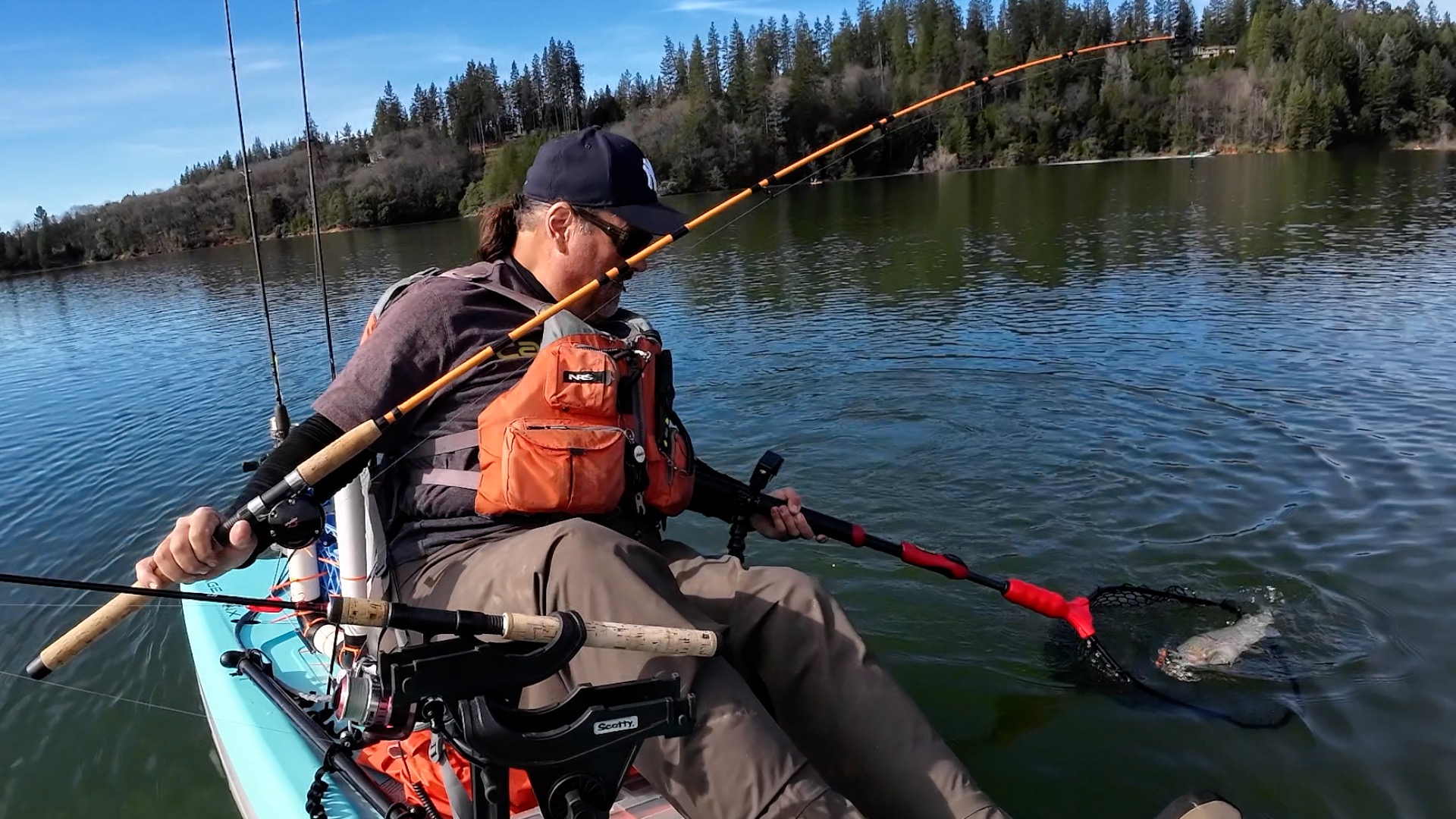
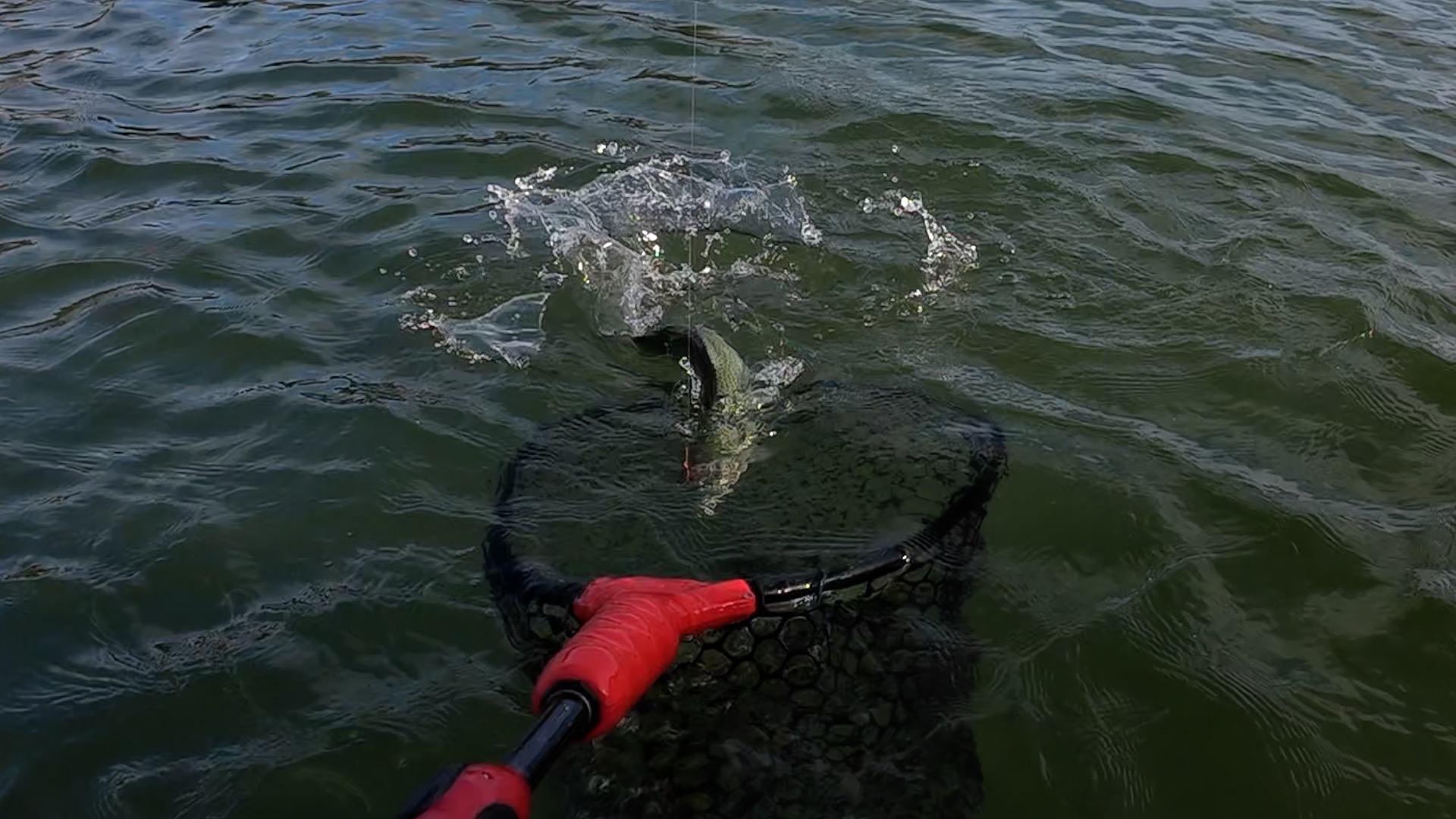
By Cal Kellogg
There are moments in fishing when everything lines up just right – conditions, access, pressure, timing – and for a brief window, a fishery shows you what it’s truly capable of. Rollins Lake is in one of those moments right now.
With boating restrictions in place due to California’s invasive golden mussel situation, the lake has been transformed. The big wake boats, jet skis and constant traffic that once defined summer weekends are gone. In their place is something that feels almost like stepping back in time – with quiet water, light pressure and fish that are behaving naturally.
For anglers, especially those fishing from kayaks or small watercraft, it’s a rare opportunity. Rollins is fishing freely, and it’s fishing well.

THE BASICS
Located just outside Colfax at roughly 2,100 feet in elevation, Rollins Lake is a 900-acre impoundment on the Bear River. Constructed in the 1960s as part of Pacific Gas and Electric’s hydroelectric system, the lake was designed for power generation and not recreation. But over time, as is often the case in California, anglers discovered its potential. What they found was a diverse, structure- rich reservoir capable of supporting multiple species and delivering consistent action across seasons.
Rollins isn’t a featureless bowl. It’s a complex lake, with long arms, submerged timber, rocky shorelines, tapering points and a well-defined river channel that snakes through its depths. That diversity of structure is what drives the fishery. It provides habitat, ambush points and feeding lanes for everything from trout to bass to catfish.
Right now, with the boating restrictions in place, all of that structure is being utilized more effectively by fish that aren’t constantly pushed around by noise and wakes. Trout are holding tighter to contours. Bass are setting up more predictably. Even the panfish and catfish seem less scattered. It’s the kind of scenario that rewards anglers who fish methodically and pay attention to detail.

TROUT LEAD THE WAY
Trout are the headline attraction for many anglers, and Rollins delivers. The lake is regularly stocked with rainbows, but it’s the holdovers that really define the fishery. Given time and forage, these fish grow well beyond stocker size, and it’s not uncommon to encounter rainbows in the 2- to 3-pound class, with larger fish always a possibility.
During the fall, winter and early spring, trout are accessible and active. Cooling water temperatures pull them up into the upper layers of the water column, often within the top 10 to 20 feet. This is prime time for trolling, and at Rollins that means covering water with small, efficient offerings. Spoons, spinners and 2- to 3-inch minnow plugs are all top producers.
Flat-line trolling early and late in the day is often all you need. Work the dam area, main lake points and the mouths of coves where trout move in to feed. As the sun climbs or conditions change, adding a small amount of weight or transitioning to light leadcore allows you to stay in contact with fish that slide a bit deeper. Speeds in the 1.8 to 2.2 mph range are a good baseline, but subtle adjustments can make a big difference.
One of the keys to consistent success at Rollins is paying attention to detail. Watch your sonar. Note where you mark fish. Observe which rods are getting bit and at what depth. Small adjustments – running one rod a little deeper, changing lure color, tweaking speed – can turn a slow day into a productive one.
Bank anglers have solid opportunities as well, particularly in the cooler months. Fishing inflated nightcrawlers or PowerBait off the bottom remains one of the most effective techniques. The key is location and restraint. Trout often cruise closer to shore than many anglers realize, especially when water temperatures are favorable. Instead of launching long casts into deep water, focus on likely travel lanes in 6 to 15 feet of water and let the fish come to you.
X MARKS THE SPOTS
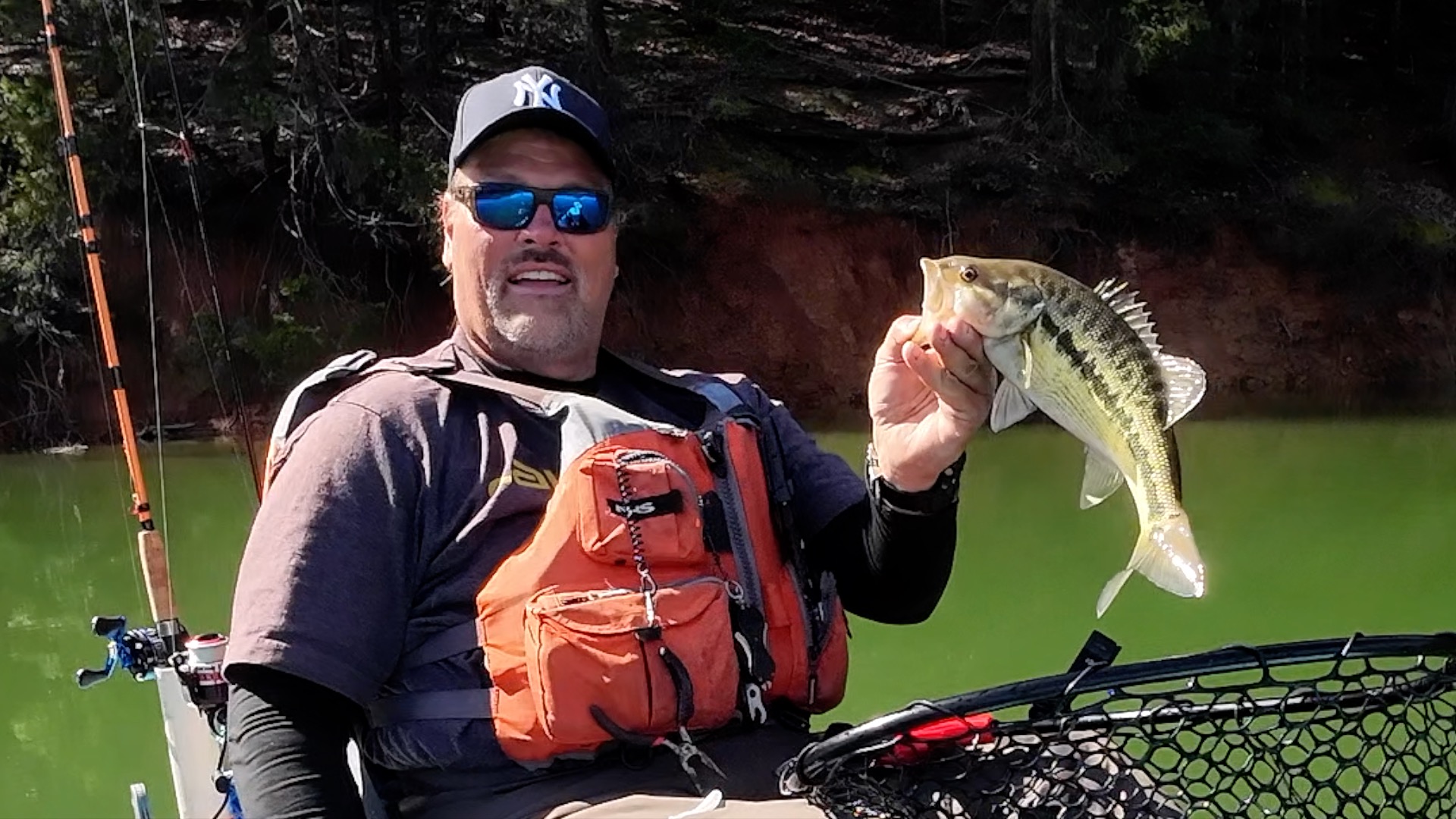
If trout are the foundation, spotted bass are the personality of Rollins.
These fish thrive in the lake’s clear water and rocky structure, and they are active, aggressive and widely distributed. While they may not reach the size of largemouth bass in some systems, Rollins spots make up for it with numbers and fight.
Bass fishing at Rollins is all about structure. Points, rock piles, submerged timber and transitions from shallow to deep water all hold fish. In fall, bass feed aggressively as they prepare for winter, and this can make for fast action.
Soft plastics are a go-to setup, especially worms, tubes and finesse baits worked along the bottom. A slow, methodical presentation often produces the best results, particularly when fish are holding tight to structure. Drop-shot rigs shine when bass are deeper or less aggressive, allowing you to present a bait precisely in the strike zone.
When bass are actively feeding, reaction baits come into play. Small swimbaits, crankbaits and spinnerbaits can all produce, especially when worked along points or through schools of baitfish. The key is covering water until you locate fish, then slowing down and working the area thoroughly.
Again, the current conditions on Rollins give anglers an edge. Without heavy boat traffic, bass are less pressured and more willing to commit. From a kayak, you can ease into position, make multiple casts and fully work a piece of structure without interruption. That kind of approach consistently produces more fish.

CATS AND PANFISH
Bluegill are another strong component of the fishery and are often overlooked. These fish can provide steady action, particularly in the warmer months, and they are perfect for anglers looking for consistent bites or introducing kids to fishing. Bluegill relate to shallow structure – look for docks, brush and protected coves – and will readily take worms, small jigs and other simple offerings.
Channel catfish round out the lineup and offer a legitimate shot at quality fish. Rollins has produced some impressive channel cats over the years, and they are available throughout the lake. Fishing the bottom with cut bait, nightcrawlers or prepared baits in the evening or after dark is a proven approach. Focus on flats adjacent to deeper water or areas where the old river channel swings close to shore.
While Rollins Lake offers year- round potential, fall and early winter is when trout fishing comes alive, bass feed aggressively and overall conditions are comfortable and predictable. As winter progresses, trout remain active and fishing pressure drops even further.

THE TENT LIFE
Camping at Rollins adds another dimension to the experience. The reservoir features multiple campgrounds, including developed sites with amenities and more rustic options for those looking for a quieter stay. Spending a few days here allows anglers to take full advantage of prime fishing windows like early morning and evening without the need to travel. It also lets you settle into the rhythm of the lake, something that day trips rarely allow.
Access to the water is pretty straightforward, and under current restrictions it strongly favors kayaks and other small, non-trailered craft. For many anglers, that’s a benefit and not a limitation. Kayaks allow you to move quietly, fish efficiently and reach areas that larger boats often overlook. They also align perfectly with the current conditions at Rollins, where stealth and precision are paying off.
RIGHT LAKE AT THE RIGHT TIME
There’s a certain feel to Rollins right now that’s hard to describe but easy to appreciate. The lake is calm. The pressure is low. The fish are there and willing. It’s the kind of situation that doesn’t come along often, and it won’t last forever.
Rollins Lake has always been a solid fishery, but it’s something more at the moment. It’s a place where everything has come together – environmental conditions, access limitations and seasonal timing – to create a unique window of opportunity.
For anglers willing to adapt, fish from a kayak, slow down and really work the water, Rollins is offering the kind of experience that keeps people coming back year after year: good fishing, beautiful surroundings and, for now at least, a welcome absence of crowds.
And in today’s world, that might be the best catch of all. CS