Carpe Diem! Targeting Crappie Can Make For A Great Day On The Water
The following appears in the June issue of California Sportsman:

By Tim E. Hovey
The screen on the Garmin fishfinder lit up. From the display it looked like the fish were gathered in a huge school, about 10 feet thick, 15 feet below the boat.
My wife Cheryl dropped her double-jig rig down and it never reached the bottom. The rod tip twitched several times and she set the hook. Seconds later two keeper crappie were on the deck. We had finally found the school!

then summer,” Hovey writes. “I’m constantly checking water temperature
readings and watching the weather” to time trips to the lake. (TIM E. HOVEY)
A FUN FISHING TARGET
One of the best times to target crappie is during the prespawn period when the fish are feeding aggressively to prepare for the spawn. Crappie can also be caught during the spawn as the fish, mostly males, switch to aggressively defending territories, biting out of defense rather than hunger. If you can locate postspawn fish moving out to deeper water, you can also catch them as they transition back into feeding mode.
The bottom line: If you understand why and when crappie schools move, you can successfully target them for a larger portion of the spring-summer season.
THREE FACTORS TO KNOW
Three things influence crappie movement during this time of year. Most anglers know that when the water warms, usually in the 60- to 65-degree range, crappie move into the shallows (3 to 15 feet) to prepare for the spawn.
However, there are a few other environmental conditions that can precisely predict crappie movement. One is daylight photo period. Essentially, when the days get longer, it triggers crappie to really focus on preparing for the spawn. Finally, add in consistently warm weather, and the movement pattern of crappie from deep water to shallow during this time of year is easy for anglers to forecast.
The spring spawn usually occurs in water temperatures from 60 to 65 degrees. Big schools of crappie move into shallow water, often near some sort of structure to spawn. These gatherings can be absolutely huge, and if you’re lucky enough to find a group, you will catch fish.

WHERE TO FIND CRAPPIE
Both local species of crappie, black and white, are available in almost all California lakes, particularly warmer, lower-elevation lakes, and they often thrive in the same systems Black crappie typically spawn earlier in the season in cooler water (58 to 62 degrees), with white crappie showing up a little later when conditions warm up a bit more.
When we head out to target crappie, I’m always referencing the water temperature and the screen of my fishfinder. Being a fair-weather angler, I’ve already checked the weather and looked at the forecast to hopefully establish a warming trend. Understanding that June 21, the summer solstice, is the longest day of the year and daylight will gradually increase moving towards that date, we plan our crappie trips using these parameters.
NO PATTERNS DETECTED
Honestly, I have caught crappie on lots of different lures, and while I haven’t really seen a pattern, I do have my favorites. It also should be noted that larger crappie can be caught using crankbaits as well. In fact, the largest crappie my wife and I have caught were with crankbaits.
When we locate a school, we usually rig up with two small crappie jigs about 18 inches apart. These jigs are usually smaller leadheads and they come in a variety of different colors. We also make sure that each lure is a different style and color. With two of us fishing, that’s four different lures being presented to the school. This should give us an idea of what lure style and color the fish prefer.
Last year we decided to experiment with our crappie rigs. Using a drop-shot rig, we tipped the hook with a Berkley Gulp! 3-inch minnow and did very well. In fact, not only did the lure last through dozens of fish, but we also noticed that we were catching larger specimens as well. Needless to say, when we locate a cooperative school of crappie, we are rigging up with the Gulp! lures.
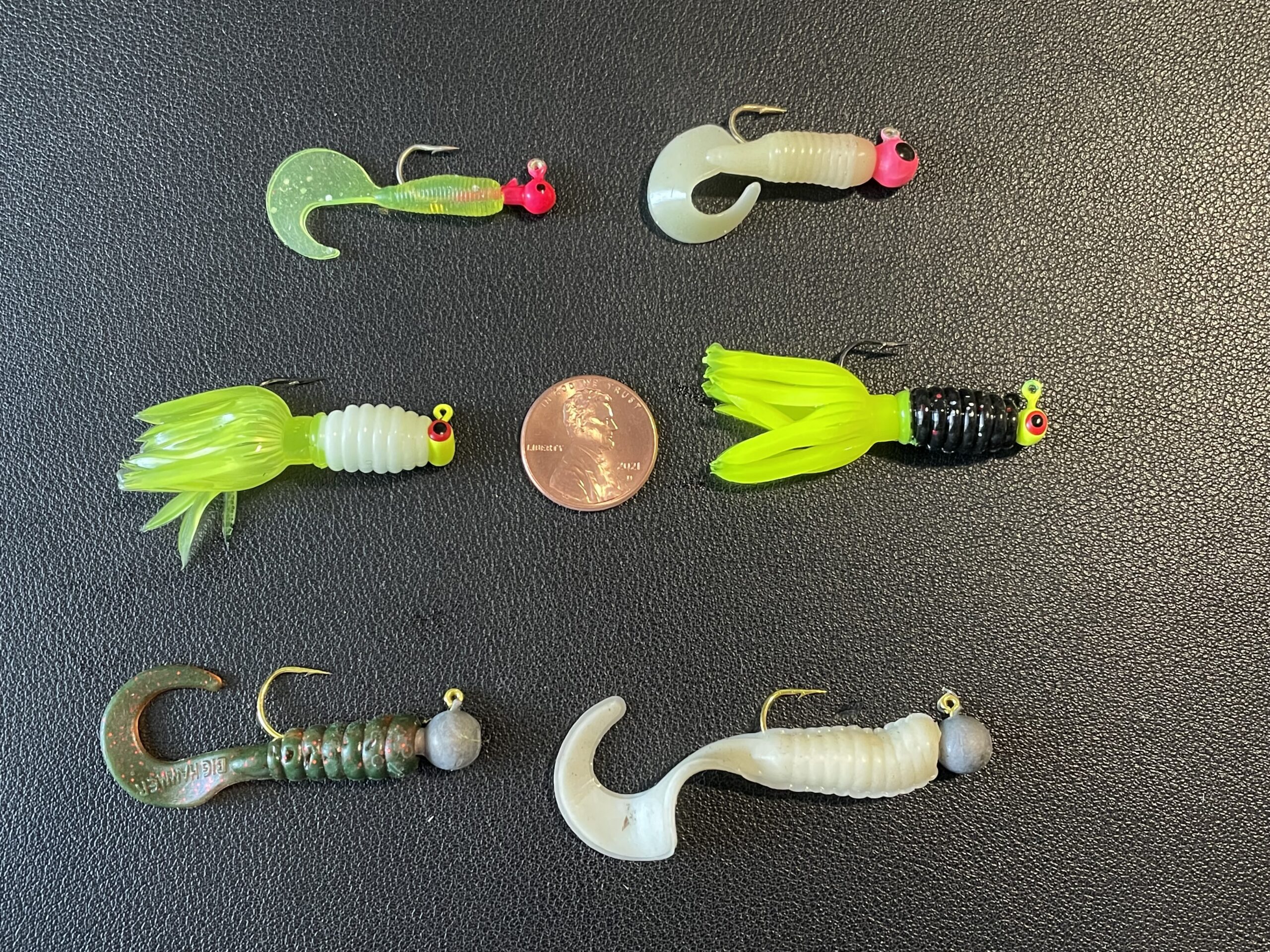
of different lures, and while I haven’t really seen a pattern, I do have my favorites.” (TIM E. HOVEY)
TAKING SHORE LEAVE
Shore anglers can also do well when the crappie move shallow and start to school within casting range. Using small jigs under a bobber is a great way to target suspended fish without getting hung up on the bottom.
If you don’t have access to a boat and pay attention to the movement guidelines of crappie, you can still load up a stringer with crappie for a fish fry (see sidebar, below).

catch them, but the fish are also available off the bank when they move into the shallows. (TIM E. HOVEY)
FUN FOR ALL AGES
If you’re prospecting for a school of prespawn or spawning crappie, where you find one or two, usually more are nearby. This type of fishing is perfect for young kids, as the bites will always be fast and furious and the action constant. The tackle required is simple and all they have to do is reel.
I always look forward to the crappie migration as we ease into spring and then summer. I’m constantly checking water temperature readings and watching the weather. Once things line up, we’ll launch the boat and start the search. Crappie are a great fight on light tackle, and I will never tire of locking on a school in the shallows and putting a few nice fish in the fish hold.
If you’re looking to catch something different this summer and maybe bring home a few filets for dinner, head out to your local lake and fish the shallows. Just like clockwork, crappie will be staging for the spawn and ready to eat. CS
Sidebar: HOW TO PREPARE TASTY CRAPPIE FOR THE TABLE

stringer full of black or white crappie. (TIM E. HOVEY)
I am a catch-and-release angler for the most part. I love catching both largemouth and smallmouth bass, but after a few photos they are carefully released. However, when we encounter an aggressive crappie school, we always save a few for dinner. If you’ve never tried fried crappie or had crappie tacos, do yourself a favor and save a few for lunch next time you catch them. You won’t be sorry.
After fileting the panfish, we rinse them off and dry them on a paper towel. We then prepare them in one of two ways. 1) We sprinkle them with our favorite seasoning and pan fry them in butter and olive oil. Or 2) We run the filets through an egg wash, coat them in seasoned breadcrumbs and fry them in a fryer for fish tacos.
There’s nothing better after a long day on the water. TH