National Park Service Analyzes Pacific Earthquake Impact On Rare Death Valley Pupfish
Faraway earthquakes have had an impact on rare Death Valley National Park-native Devil’s Hole pupfish, and it appears while they’ve had a positive effect from quakes in the past, biologists are also fearful that events such as last week’s massive earthquake in Russia and subsequent volcanic activity and tsunami waves throughout the Pacific could be detrimental for these tiny fish.
Here’s S.F. Gate with more details:
As recently as last spring, a count of 191 fish marked a 25-year high, and experts thought a comeback could be on the horizon. But the alarming results of the March population survey conducted by park officials came in the aftermath of a 7.0 earthquake in Humboldt County last December, which sloshed away most of the larval fish, eggs and algae on the shallow limestone shelf where they spawn and eat. Then, a second quake in February triggered another wave that further disrupted their habitat. …
Though it might seem the most recent earthquake would make a bad situation worse, park officials said in a Thursday news release that they were “less concerned” about its impacts.
“The waves generated by this earthquake were smaller than those from the previous quakes, as the epicenter was farther away,” the news release read.
Here’s the full press release: from the National Park Service:
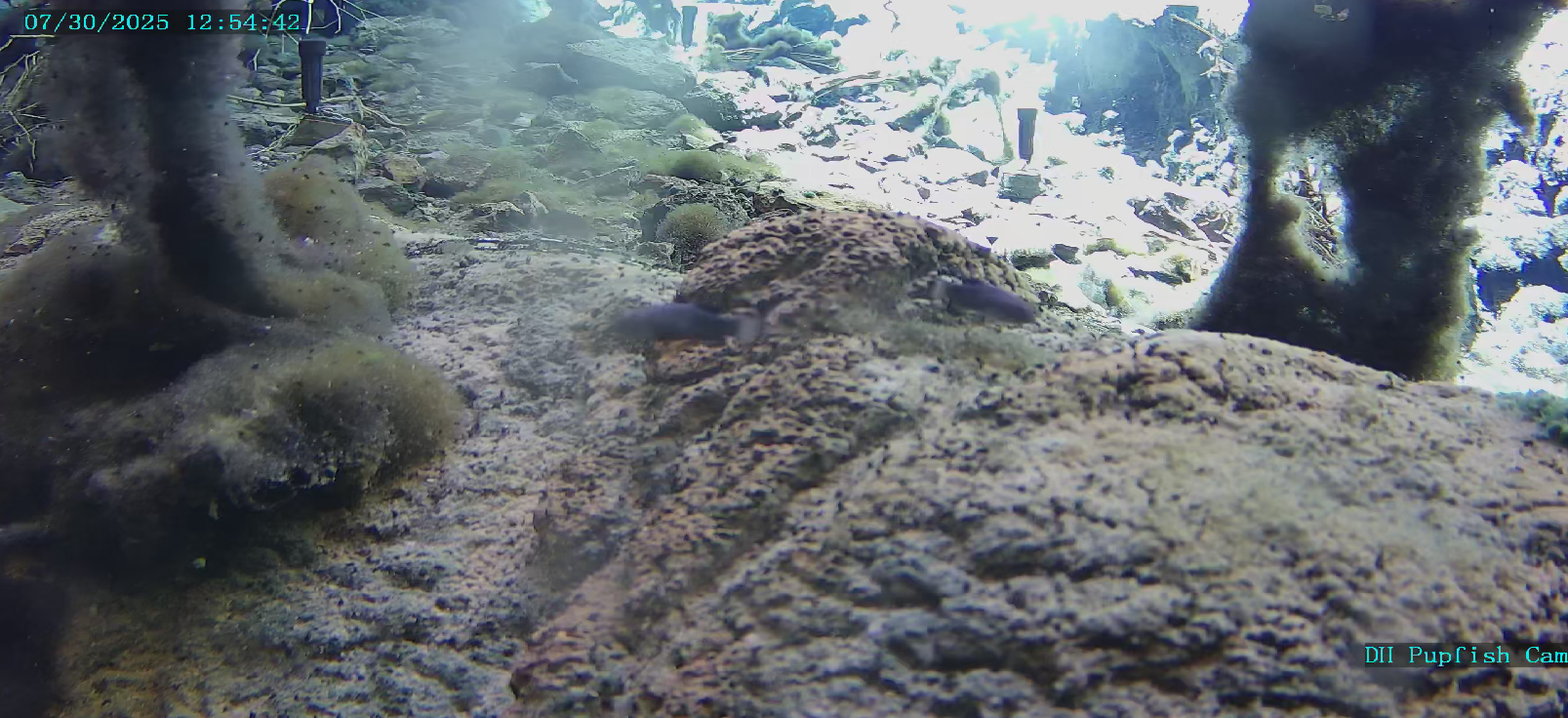
News Release Date: July 31, 2025
AMARGOSA VALLEY, Nev. – On July 29, just 21 minutes after a magnitude 8.8 earthquake struck Russia’s Kamchatka Peninsula, waves were triggered nearly 4,000 miles away in Death Valley National Park. Earthquakes can generate waves in enclosed bodies of water, even over surprising distances.
Devils Hole is a water-filled cave approximately 12 feet wide and over 500 feet deep, with a water surface that is typically sheltered from wind and remains extremely calm. The endangered Devils Hole Pupfish depend on a shallow shelf at the cave’s mouth for most of their food and spawning.
The pupfish’s habitat was previously affected by earthquake waves in December and February, which removed most of algae and invertebrates that pupfish rely on for food. During the official survey in March, only 38 fish were counted.
Fortunately, biologists are less concerned about the impacts of the July 29 quake on the pupfish. The waves generated by this earthquake were smaller than those from the previous quakes, as the epicenter was farther away. The 10-inch waves from the Kamchatka quake only removed some materials from the shallow shelf.
Additionally, the timing of this quake is less concerning for the pupfish. With the sun at a high angle in summer, conditions are favorable for algae regrowth. Pupfish typically increase their spawning rates after disturbances, offering hope for a rebound of the Devils Hole Pupfish population.