Nevada’s Pyramid Of Success: A Top-Notch Cutthroat Fishery
The following appears in the February issue of California Sportsman:
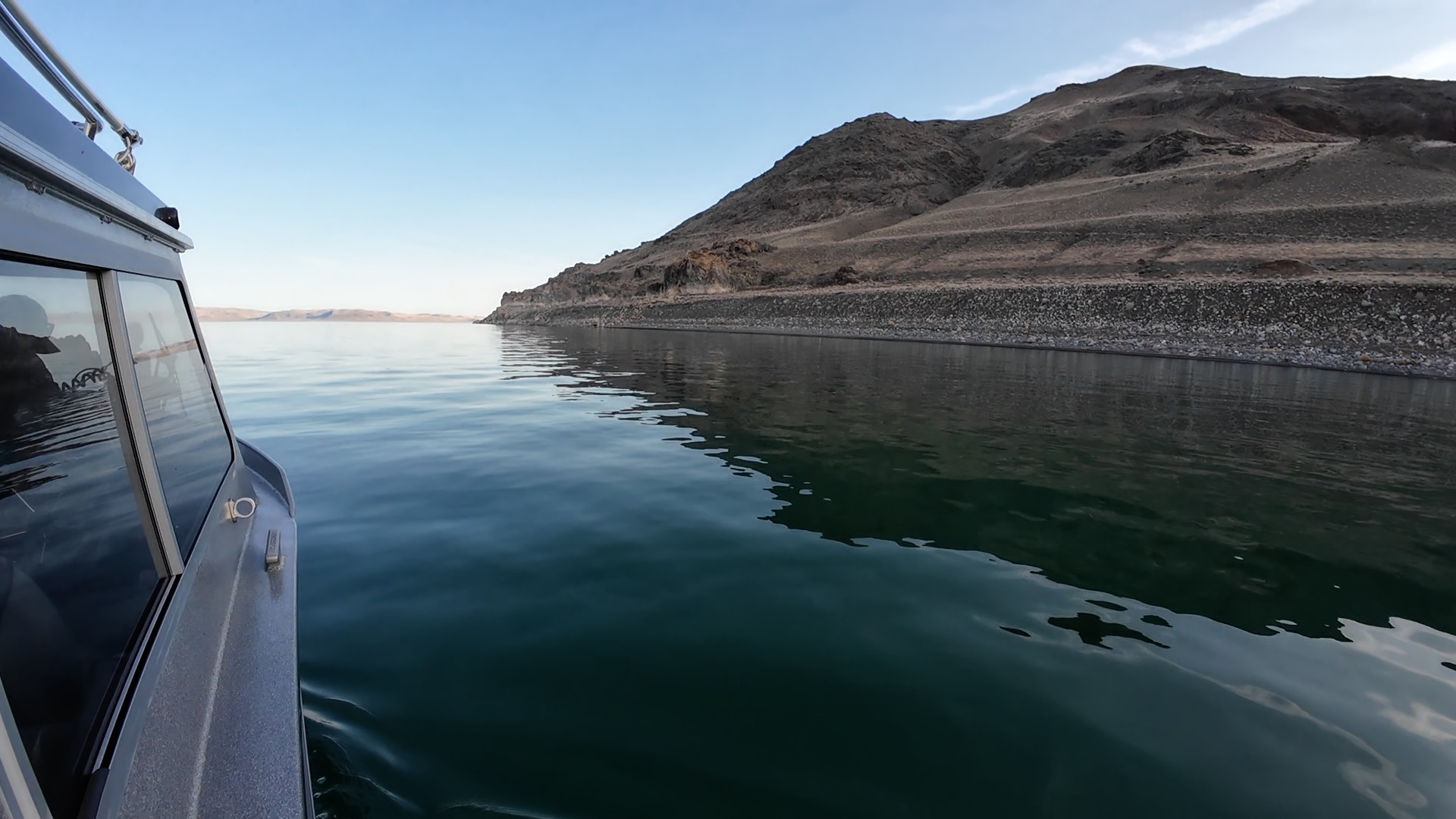
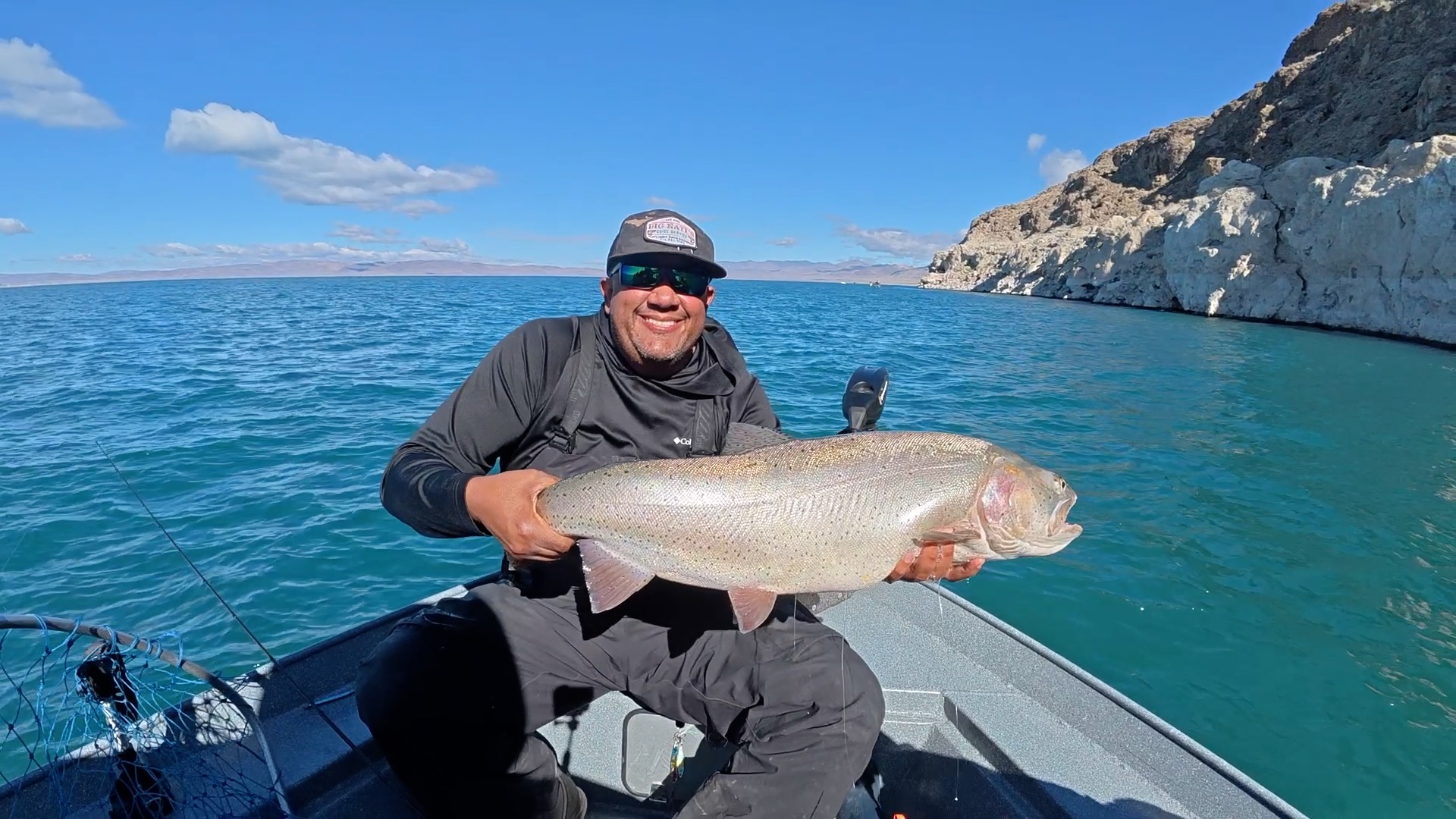
A short drive across the California-Nevada border not far from Reno, Pyramid Lake offers up outstanding trophy Lahontan cutthroat trout action from February through April. This big cutt (below) smashed a huge trolling spoon during an April adventure. (CAL KELLOGG)

By Cal Kellogg
If you’re the kind of trout angler who’s bored by “good” fishing, Pyramid Lake will ruin you – in the best possible way.
This Nevada gem is a lake that turns grown men into ladder-hauling beach nomads, scanning wind lines like bird dogs and watching the horizon for that one rolling fish that signals everything is about to happen. And if you’re reading this in late winter, you’re right on time. February through April is the heart of Pyramid’s best season, when cold water, heavy baitfish and prespawn instincts collide and those famous Lahontan cutthroat trout show up shallow and aggressive.
Pyramid, a short drive across the California-Nevada border near Reno, is not a numbers lake. It’s a next-bite- could-change-your-life lake. The fish are big, the weather is bigger and the learning curve is real. But if you want a legitimate shot at the best accessible trophy trout fishery in the West, this is your window. There are very few places where a 10-pound trout isn’t remarkable, and even fewer where a 15- or 20-pound fish is something you can realistically plan for. Pyramid is one of those rare places.
HIGH-DESERT GEM
Pyramid Lake sits at the end of the Truckee River system and is a massive high-desert bowl of deep blue water located on the reservation of the Pyramid Lake Paiute Tribe northeast of Reno. Historically, Pyramid supported a unique lake-run strain of Lahontan cutthroat trout that migrated up the Truckee River toward Lake Tahoe to spawn. Those fish were legendary, but overfishing, water diversions and dams eventually cut off their spawning access and helped drive the original Pyramid population to extinction by the early 1940s.
What followed is one of the great comeback stories in Western fisheries. Through hatchery programs and reintroduction efforts, Lahontan cutthroat were brought back to Pyramid Lake using fish associated with the Summit Lake strain and supported by continued stocking and management. The modern result is the fishery we enjoy today, a trophy-driven destination where a 10-pound trout is not rare and where fish pushing well beyond that mark show up every season.
Pyramid is different from most trout lakes because everything about the system favors growth. It’s a large, nutrient-rich desert lake with abundant forage, especially tui chub, and long stretches of a cold-water season. The fish have room, convenient food sources and time. And when Lahontan cutthroat get all three, they turn into footballs with fins. Add in the fact that many of these fish are caught in shallow water, where you can see the takes, feel the headshakes and watch the chaos unfold, and you’ve got a fishery that hits you square in the chest. This is not dainty, sipping-risers fishing. This is big trout hunting.
KNOW THE RULES
Access to Pyramid is straightforward, but the rules matter. You don’t need a Nevada state fishing license; you do need a tribal fishing permit, as well as a boating permit if you plan to launch. The lake is governed by tribal regulations, and two rules shape everything about how you fish there: All hooks must be barbless, and no bait or scent of any kind is allowed. That means no worms, no eggs, no PowerBait- style products and no added scent. Pyramid is an artificial-lure and fly- only game, and it rewards anglers who embrace that reality.
Seasonally, the cutthroat fishery typically runs from October through the end of June, but the prime window for many anglers is late winter into early spring. February through April is when the puzzle pieces align. Water temperatures are cold and stable, baitfish use the shallows and edges, and Lahontans, especially the bigger ones, begin transitioning toward prespawn behavior. The result is a fish that’s willing to move, willing to eat and often willing to do it in water shallow enough to reach from the beach or a slow-trolling boat.

GO WITH THE WIND
One simple truth about Pyramid is that wind is usually your friend. Wind pushes warm surface water, plankton and bait, and that concentrates predators. A dead- calm, sunny day can be beautiful and slow. A nasty, sideways day with a strong wind line can be the day you remember for the rest of your life.
Shore casting is the classic Pyramid approach and the one most anglers picture when they think about the lake. Standing on a beach or rock point, often with the help of a ladder, firing long casts into waves and wind lines has become part of the culture. The ladder isn’t a gimmick. In many areas the shoreline is shallow and the waves roll hard, and getting a little elevation helps keep your line out of the wash and lets you see water movement, structure and sometimes even cruising fish.
LITTLE FISH MEANS BIG FISH
Late winter and spring shore fishing revolves around baitfish profiles and high-visibility reaction baits. You want lures that cast a mile, track well in wind and have enough presence to get noticed in moving water. Let them sink, then work them with steady retrieves mixed with pauses and speed changes.
Pyramid trout often eat on the stall or right as the lure accelerates again. Soft plastics and streamer- style presentations on spin gear can be deadly when fish are cruising the inside edge, especially on days when they’re following but not committing to metal.
Where you stand also matters, but not as much as how you move. Wind lines are highways. Beaches with quick access to deeper water tend to hold fish longer than long, shallow flats. If you see bait flipping, birds working or fish rolling, you’re in the right neighborhood. If you’re not seeing life, don’t get stubborn. Pyramid rewards anglers who treat shore fishing like hunting. Move until you find signs, then fish hard.
LURE CHECKLIST
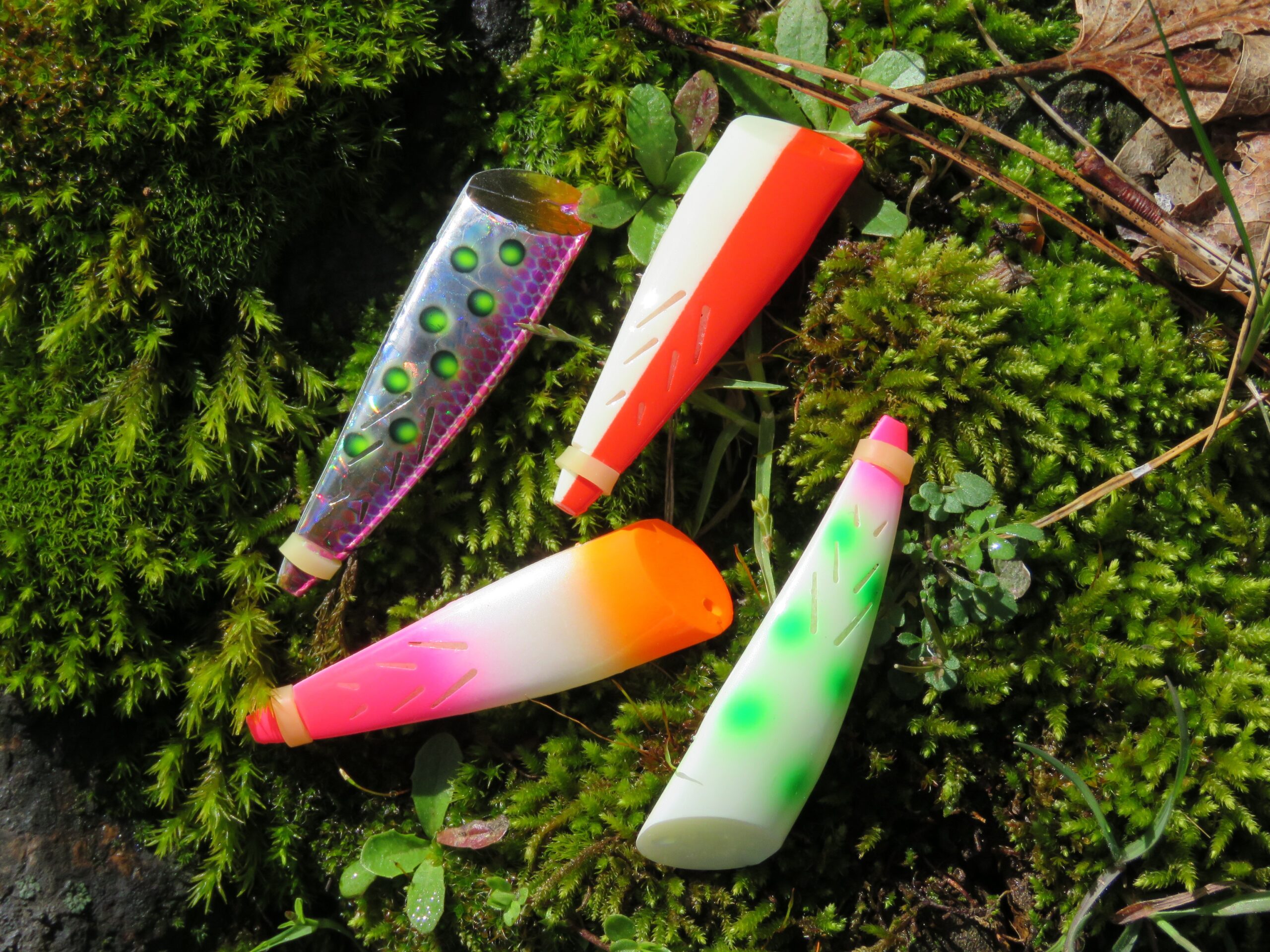
While fly fishing at Pyramid is a major attraction (see sidebar on page 30), for conventional gear anglers, classic coldwater fishery plugs and wobblers work well when the lake’s Lahontans want a lazy, wounded-baitfish profile. Spoons add flash and vibration when trout are actively feeding.
The real key here is boat control. Pyramid is big water and wind- driven, and your ability to hold productive lines along contours and repeat successful passes matters more than the specific lure you’re pulling.
VARIABLES TO KNOW
There are a few Pyramid truths that will save you years of frustration. First, rig it like you mean it. Barbless hooks and no scent mean you need sticky-sharp hook points, strong knots and constant attention to your leader. Second, steady pressure beats hero moves. Big Lahontans surge, roll and throw slack like champions. Smooth drag and a tight line win more fish than brute force. Third, wind lines matter more than comfort. Fish where the food goes, not where it’s easy to stand. Fourth, move until you find life. Pyramid is too big to sit in dead water and hope.
And a final Pyramid tip is to dress for battle. February and March can feel like winter on another planet. Windproof layers, good boots and warm hands aren’t luxuries; they’re part of the program.
SAVORING THE BIG MOMENT
Here’s why anglers drive from all over the West to fish Pyramid Lake in February, March and April: On the right day, in the right light, with the right wind, you can hook a trout that doesn’t make sense; a trout that looks like it belongs in Alaska; a trout that makes your reel sound like a siren and your hands shake when it finally slides into the net.
That’s the real Pyramid experience. It isn’t just catching trout; it’s chasing something bigger than a bite. It’s chasing that moment when a true giant eats in shallow water and everything you thought you knew about trout fishing gets rewritten.
If you’ve never been, go. If you’ve been and got humbled, go back. February through April is when Pyramid is most likely to show you what it’s famous for, and why, once it gets in your blood, you’ll never stop thinking about it. CS

the boat after a hard fight. Author Cal Kellogg writes of this massive Nevada fishery, “On
the right day, in the right light, with the right wind, you can hook a trout that doesn’t make sense; a trout that looks like it belongs in Alaska; a trout that makes your reel sound like a siren and your hands shake when it finally slides into the net.” (CAL KELLOGG)
Sidebar FLY FISHING OPTIONS FOR PYRAMID MONSTERS
Fly fishing has built an entire subculture at Pyramid Lake, and for good reason. When those Lahontan cutts move shallow, fly fishing becomes a visual chess match: part patience, part timing, part confidence.
Late winter into early spring can be outstanding for indicator fishing when midge activity ramps up. Pyramid trout eat midges heavily, and an indicator rig lets you hold flies in the strike zone without dragging them out of position. Long leaders, balanced leeches, midges, and subtle attractors fished under an indicator can be incredibly effective, especially when wave action adds natural movement.
Stripping streamers is the high-octane side of Pyramid fly fishing and one of the most exciting ways to connect with a giant. Big baitfish patterns, leeches and flashy streamers all have a place. Long pulls mixed with short, frantic bursts and well-timed pauses often trigger savage eats. Big Lahontans are famous for following and then eating right on the stop. Keeping the rod low and using strip sets instead of trout-style lift sets is critical with barbless hooks.
If you’ve got a boat, trolling opens another dimension and is one of the best ways to locate roaming giants. Trolling flies, paired with the right attractor and tuned for the day’s light level, can be deadly and are often overlooked by boat anglers. Late winter and spring trolling allows you to cover water, find schools and intercept fish that may not yet be committed to the shoreline. Cold water favors slower, steadier speeds early in the season, with faster presentations coming into play as spring progresses. The biggest mistake I see is running one speed and one depth all day. Pyramid fish move constantly. Let the sonar and your bites dictate adjustments. CK