Great Scotts Flat! An Underrated Trout Fishery That Should Be On Your Radar
The following appears in the March issue of California Sportsman:

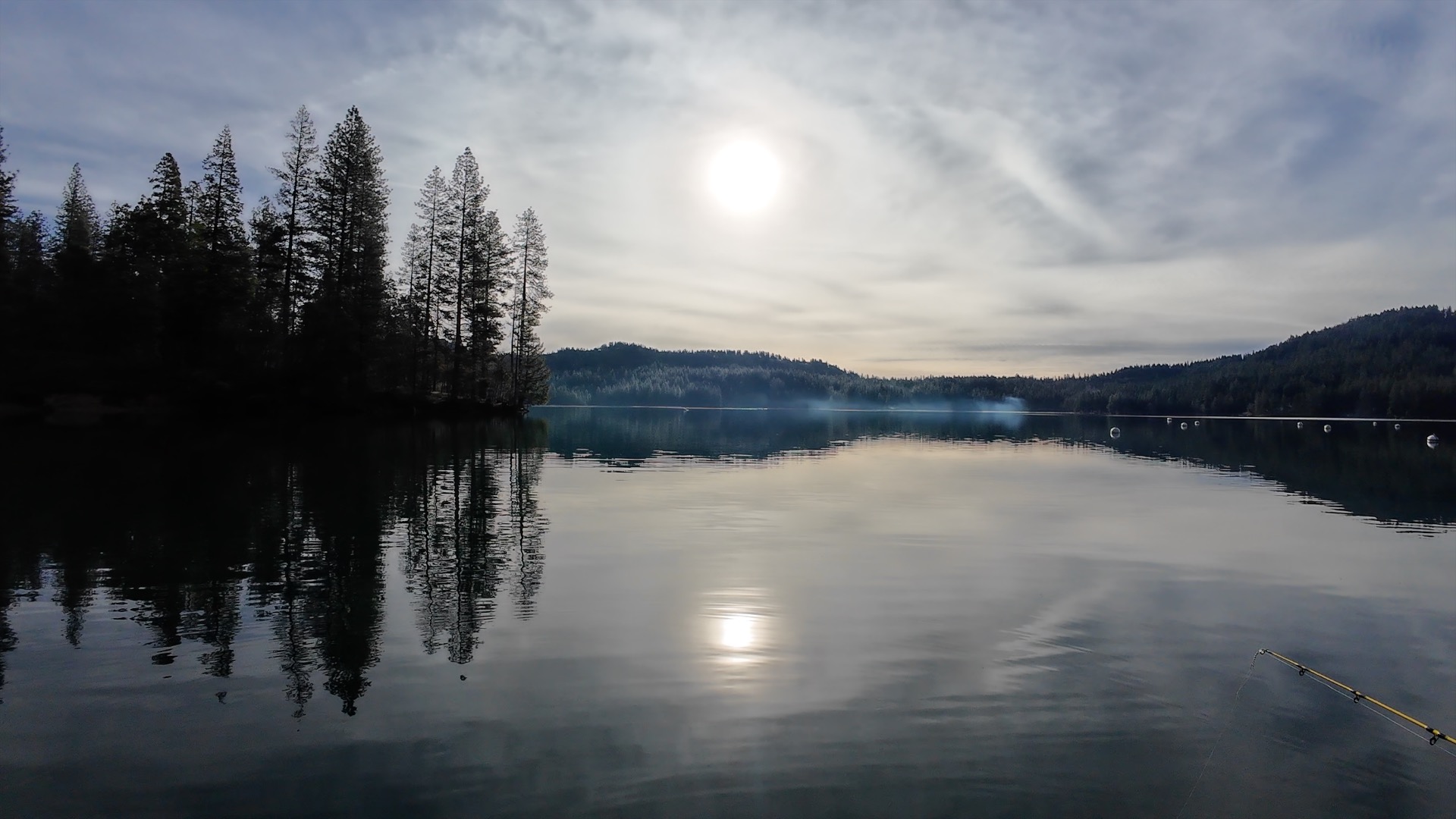
Nevada County’s Scotts Flat Reservoir, located at 3,000 feet up in the Sierra foothills, somehow feels like both a high country lake and a close- to-home water. Its trout and bass should be on Central Valley anglers’ radar. (CAL KELLOGG)
By Cal Kellogg
There are trout lakes you fish because they’re famous, and there are trout lakes you fish because they’re dependable. Scotts Flat Reservoir falls squarely into the second category, and that’s not an insult; it’s a compliment.
Dependable means you can show up with a game plan, fish hard, make smart adjustments, and have a real shot at bending a rod whether you’re launching a boat or walking the bank with a small tackle box and a folding chair.
Scotts Flat also has something else going for it that a lot of foothill reservoirs can’t claim: It’s a beautiful place to spend a day. Ponderosa pines, granite, clean air, and water that feels like it belongs in the high country, even though you’re not that far from the Sacramento Valley.
Scotts Flat sits just a few miles northeast of Nevada City, tucked into the Sierra foothills at roughly 3,000 feet in elevation. Nevada City itself is one of those classic Gold Country towns that still wears its history on its sleeve – old brick buildings, narrow streets, and a feeling that if you scratched the surface hard enough, you’d find gold dust in the cracks.
That Gold Rush legacy is part of what makes a trip to Scotts Flat feel like more than just fishing. You’re in the same country that helped shape California, and the lake you’re fishing is tied to that story through the long arc of water development in the foothills.
Scotts Flat Reservoir is managed by the Nevada Irrigation District, and it was created when Scotts Flat Dam was built in the late 1940s and later raised in the early 1960s. Today, the reservoir covers roughly 850 acres at full pool and can hold around 48,500 acre-feet of water, which puts it in the “big enough to explore, small enough to learn” sweet spot.
It’s large enough that fish can spread out and patterns matter, but not so massive that you feel lost without a guide and a pile of electronics. If you fish it a few times across the seasons, you start to recognize its personality.
BIG-TIME ’BOWS
For trout anglers, Scotts Flat is primarily a rainbow lake. Browns and even kokanee show up in the conversation, too, but rainbows provide the bread-and-butter action, which can be surprisingly consistent when the lake is fishing right.
A lot of folks assume foothill reservoirs slow down as the weather warms, and that can happen here. But Scotts Flat holds enough cool water and has enough structure that you can stay in the game longer than you might expect. The biggest key is fishing the season and the water column instead of forcing one approach year-round.
SCORE FROM SHORE
Let’s start with bank fishing, because Scotts Flat is one of those lakes where shore anglers can absolutely compete, especially during the cooler months and into spring.
In late winter and early spring, rainbows cruise the edges looking for easy meals. This is when you can catch trout shallow with classic offerings like small spoons, spinners, mini plugs, and floating baits if you’re bait fishing.
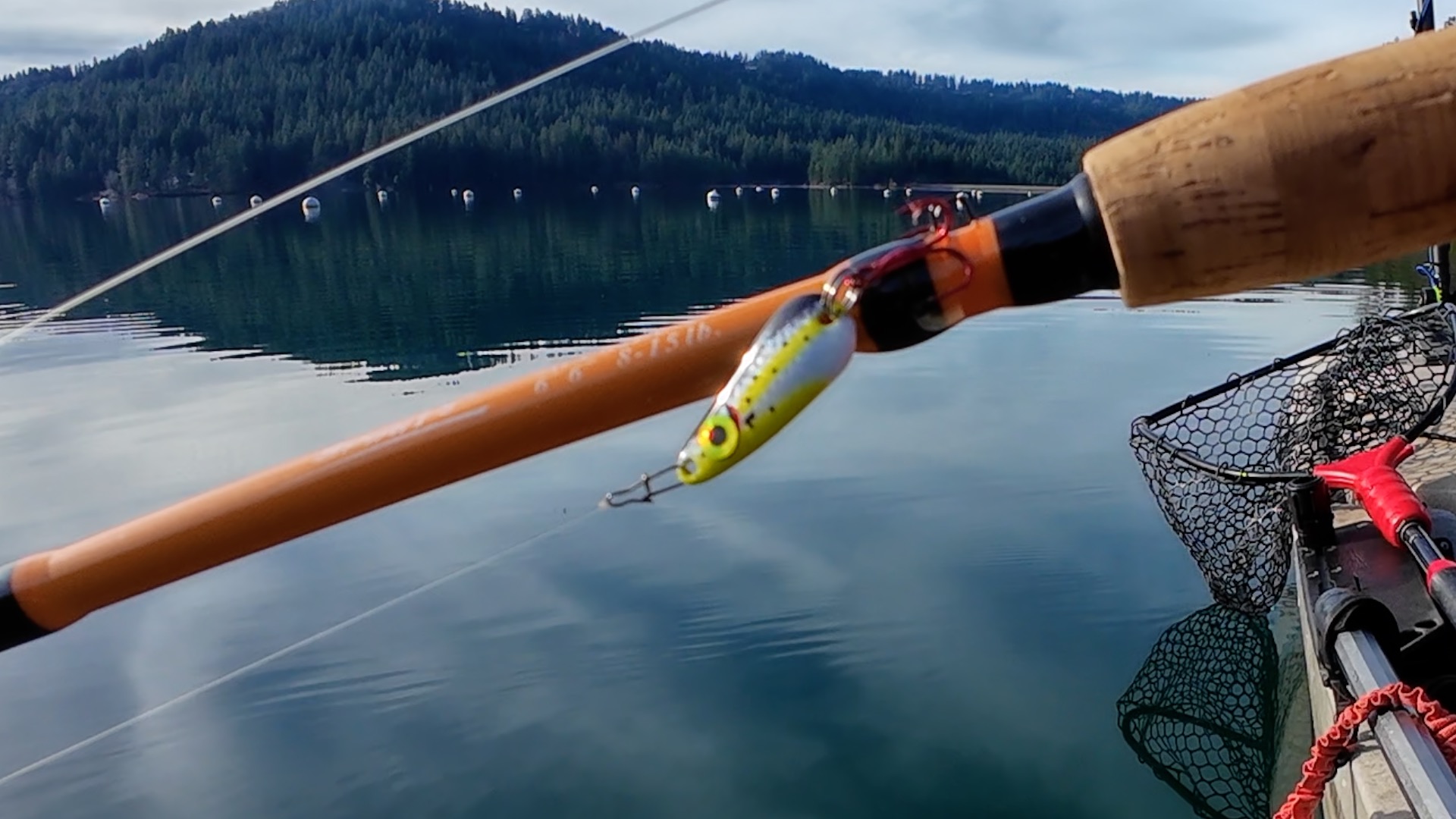
Small spoons in pond smelt colors often work well at Scotts Flat. (CAL KELLOGG)
BE WISE, GO DEEP
The difference between getting bit and getting skunked often comes down to two details: stealth and depth. Scotts Flat trout can be surprisingly willing, but they can also get moody, especially on bright, calm days.
Light line, long leaders and natural presentations matter. On those tougher days, I’d rather fish 6-pound-test leaders and a smaller offering than throw the kitchen sink at them and hope.
If you’re a lure guy like me, this is a great time to cover water with a 1/8- to 1?4-ounce spoon, a small spinner or a compact minnow plug. Work parallel to the bank when possible instead of just over deep water. Trout often travel the shoreline, and a lure that stays in the strike zone longer will outproduce one that spends most of its time in open water.
If the wind is pushing into a bank, pay attention. Wind stacks plankton, bait and bugs, and trout follow the groceries. A windy bank isn’t always pleasant to fish, but it’s often where the fish are.
As spring moves along, Scotts Flat can offer excellent action for families and casual anglers because the rainbows remain active and accessible. This is also when you’ll see more people around – campers, kayakers and day-use traffic – and the trout respond by sliding off the most obvious water.
That doesn’t mean the fishing dies. It just means you need to be a little more deliberate. Fish early and late if you want solitude, but don’t get stuck in the “dawn or nothing” mindset.
On many lakes and reservoirs, the late-morning to midafternoon window can be outstanding because that’s when the food chain really kicks in. As the sun gets up, plankton activity increases, baitfish get more active and predators follow.
TROLLING TIME
Early in the season, you can flat line troll small spoons, plugs or trolling flies behind dodgers and do very well. Later, as surface temperatures rise, you’ll need to get down. That can mean leadcore, snap weights, trolling sinkers or downriggers, depending on how serious you want to get.
The good news is you don’t need a complicated program to catch Scotts Flat rainbows. What you do need is the willingness to adjust depth until you’re running your offering at the level the fish are actually using.
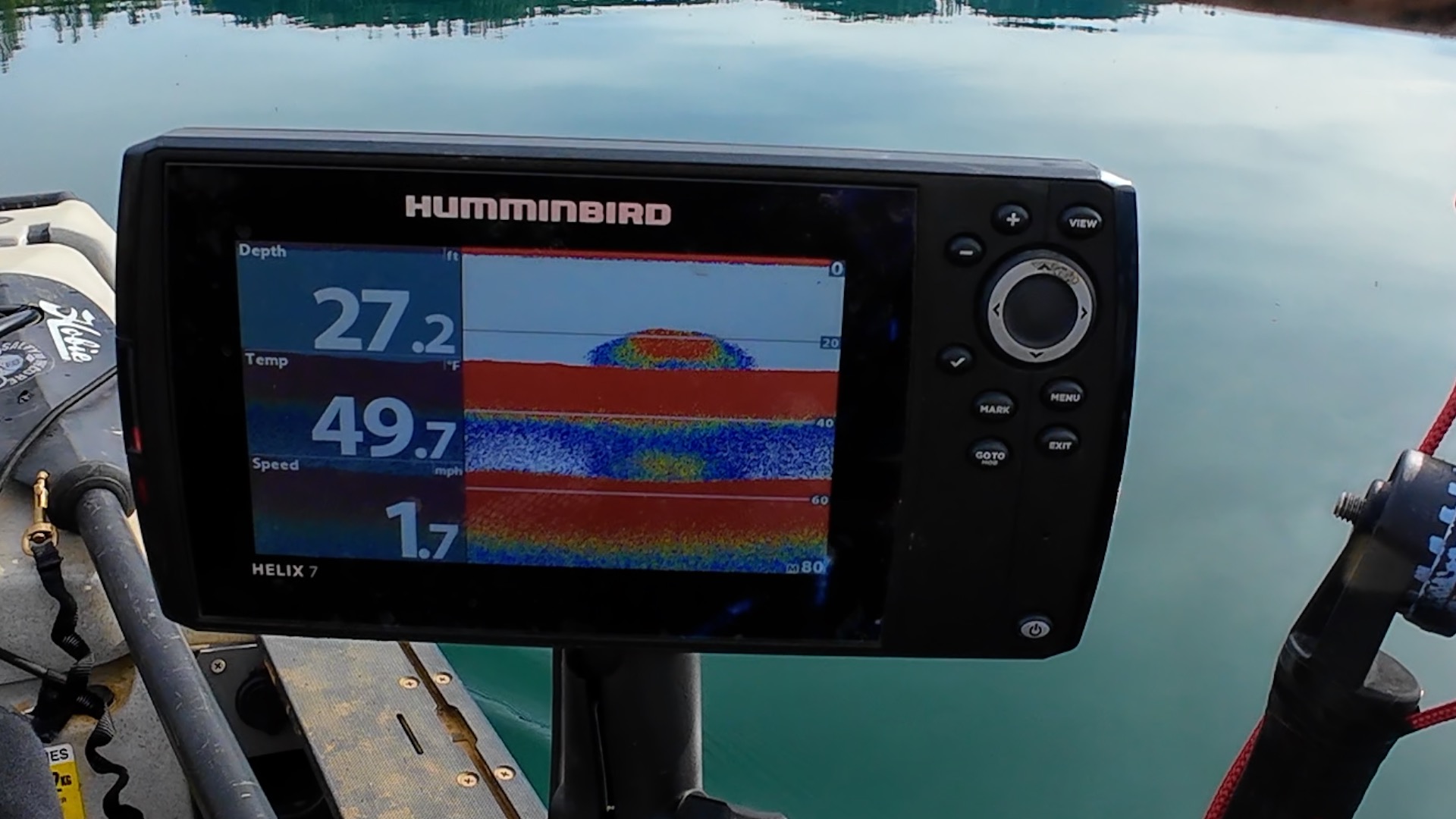
A simple starting plan for boat anglers is to troll the first major breakline off the shoreline, especially where points and coves create natural travel lanes. Rainbows often roam edges and transition zones. If you’re marking fish suspended at 20 to 30 feet, don’t waste your day dragging lures 20 feet above them. Get in the zone. Run a small spoon or a trolling fly with a subtle kick behind a dodger, keep your speed steady and make long turns so your inside rod slows down and your outside rod speeds up. Those speed changes trigger strikes – especially from fish that are following.
SUMMER SURPRISES
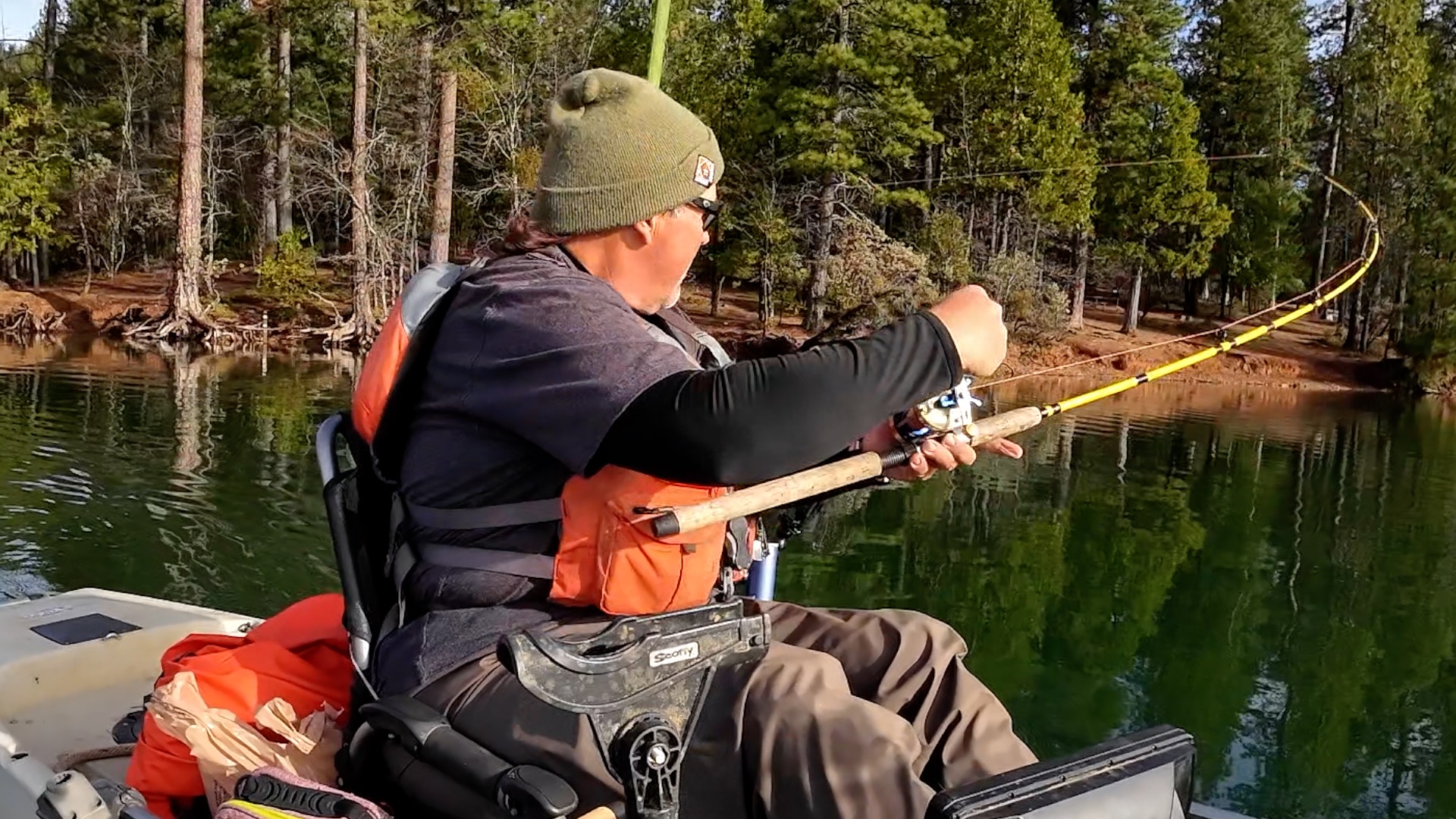
Summer is where Scotts Flat can surprise people. Many anglers switch gears completely once the weather heats up, but you can still catch rainbows if you fish deeper and smarter.
Look for cooler water, look for structure and keep an eye on your electronics if you have them. The trout won’t be everywhere, but when you find them, they’ll bite.
Early and late can be productive, but again, don’t ignore the midday window. If the light level is high, fish can actually feel secure deeper in the water column, and that can sharpen the bite, so try trolling deep under these conditions.
BONUS BASSIN’
Now, while trout are the main story at Scotts Flat for California Sportsman readers, the lake also offers real bass fishing, and it deserves mention because it adds value to the destination.
Scotts Flat holds both largemouth and smallmouth bass, and when the water warms, those fish become a big part of the lake’s identity.
Smallmouth relate to rock, points and harder structure, while largemouth lean toward cover, shade and the kind of edges where a baitfish can hide.
In spring and early summer, you can catch bass on jerkbaits, crankbaits and soft plastics, and later in summer the topwater bite can be excellent early and late.
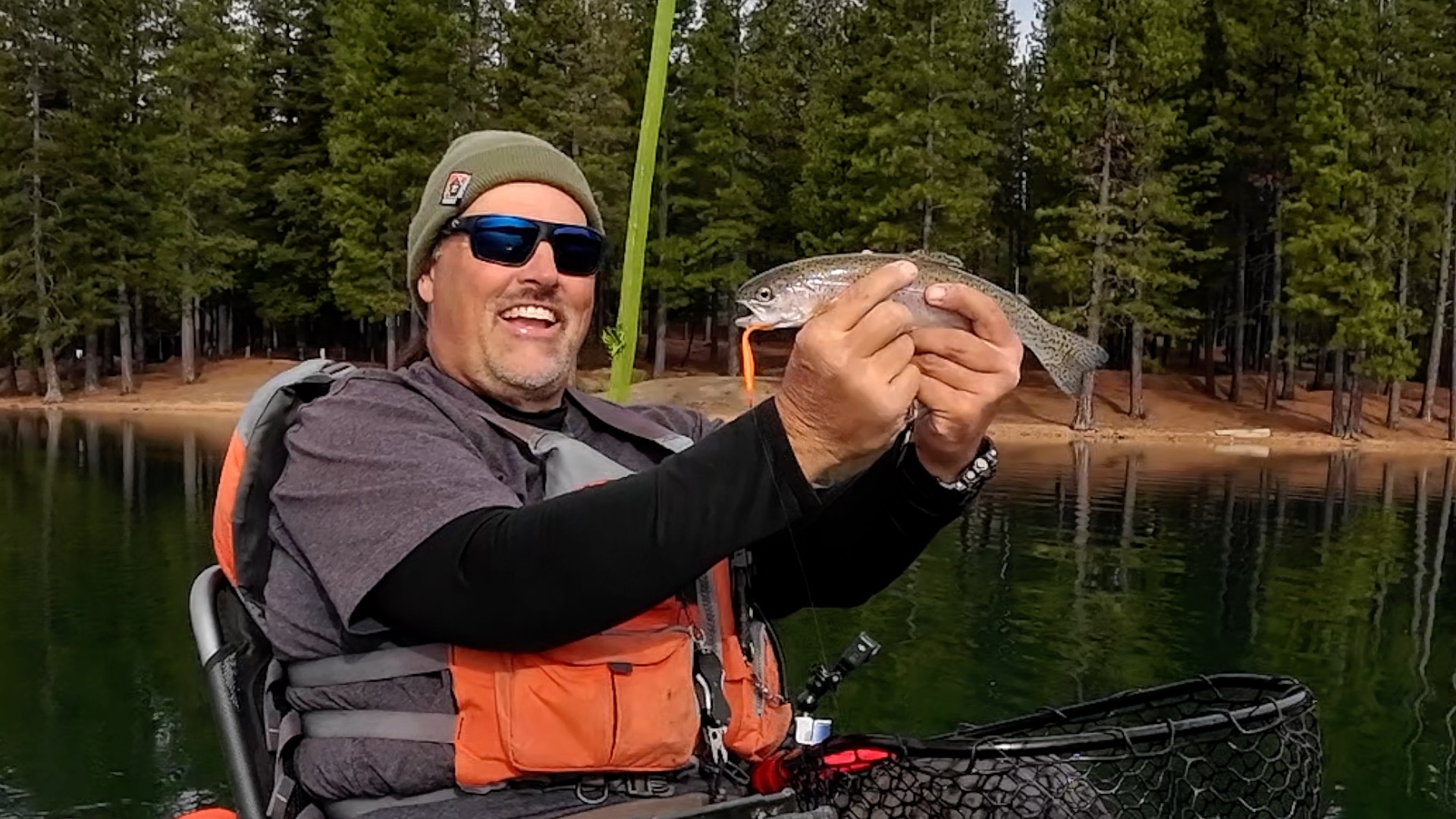
The beauty of Scotts Flat is you can do a two-species day without feeling like you’re forcing it. Troll for rainbows in the morning, then switch to bass tactics when the sun gets up and the lake gets busy. That’s a full day of fishing that makes a trip worthwhile.
FULL-SERVICE FUN
Camping and recreation are part of Scotts Flat’s appeal, and if you’re doing a family run, it’s one of the better foothill setups. Scotts Flat Lake Campground and the Cascade Shores area make it easy to turn a fishing trip into a weekend.
You’ve got day-use facilities, places to launch and the kind of environment that makes nonanglers happy too. When you can fish a solid trout bite in the morning, then have lunch in the pines while the kids swim or paddle, you’re doing something right.
PUTTING A PLAN TOGETHER
So how do you put all of this together into a practical trout setup? For bank anglers, keep it simple and mobile. Start with small hardware in the morning, work wind-blown banks when conditions allow, and don’t hesitate to downsize if you see follows without commits.
If you use bait, focus on clean rigs, light line and getting your offfering slightly off bottom. Pay attention to depth, light and water movement. For trollers, use the advantage you’ve paid for: cover water and search.
Start shallow early in the season, then follow the fish deeper as the months progress. Trolling flies, small spoons and compact plugs will all produce, but only if you’re running them at the right depth and speed.
GETS THE JOB DONE
Scotts Flat Reservoir isn’t flashy in the way some trophy waters are flashy. It doesn’t need to be. It’s a solid foothill lake with a real rainbow program, a legitimate bass fishery and the kind of setting that reminds you why we fish in the first place.
It’s close to Nevada City, which is steeped in Gold Country history, easy to access and versatile enough to keep you busy all year if you’re willing to fish with the seasons.
If you want a lake where a bank angler can catch trout, a boat angler can troll into steady action and a bass rod can save your afternoon, Scotts Flat deserves a spot on your short list – especially now, while the water is cool and those rainbows are feeling their oats in shallow water. CS
Editor’s note: Cal Kellogg is a longtime Northern California outdoors writer. Subscribe to his YouTube channel Catch America at youtube.com/user/ KelloggOutdoors.
SIDEBAR: Controlling A Pesky Invasive Species:
We need to talk about an issue that has reshaped boating on a lot of California waters: invasive mussels – specifically, the golden mussel threat that has agencies tightening policies statewide.
The reality is simple. Water managers are trying to keep these invasive species out, because once mussels establish, they’re a long-term, expensive nightmare that can clog infrastructure and damage fisheries.
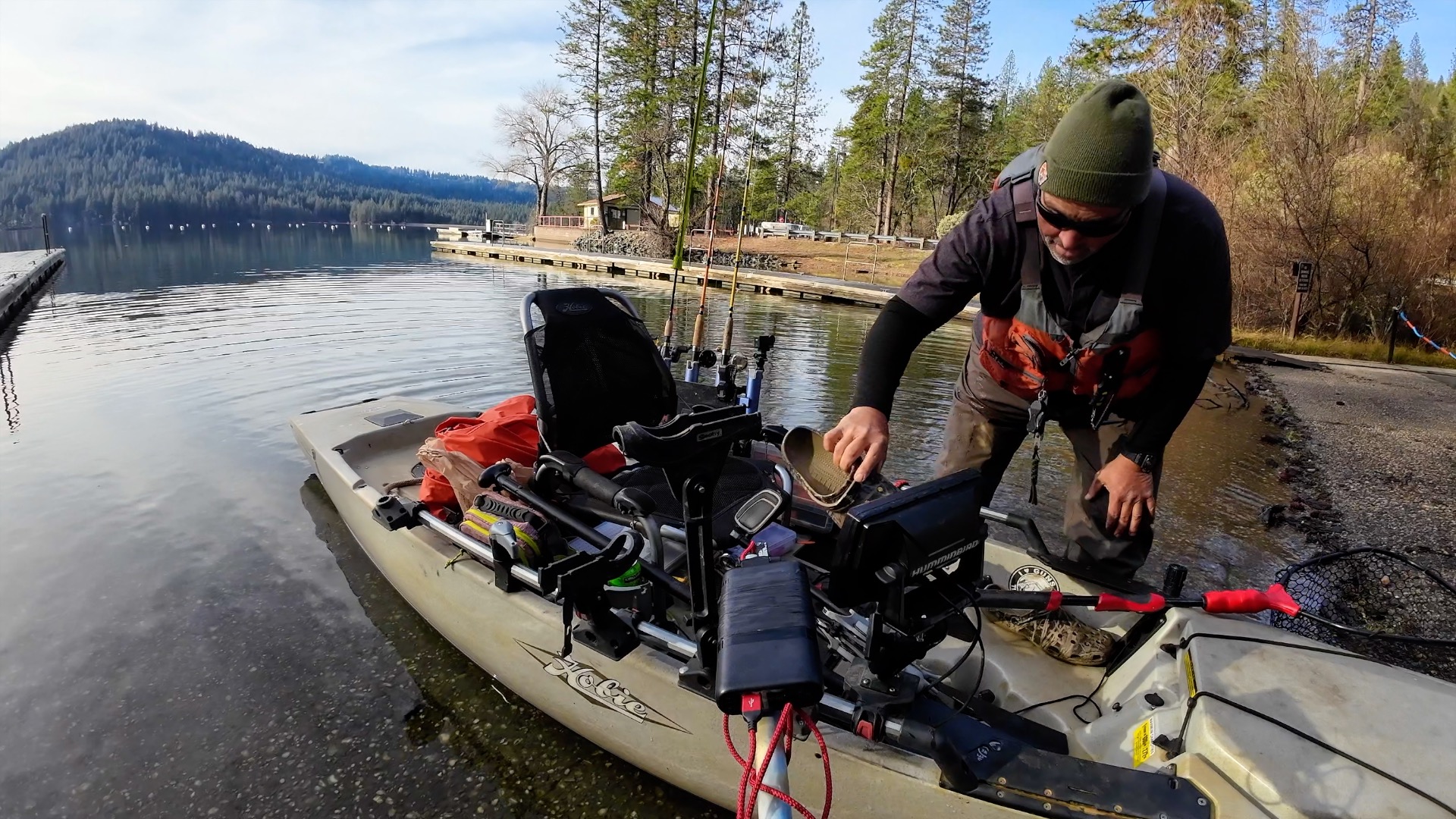
The Nevada Irrigation District (NID) has implemented prevention measures that directly affect boat anglers at Scotts Flat, and if you show up unprepared you may not be able to launch. In plain terms, the district’s protocols require motorized watercraft be part of an inspection and tagging program and, depending on the situation, a quarantine period or decontamination may be required before launching.
There are also sealing procedures upon exit that help determine whether a boat can return and launch again without restarting the entire process.
Rules can evolve, so the smartest move is to check NID’s current requirements (nidwater.com/nevada-irrigation-district-mussel-prevention-program) before you tow up the hill. Do that, and the process is manageable. Ignore it, and you can end up burning a day in the parking lot.
The big picture is that these restrictions are inconvenient, but they’re aimed at protecting the lake, and Scotts Flat is the kind of place worth protecting. CK