A Sportsman Recalls A Year Full Of Special Hunts With Friends, Family
The following appears in the January issue of California Sportsman:
By Tim E. Hovey
As we begin another year, I find myself thinking about memorable hunts I’ve experienced over the last season or so. As I get older, I find that I really treasure these events with family and friends. I’m also very aware of subtle changes in the way I hunt as time moves forward.
I no longer hike the hills like I used to. Waking up before dawn for a waterfowl hunt or staying up late and shining a light for predators seems to get harder to do each season. Time waits for no man. That’s what makes these special hunts so important to me.
Over this last season or two, I’ve been fortunate enough to participate in a few hunts that rank at the top of my outdoor list. It’s not because we bagged trophy animals or drew a once-in-a-lifetime tag. I’ve never been a trophy hunter, and honestly that stuff doesn’t matter to me. These hunts stand out because of who was at my side when I was on them. And they will forever be some of the best.

JOSE AND DUY
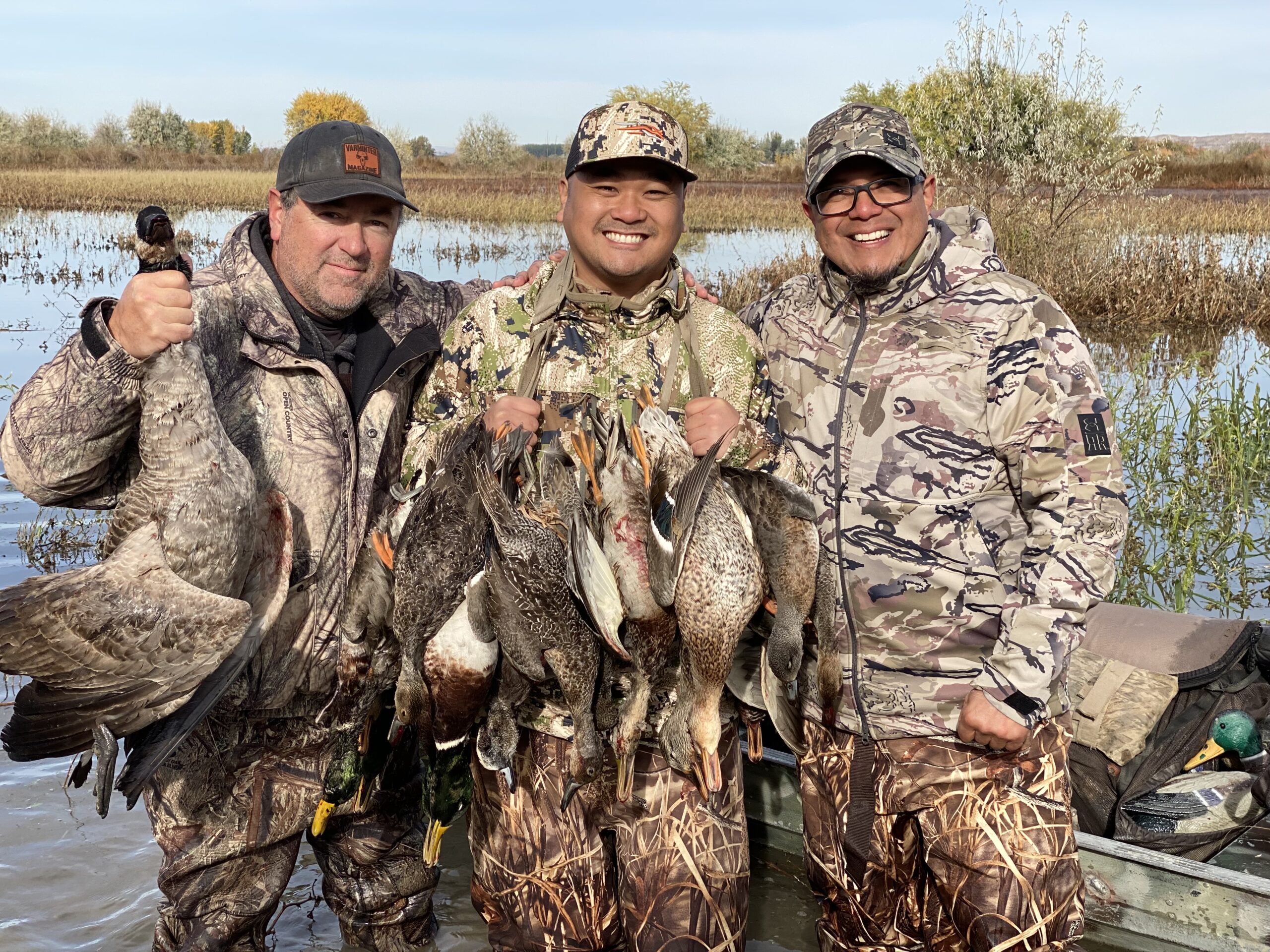
Once I relocated to Idaho, my hunting friends made plans to come up for a sportsman’s weekend. In fall 2024, my good friends Jose De Orta and Duy Phan landed at the Boise airport on a Thursday.
After I picked them up, we grabbed some dinner and discussed the plan for the rest of the weekend. Being that we were right in the middle of upland game season, I wanted to take them to some of the spots I had discovered once I started investigating my new home state. However, I also had a surprise: The pair had arrived at the beginning of waterfowl season, and hunting ducks is where we’d start.
We arrived at the private parcel at 3:30 a.m. I had done a few years of trapping on the property, and the owner was gracious enough to let us hunt ducks while my buddies were visiting. We grabbed several dozen decoys and waders and tossed them into a jon boat.
At the blind, we walked the boat out front and started creating our decoy spread in the shallow pond. In the dark, we could hear ducks getting up from surrounding ponds. I knew we were at the right place at the right time. Duy had never been on a waterfowl hunt before, so the goal of the morning shoot was to get him on a few ducks.
We stowed the boat and waded back to the hidden blind. We organized our gear in the cramped wooden structure and put Duy in the center spot after deciding he’d take the first shots. With 10 minutes until shooting time, we watched the sky come alive. Ducks flew over and soon started dropping into our decoy spread. We waited.
When shooting time arrived, there were over 20 ducks paddling around our decoys. We whispered to Duy that when the next group flew in, he should take the shot and Jose and I would shoot cleanup when the swimming ducks took flight. We didn’t have to wait long.
A group of five ducks banked hard on Jose’s side and cupped their wings; they were committed to land among the decoys. Duy tracked the lead bird, took the shot and dropped the drake mallard. At that first shot, the entire group of ducks out front exploded into instant flight and we took aim. Once the shooting eased, six ducks floated dead in the water in front of us. I quickly got out of the blind, grabbed our ducks and got back into the structure.
As the morning unfolded, the ducks kept coming. We had placed the decoys in a U-shaped pattern, with the open space directly in front of the blind. The pattern seemed to be that groups of ducks would approach from behind us and bank hard to land in the open space. Before they landed we’d take the shot, and despite quite a few misses, the ducks started piling up.
As the flight started to slow down, I spotted a Canada goose flying the edge of our spread. I made a couple of goose calls with just my voice, and he banked a bit but didn’t commit. As he closed the distance, I led him a bit and took the shot. He folded and landed hard at the edge of our decoy set.
On that morning hunt, we bagged 17 ducks of varied species and one goose. To this day it remains one of my favorite waterfowl hunts. Not for what we killed, but because I was once again hunting with my good friends.

OH, CANADA!
In the fall of 2024, I was invited on an all-expenses-paid writers’ trip to Saskatoon, Saskatchewan, to hunt geese and sandhill cranes. A month before the trip, the coordinator stated that 10 outdoor writers had confirmed and two had cancelled. That got me thinking. After a few calls and with approval from Delta Waterfowl, which was putting on the event, I got one more person invited on the hunt.
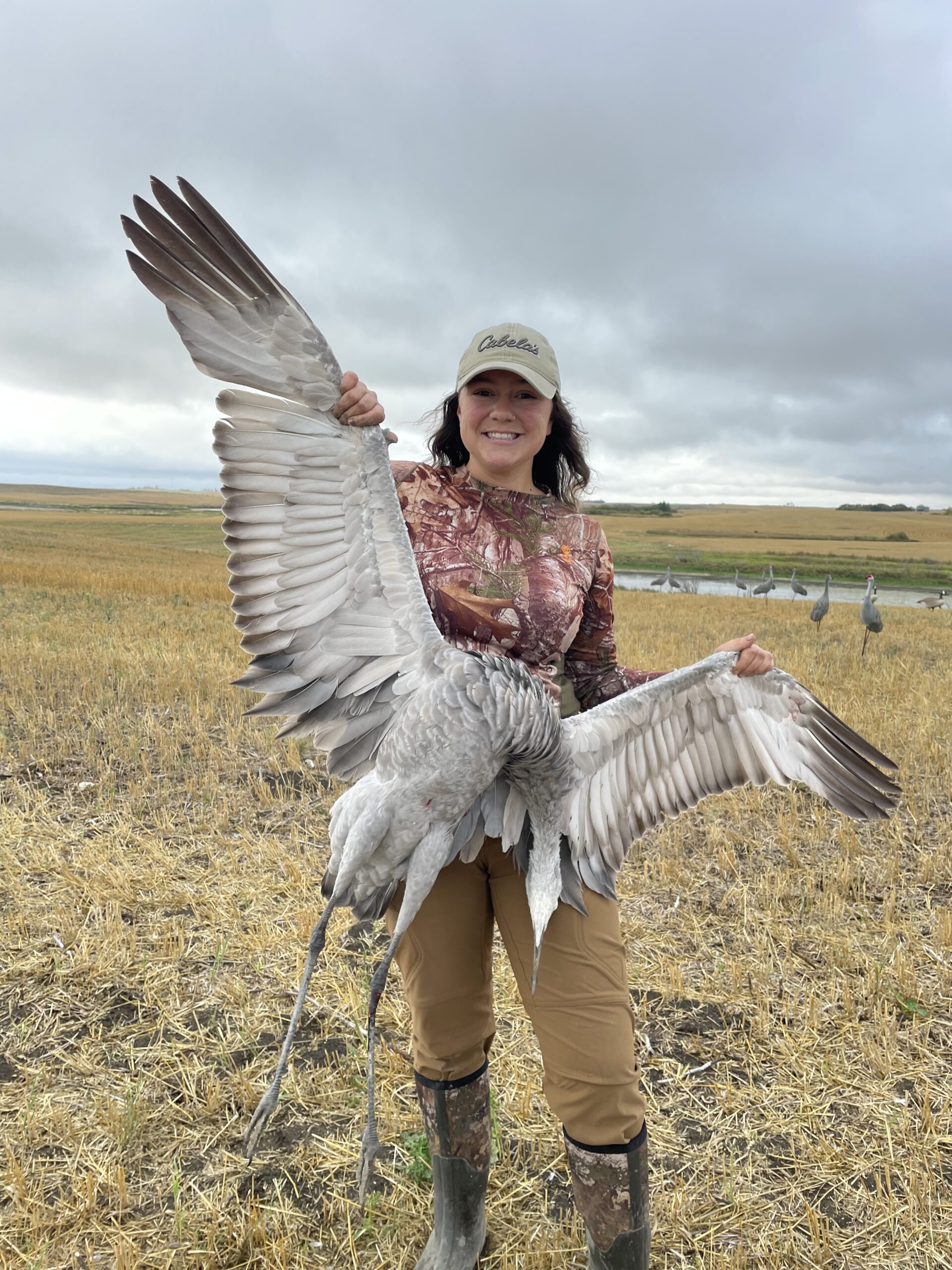
Accompanying me on this once-in- a-lifetime trip would be my hunting daughter, Alyssa. After three flights, a full day of travel and losing our shotguns for a short period, we arrived at base camp at midnight on the evening before the hunt. Paul, the coordinator, met us and strongly suggested we get some sleep for the 3:30 a.m. wakeup call early the next morning.
A short four hours later, Alyssa and I were in a field with four other hunters and our guide for the morning hunt. We placed the laydown blinds in a semicircle with the wind at our backs. We gathered grass at the edge of the field to further camouflage the tan-colored blinds. We stowed our gear, climbed into our blinds and got ready. That first morning hunt would be for sandhill cranes, a species I had never hunted before. Before shooting time, I glanced to the blind next to me where Alyssa was sitting. She looked back, smiling and nodding her head in excitement. I was so glad she was once again hunting with me.
While we had received some pointers on crane behavior and flying patterns from the guide, I wasn’t prepared for that first experience. The sharp shrills and massive wingspan of sandhill cranes made it feel like we were hunting pterodactyls. Advised that they have excellent eyesight, we were told to wait until they got close before we took the shot.
That first group came in straight downwind and directly in front of us. Their high prehistoric shrills filled the air as they looked for a place to land. When they dropped in altitude and were about 25 yards out, the guide yelled, “Take ’em!”
We exploded from the blinds firing. Several of the lanky birds fell from the sky, as the lucky ones peeled away. We ran out and grabbed the downed cranes, stowed them under a camo tarp and got back into the blinds. For the next few hours, the birds kept coming.
As the flight slowed down, the guide informed us that we were only two birds away from a limit. The sandhill crane limit there was five birds per hunter. With six hunters, we were currently sitting at 28 birds. The guide suggested that Alyssa and one other hunter take the last two. Back in the blinds, within minutes we had two birds approach the spread. When they got close, the guide gave the command, and Alyssa popped up, put the bead on the lead bird and dropped it with one shot.
The following days, we hunted twice a day and got into more cranes, some of the largest Canada geese I’ve ever seen, and several species of ducks. We enjoyed great food, great hunting and great company. Honestly, the only reason this was a hunt of a lifetime was because my daughter got to be there with me.
CHERYL’S FIRST COYOTE
While my wife Cheryl and I share a passion for fishing, she always left hunting to me and my outdoorsy daughters. That all changed in 2021 when Cheryl decided she wanted to start hunting with me. And she wanted to start with the most technically challenging and difficult type of hunting: predator calling.
Cheryl had already taken her hunting safety course, accompanying my daughters when they took theirs a decade earlier. We picked up her Idaho license, and for the first few months we practiced firearm safety and target shooting. Once she felt comfortable shooting my .22-250, we started hunting.
For the next year, she experienced a lot of frustration. The opportunities were slim, as only a handful of coyotes responded to the call. They would either come in way too fast for her or well out of her comfortable shooting range. It was time to change things up.
Last spring, we planned a trip to Nevada to hunt predators. The Silver State does not require a hunting license to pursue coyotes.
After checking into our hotel, we drove out to the desert to explore. We made a few stands without luck, then the stars aligned. Cheryl and I hiked into a small canyon loaded with sagebrush. We set up in front of a dark shrub with the sun at our back. Anything looking our way
would be looking right into the sun. The shallow canyon opened up and contained great-looking habitat both to our left and right. As I always do, I had Cheryl pick her side. With her covering the right side and me on the left, we set up to start calling.
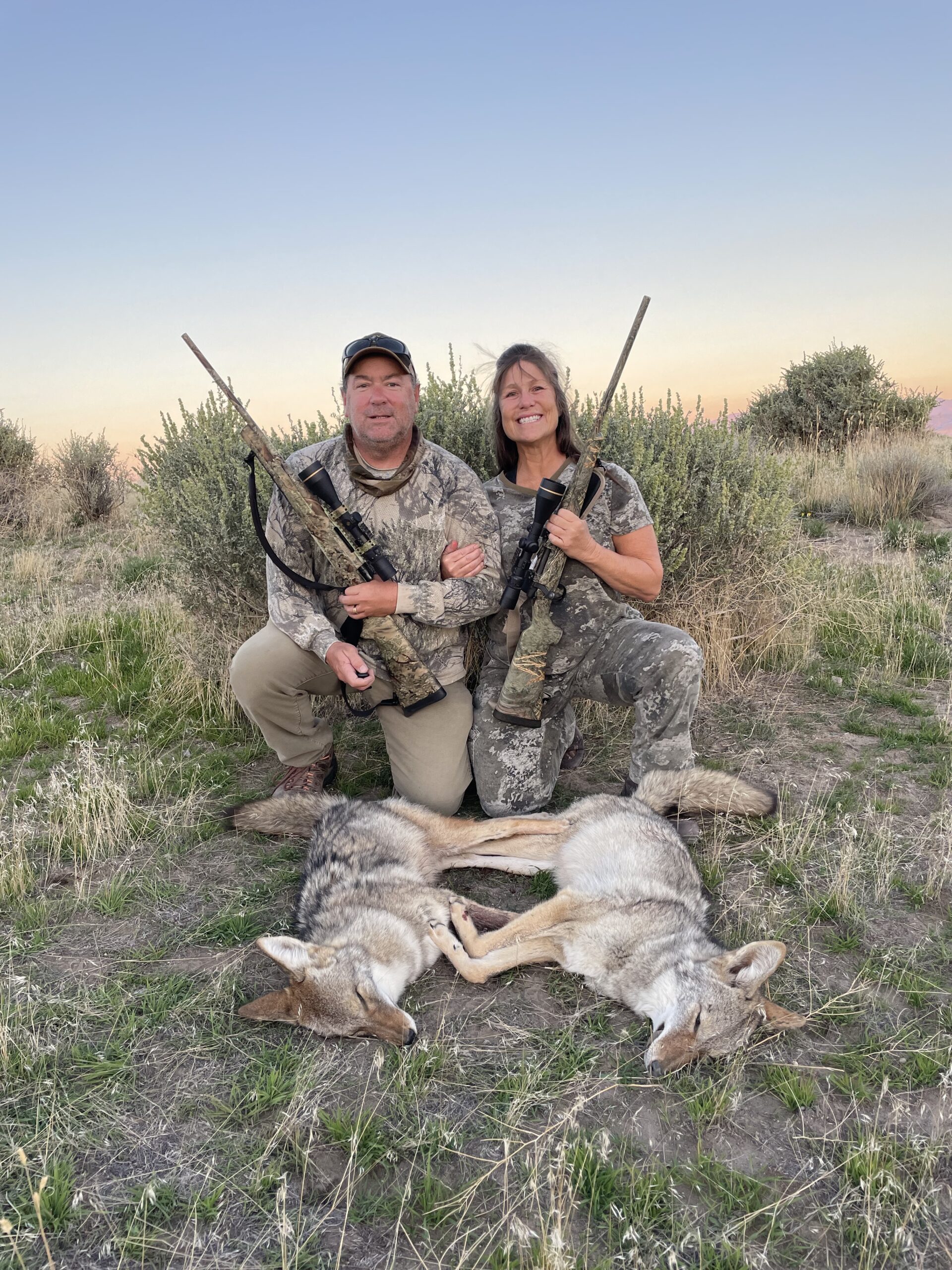
At around the eight-minute mark, a coyote appeared at the edge of the sage about 120 yards out. Cheryl spotted him and I could instantly hear her breathing change. I just felt it; this was her chance. But Cheryl’s rifle was not in a position to take a shot, and with the coyote carefully searching the area, she couldn’t move. “Just wait,” I whispered.
With the volume on the caller lowered, the coyote decided he needed to get closer. He trotted out and moved behind a huge sagebrush. When he was out of sight, Cheryl moved her setup just like I taught her and was in line for him to reappear on the backside of the sage. When he stepped
out in the open again, he stopped. Cheryl got on him instantly, found him in the scope, squeezed the trigger and dropped her first coyote there. After over a year of practice, training and calling, Cheryl became a predator hunter in a narrow canyon in Nevada. She was so excited, and I was beyond proud. My wife is now my lifelong hunting partner.
WHAT HUNTING REALLY REPRESENTS
For me, the reason these hunts stand out has very little to do with the game we pursued. As I stated earlier, I am not in search of a trophy; that has never mattered to me. What matters most to me, and the reason these hunts are so memorable, is those who stood by my side during the event.
Whether it’s chasing waterfowl, hunting the lanky birds of the north or calling the common coyote, the only thing that will ever matter is who is hunting with me. CS