A Former CDFW Biologist On How SoCal Fires Affect Watersheds And Fish
Editor’s note: In late-breaking news when this story was published, CDFW rescued 271 Topanga Creek steelhead and took them to a special hatchery facility to hold until stream conditions improve. Go to https://wildlife.ca.gov/News/Archive/endangered-southern-california-steelhead-trout-rescued-from-fire-impacted-topanga-creek for more details.


The following appears in the February issue of California Sportsman:
By Tim E. Hovey
When the recent wildfires burned through Southern California, leaving unimaginable devastation, both in human lives lost and property lost or damaged, it stands to reason that the natural wild world within the fires’ footprints also suffered.
Most animals know to flee fire; however, when fleeing is not an option, some organisms will suffer immediately and still others will suffer as soon as the rains come.
Many species of the natural plant community have evolved to deal with fire. Many germinate and resprout within a few weeks of the blaze. And while a natural sagebrush community will take five to 10 years to fully recover after a complete burn, if left alone, they will still come back. However, the same can’t be said for the stream communities.
ON THE FRONT LINE OF FISHERIES
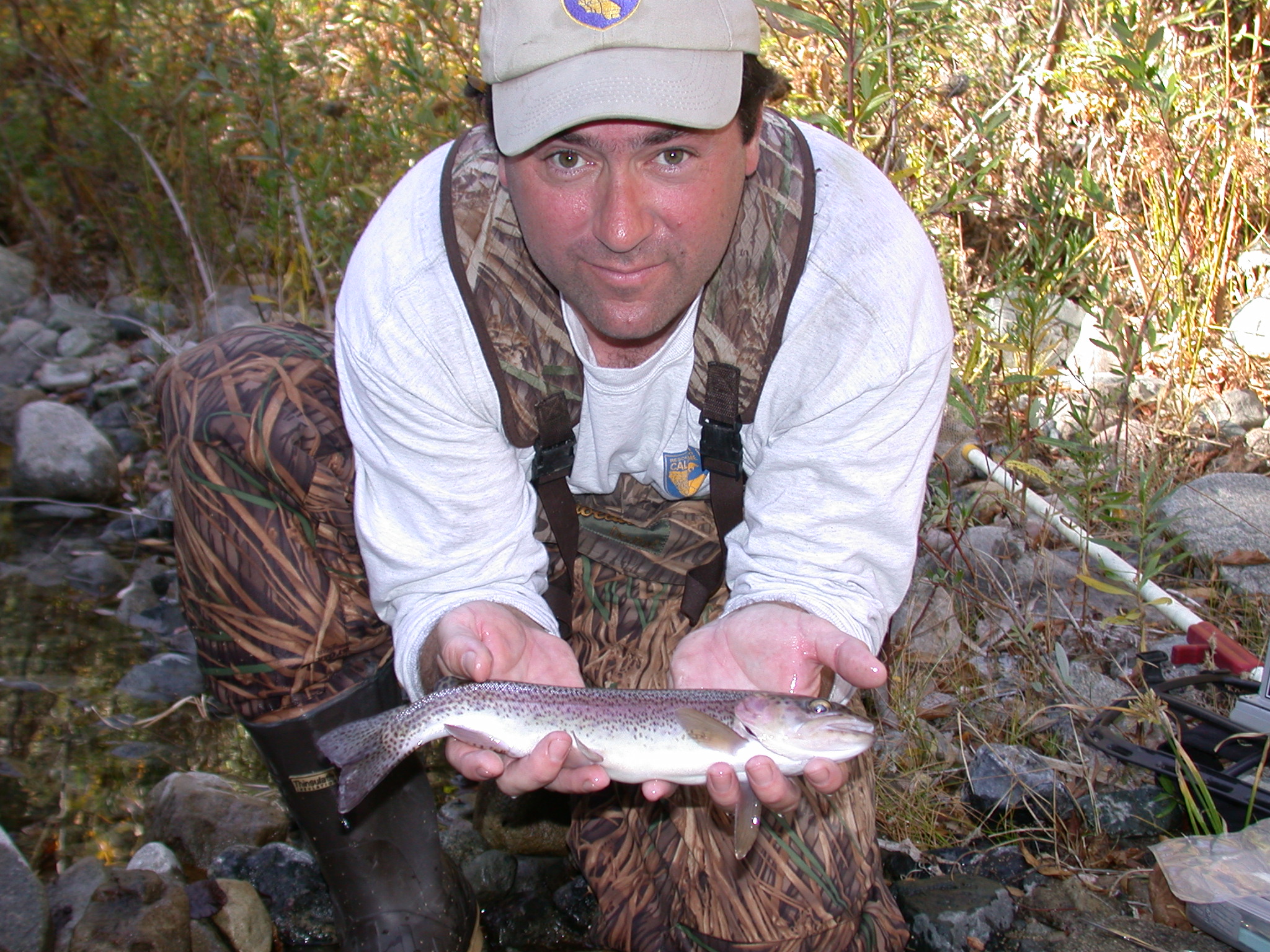
I was born and raised in California and had the privilege of working as a fisheries biologist for the California Department of Fish and Wildlife in Southern California for over 20 years. Without fail, I had to deal with the aftermath of at least one wildfire every single year I was employed by the state. Unfortunately, when it comes to wildfires and stream communities within the fire footprint, there is not much we can do.
Prefire, the plants in a natural community hold the soil in place. When rainfall comes, those plants soak in the rain and keep the soil from moving with the water. When a fire burns through the plant community, that barrier to soil movement is removed and in sloped areas, that slurry of mud, ash and debris finds its way to the streams below. This will suffocate everything within the stream community and often extirpate, or completely kill, every creature in that section of stream. If this section of creek is home to endangered species, it is likely that this species will become extinct if it exists nowhere else.
During my normal field tasks for the state, I’d monitor and manage all the sensitive fish species I was responsible for. When a fire burned near one of these sensitive populations, our fisheries group would have to become more reactive, often conducting rescue surveys within weeks of the fire and before any forecasted rain events.
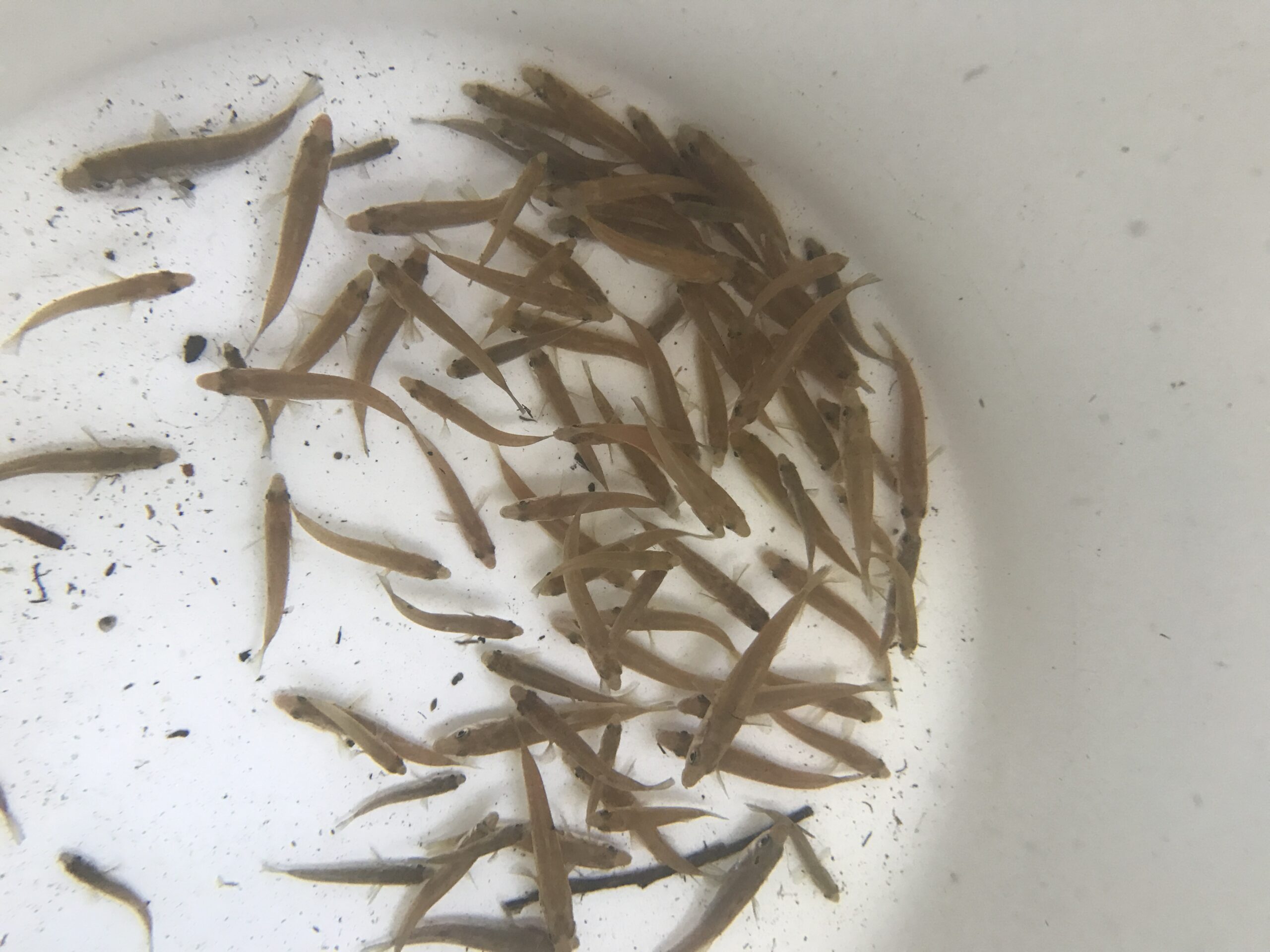
Depending on the species and its listing status, we would often conduct fish rescues, where fish were collected in the fire zone and moved to another unaffected area of the same drainage. To avoid downstream runoff of ash and mud, the release site was always upstream of the collection site and the fire damage. Unfortunately, in Southern California, this became a regular event during fire season.

A THREAT TO SOUTHERN STEELHEAD
The recent Palisades Fire scorched an area in and around Topanga Creek, a small coastal mountain stream that is home to the only known population of Southern steelhead trout in the Santa Monica Mountains.
Depending on the fire severity upstream of this population, it is likely that heavy debris, ash and mud will be washed into this special section of creek during the next rainfall, killing everything in the water.
Wildfires are not going away in California anytime soon, and conducting reactive fish rescues on sensitive populations may not always be the solution. Moving fish out of their native stream to another after a fire may work in the short term.
However, crucial elements of that species’ survival may be missing in their new home. We are also running out of suitable drainages with perennial water to use as refuge creeks for fish in Southern California.
When fires move through any ecosystem, they are rarely a good thing. They take lives, destroy property and place an unwelcome reset on the natural community. Despite having participated in dozens of fish rescues, I’ve always thought that when man must step in to save any animal, we are only prolonging the inevitable.

AN UNCERTAIN FUTURE
It will be months before the true damage of these catastrophic fires is realized. The one thing that all Californians can rely on is that more fires will come and that fire season, a term that is almost specifically associated with California, will always be just around the corner. CS